
Align your travel risk management program to ISO 31030 guidance
Use this practical checklist to evaluate your travel risk management maturity across governance, traveler safety, incident response, operational resilience, and duty of care.
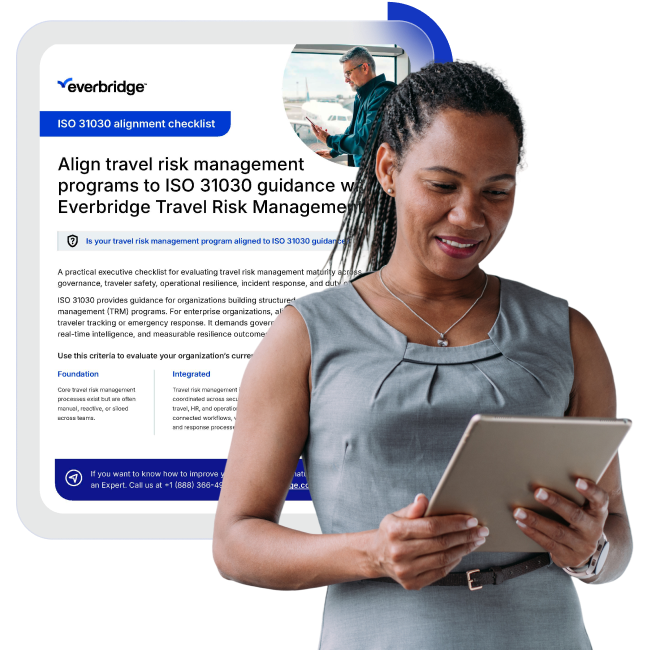
Download the checklist now!
Is your travel risk management program ready for today’s operating environment?
Business travel is no longer a simple logistics function. Health risks, geopolitical instability, extreme weather, civil unrest, and transportation disruption can all affect employees while they’re away from home.
ISO 31030, the international guidance for travel risk management, requires more than traveler visibility. It calls for a structured, risk-based approach that connects policy, intelligence, communication, response, and reporting.
Use the checklist to assess whether your program is foundational, integrated, or optimized – and where improvements are needed.

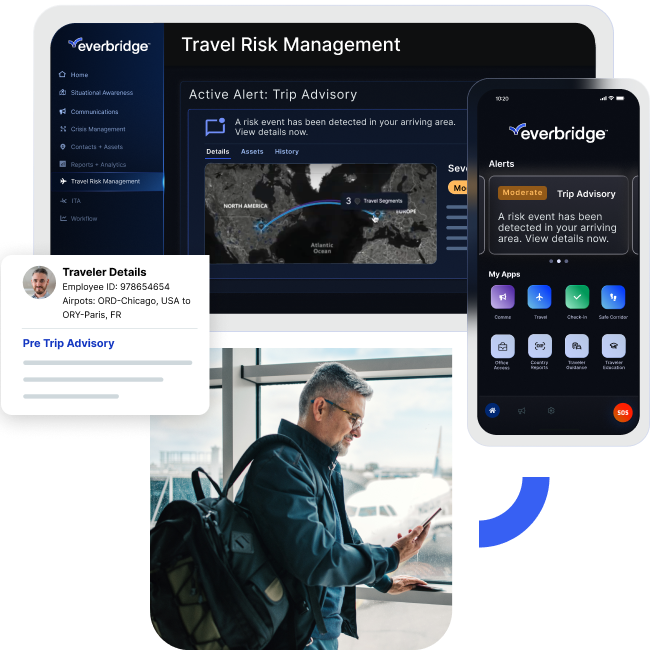
What you’ll get inside
The checklist provides a practical framework to help your team:
- Benchmark travel risk management maturity across five key areas
- Identify gaps in governance, communication, response, and reporting
- Evaluate whether your program is foundational, integrated, or optimized
- Support internal conversations around duty of care and operational resilience
- Prioritize next steps for strengthening traveler safety
Move from fragmented traveler support to integrated travel risk management
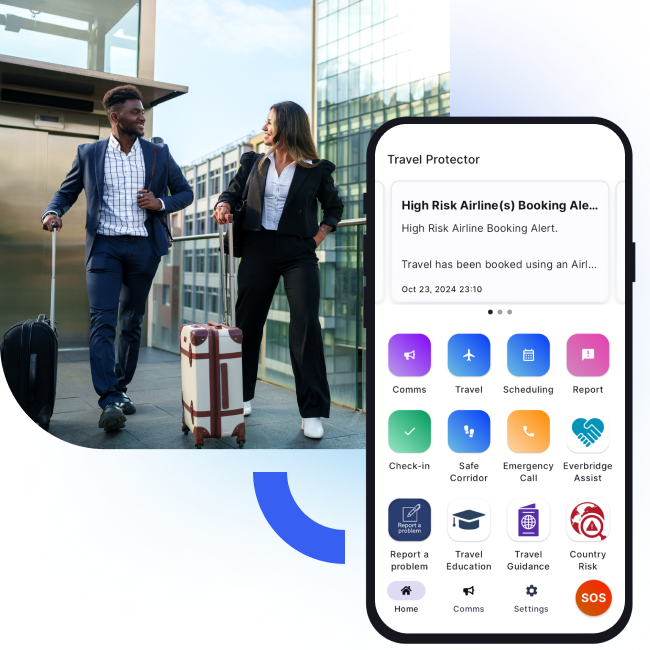
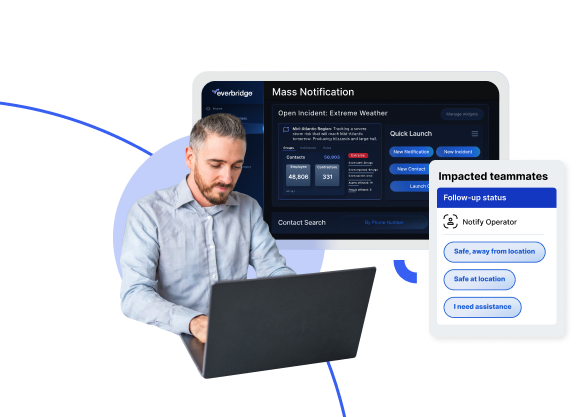
You may already have travel policies, emergency contacts, medical assistance, or basic location visibility in place. But when these processes sit in silos, teams lose valuable time during critical events. The ISO 31030 alignment checklist helps you assess how well your travel risk management solution connects traveler data, real-time intelligence, automated alerts, escalation workflows, incident communications, and reporting to strengthen duty of care, speed response, and build a more measurable, resilient travel risk management program.
Start evaluating your ISO 31030 alignment
Download the checklist to understand where your travel risk management program stands today – and where to focus next.