
From theory to action: A practical guide to AI-powered operational resilience
Get practical guidance to apply AI safely across risk intelligence, critical event response, and continuous improvement – without losing human control where it matters most.
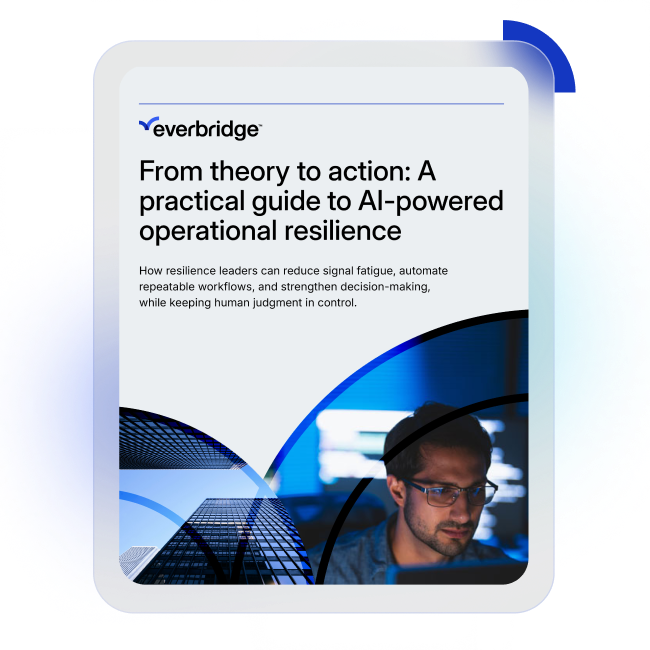
Download the whitepaper now
Why resilience leaders can’t afford to wait
AI is already changing how organizations work, but many resilience teams are still waiting for practical ways to apply it to the workflows that protect people, operations, assets, and communities. At the same time, risk signals are increasing, events are moving faster, and teams are under pressure to respond with greater speed and confidence.
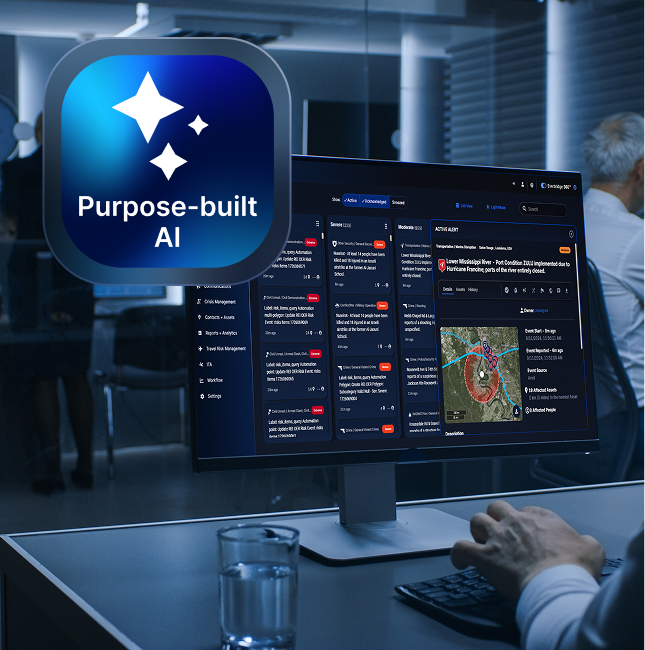
To move from promise to performance, resilience leaders need more than generic AI tools. They need governed, purpose-built AI that can personalize intelligence, reduce signal fatigue, support faster response, and keep people in control when judgment is essential.
Key insights from the whitepaper
This whitepaper shows how resilience leaders can move from AI theory to operational action. The guidance highlights where AI can create practical value today – and how organizations can apply it responsibly across critical event workflows.
01

AI should support human judgment, not replace it
The strongest resilience model is autonomous when you want it to be, and human-guided when you need it to be.
02

Personalized intelligence reduces signal fatigue
AI can help teams identify which risks matter most by connecting external events to internal context, including people, locations, assets, and operations.
03

Practical AI starts with repeatable workflows
Some of the best starting points are everyday sources of friction: recurring alerts, manual routing, message translation, incident summaries, and response coordination.
What you’ll learn from the whitepaper
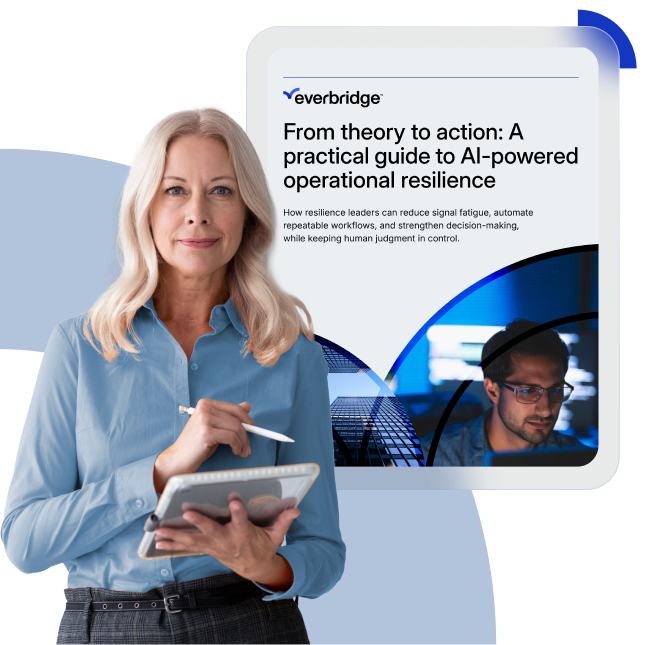
We built this whitepaper to help resilience teams identify practical, governed ways to apply AI across critical event management.
- Move from AI theory to action: Understand where AI can improve intelligence, response, and continuous learning.
- Design the right control model: Decide where AI should assist, where it can automate, and where human review should remain central.
- Identify your first use cases: Use a practical readiness checklist to find repetitive, high-friction workflows where AI can create value quickly.
How leading organizations put AI into action
Forward-thinking resilience teams are not just exploring AI. They are using it to improve signal quality, automate routine workflows, support multilingual communications, and learn from incident response over time. That’s why many organizations are moving toward a more adaptive model of resilience – one that connects intelligence, action, and improvement in a governed way.
Want to see how that approach works in practice?


AI in resilience is not about removing people from critical decisions. It is about helping teams see more clearly, act faster, and improve continuously.”
Alexander Nova
Director, AI Strategy & Implementation, Everbridge
Take the next step in your AI resilience journey
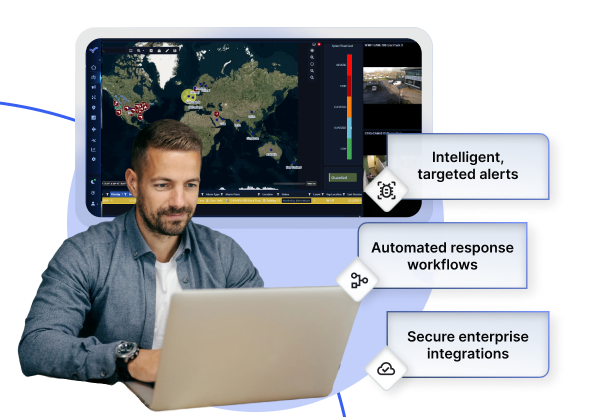
Equip your team with a practical model for applying AI to operational resilience. Download the whitepaper to explore how governed, purpose-built AI can help your organization reduce noise, improve response, and move from reactive to dynamically adaptive resilience.