
Modern travel risks are evolving. Is your organization prepared?
Learn how leading organizations are improving traveler safety, strengthening duty of care, and building more resilient travel risk management programs.
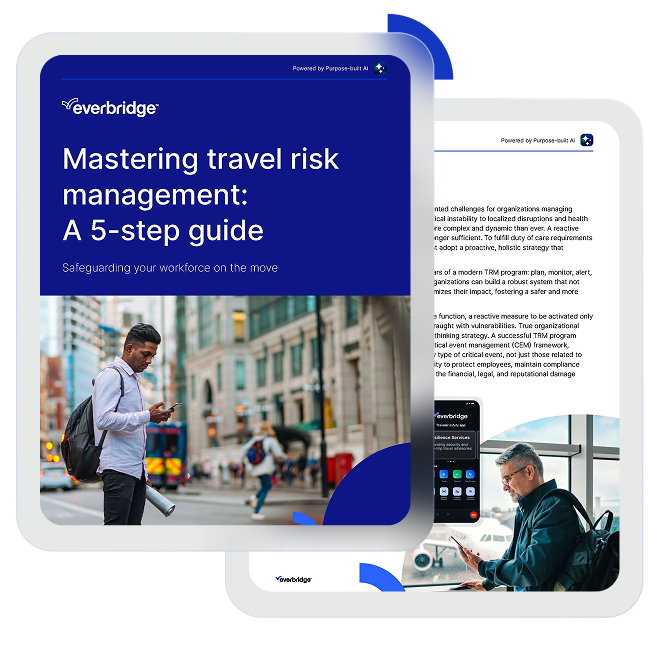
Download the guide now
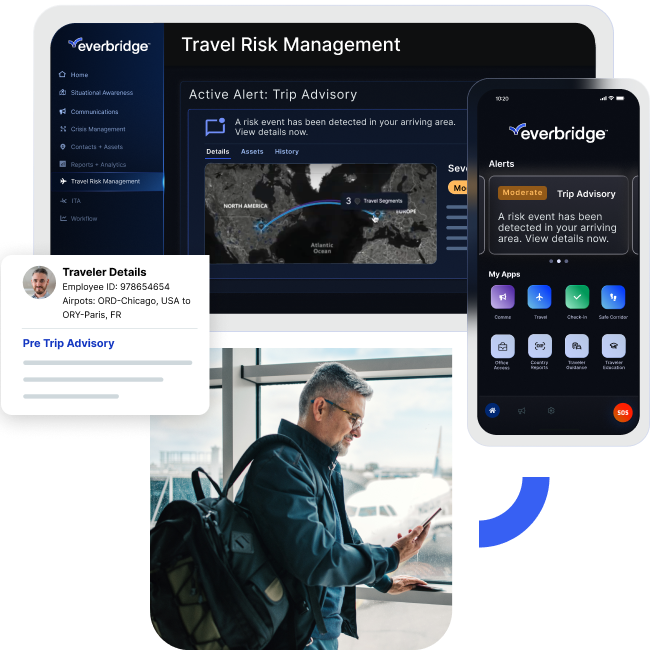
Why you can’t take a reactive approach to travel risk
Global travel has become more complex and unpredictable. Severe weather, geopolitical instability, health concerns, transportation disruption, and security threats can impact travelers with little warning, creating operational, financial, and reputational risk for organizations everywhere.
Many organizations still rely on fragmented processes and manual communication during critical events. To better protect people and maintain operational continuity, you need an approach that combines real-time visibility, coordinated communication, and actionable intelligence before disruptions escalate.
Key insights from the guide
Our latest Travel Risk Management guide shares how organizations can improve preparedness, communication, and response in a rapidly changing global environment.

1. Travel risks are more unpredictable
Organizations face disruption from geopolitical events, severe weather, health incidents, and transportation challenges.

2. Visibility enables faster response
Real-time traveler awareness and timely communication help organizations respond more effectively during critical events.

3. Resilience depends on coordination
Leading organizations align security, HR, and operations teams to strengthen decision-making and improve traveler support.
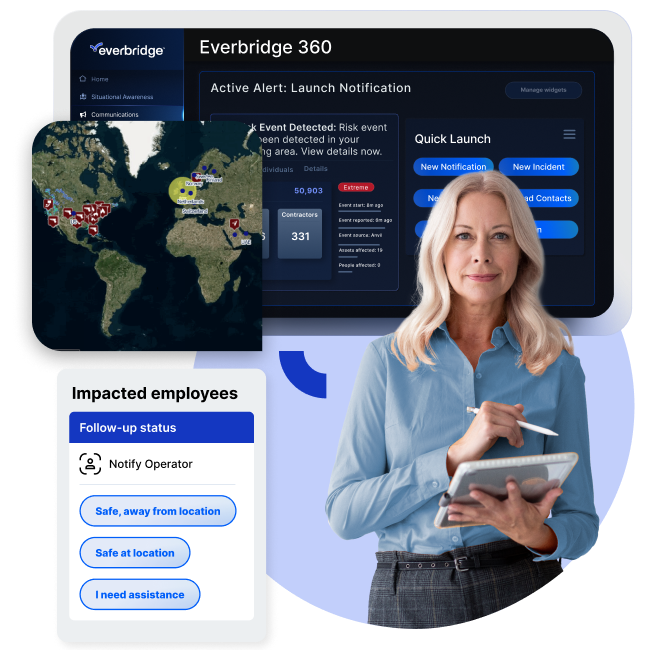
What you’ll learn from the guide
This practical guide provides a framework to help you strengthen your travel risk management program.
- Understand today’s evolving travel risks: Learn how to adapt to changing global threats and increasing expectations around traveler safety and duty of care.
- Build a more proactive TRM program: Explore five key steps for improving visibility, communication, preparedness, and response before disruptions occur.
- Strengthen resilience across your organization: Discover how integrated travel risk management supports your operational continuity, employee confidence, and faster crisis response.
How resilient organizations approach travel risk
Forward-thinking organizations understand that travel risk management is not just a security function; it is a critical part of operational resilience and employee safety. That’s why many organizations are moving toward a more connected approach that combines threat intelligence, traveler visibility, emergency communication, and incident response in a single platform.
Want to see how that approach works in practice?


Everbridge helps our team navigate critical events, protect travelers, and communicate quickly to keep people safe.”
April Renner,
Business Continuity Manager, Burns & McDonnell
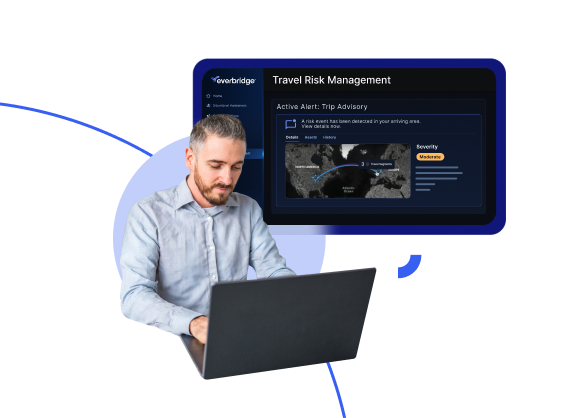
Take a more proactive approach to travel risk management
Help your team improve traveler safety, strengthen preparedness, and respond more effectively. Download the guide to learn the five essential steps to modern travel risk management, or explore how Everbridge Travel Protector helps organizations turn these insights into action.