[00:05.0]
Good. Afternoon. My name is Christy Majoris. I am the regional analyst for North America here on Everbridge's Global Insights team. Today I will be giving a brief update on the situation at El Paso Airport in Texas. You've probably seen a lot of this in the news this morning.

[00:21.0]
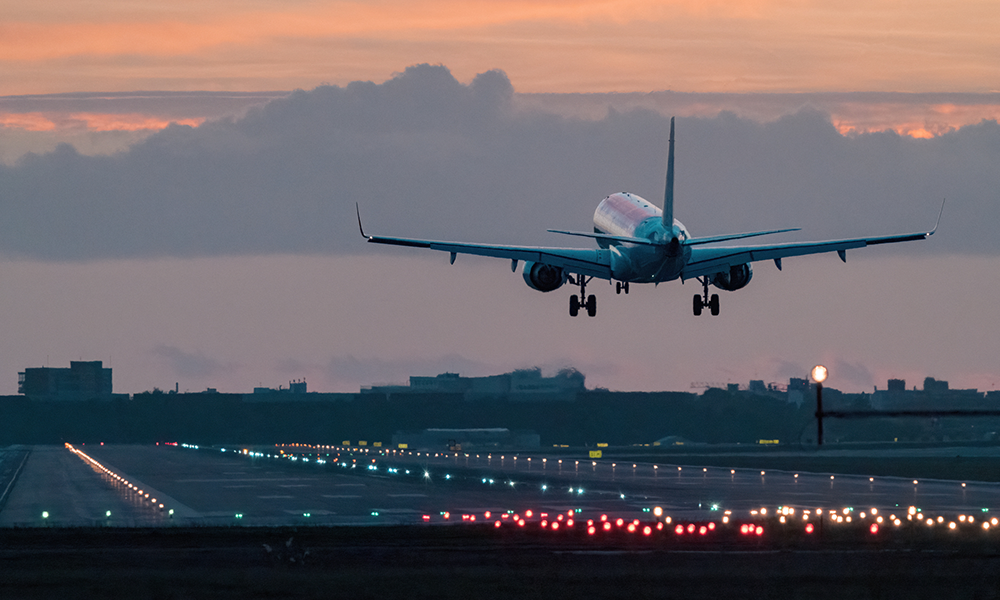
So, late last night, the FAA issued a temporary flight restriction for a 10 mile radius around the airport. They, they cited unspecified security concerns and also stated these measures would remain in place for approximately 10 days.

[00:37.2]
And this effectively halted flight operations in and out of the airport. And then a few hours later, it was lifted. And this set off a flurry of speculation as to what had caused the flight restriction in the first place. Why this extraordinary measure of 10 days for a major commercial airport?

[00:56.1]
And in the immediate aftermath, there was sort of two competing explanations. First, that the military was responding to Mexican cartel linked drones which had infringed on US Airspace near El Paso. And second, that the FAA was responding to US Military training exercises, anti drone training exercises at Fort Bliss, which is quite close to El Paso airport.

[01:24.8]
And since then we've had a little bit more clarity and it has emerged that there's a kernel of truth to both these explanations. The military is indeed conducting anti drone training exercises, in response to the proximity of Mexican cartel linked drones near the US Border.

[01:45.0]
And the FAA is also concerned at the proximity of these training exercises, to civilian airspace, and in this near El Paso airport. And it seems that there was a breakdown in communication between these two agencies with the FAA not being able to verify, from the Department of Defense, whether these exercises, which reportedly involved the use of high energy lasers, posed a threat to civilian flight operations at El Paso.

[02:23.1]
So they took the initiative and went ahead and issued that temporary flight restriction. Since then, communication has resumed between the two agencies, hence the lifting of the flight restrictions. And though the situation has largely returned to normal, there are a few things that we would highlight, going forward.

[02:43.4]
One is this continued and increasing use of drones, not just by foreign threat actors, but also commercially, and also the responding training exercises that would, be conducted by the military or other law enforcement agencies.

[03:02.9]
There is this issue of shared airspace. These are all things happening near urban centers, and these are all things happening in shared airspace. This issue of communication becomes really, really important. We would highlight this short incident as illustrative of what happens when there is a breakdown in communication between agencies and just how quickly these disruptions can cascade.

[03:34.4]
Not only did this affect commercial flight operations, but it also forced the diversion of medical evacuation flights to other airports and caused quite a bit of distress amongst, city officials in El Paso because there was no communication there either.

[03:52.4]
So how do you plan for this sort of thing? Well, I will give the same advice that I give in all of these videos, which is to plan for the worst. Have a backup plan if airspace is suddenly closed. Account for the possibility that there is a lack of communication.

[04:09.7]
So have backup plans for supply chains and for executive travel.