What is event risk management and why is it critical for large-scale events? Event risk management is the process of identifying, assessing, and responding to threats that could impact the safety, operations, or reputation of an event. It is critical for large-scale events because organizers must coordinate security, communications, crowd safety, weather monitoring, and operational continuity across complex and rapidly changing environments.
What are the essential steps to build an event risk management plan? An effective event risk management plan includes risk assessments, incident response procedures, communications planning, stakeholder coordination, evacuation and shelter protocols, situational awareness monitoring, and post-event reviews. Organizations should also define escalation workflows, assign response roles, test plans regularly, and integrate public safety and operational teams into preparedness activities.
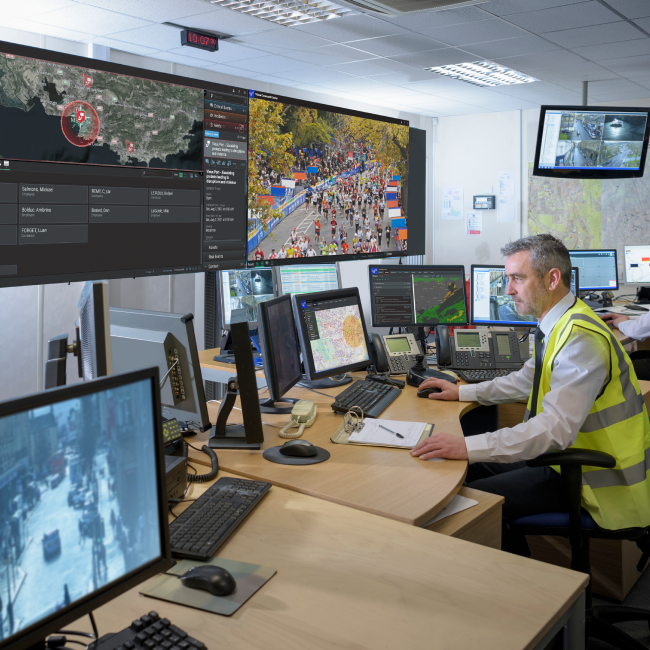
How does Everbridge integrate with city agencies, venue systems, and third-party tools (e.g., CAD, GIS, weather)? Everbridge supports integrations across CAD systems, GIS platforms, weather intelligence feeds, public safety technologies, venue management systems, collaboration tools, and enterprise applications. These integrations help unify situational awareness, automate workflows, improve coordination with city agencies and emergency responders, and accelerate decision-making during planned events or emergencies.
How quickly can Everbridge be deployed and what does implementation involve? Deployment timelines vary depending on organizational size, event complexity, integrations, and operational requirements, but Everbridge supports rapid onboarding for event-driven use cases. Implementation typically includes configuring communications workflows, incident management processes, integrations, user groups, escalation paths, and training for security, operations, and event management teams.
How does Everbridge help organizations comply with regulations and standards (e.g., Martyn’s Law/Protect Duty, ISO 22301)? Everbridge helps organizations strengthen preparedness, communications, documentation, and incident coordination practices that support operational resilience and public safety requirements associated with frameworks such as Martyn’s Law/Protect Duty and ISO 22301. Our platform supports centralized incident management, auditability, mass notification, and coordinated response across stakeholders and operational teams.
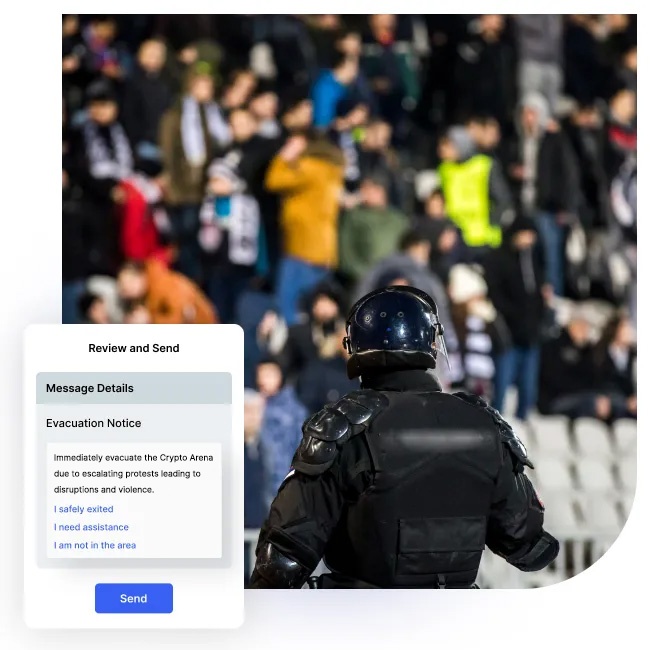
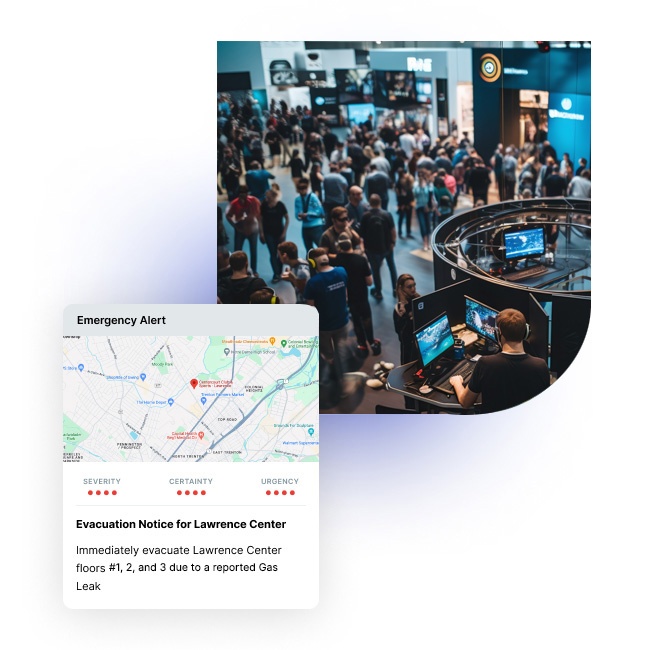
Which channels does Mass Notification support and how do you prevent alert fatigue? Everbridge Mass Notification supports SMS, voice, email, mobile push notifications, desktop alerts, collaboration platforms, digital signage, social media, and outdoor warning systems. To reduce alert fatigue, organizations can use role-based targeting, geofencing, escalation rules, and intelligent notification workflows to ensure people receive timely, relevant, and actionable alerts.
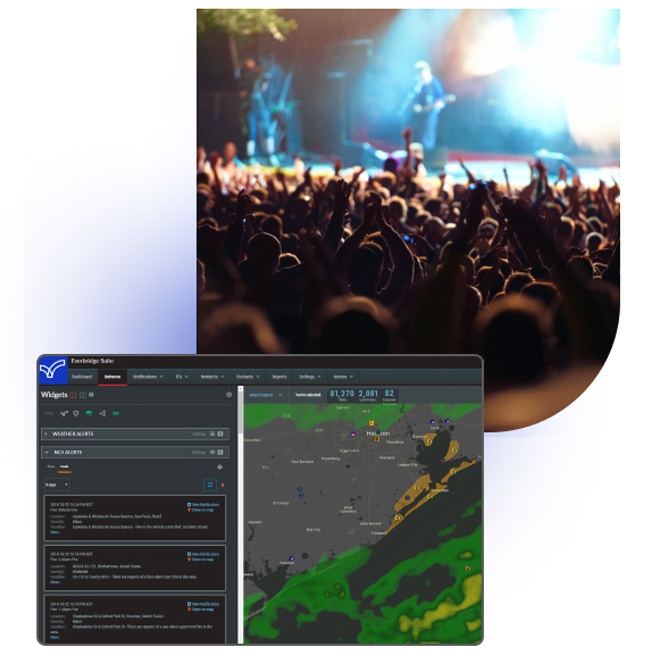
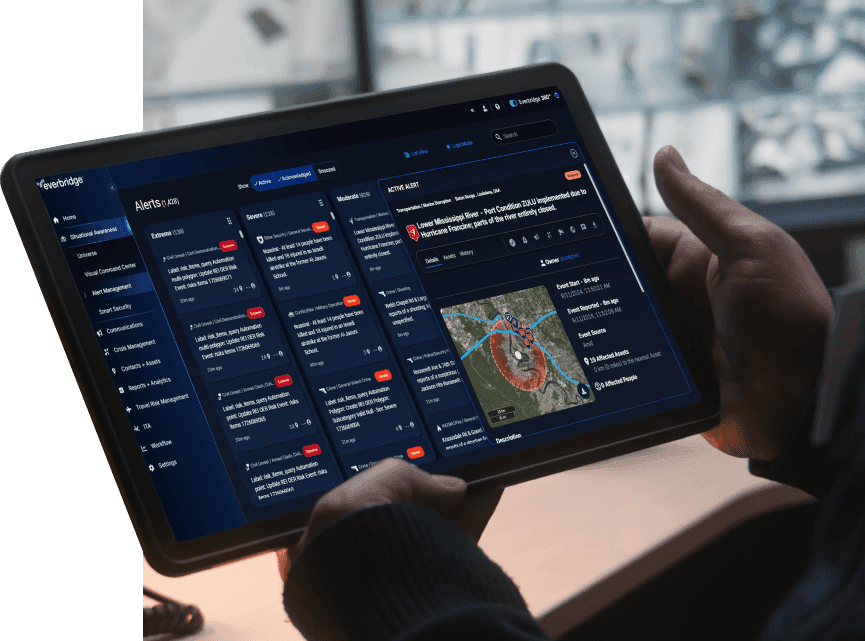
How does Everbridge’s risk intelligence reduce false positives and improve situational awareness? Everbridge combines AI-powered risk intelligence, geospatial analysis, verified threat feeds, and automated correlation to help organizations filter noise and focus on credible threats. By aggregating and validating data from multiple sources, the platform improves situational awareness, supports faster decision-making, and reduces operational disruption caused by unnecessary escalations or duplicate alerts.
How does Everbridge protect attendee and employee data privacy and security? Everbridge supports enterprise-grade security capabilities including encryption, role-based access controls, auditability, and configurable data governance policies designed to help organizations manage sensitive information responsibly. Our platform helps organizations strengthen operational resilience while supporting privacy, security, and compliance requirements associated with critical communications and incident management workflows.