Full transcript
[00:04.9]
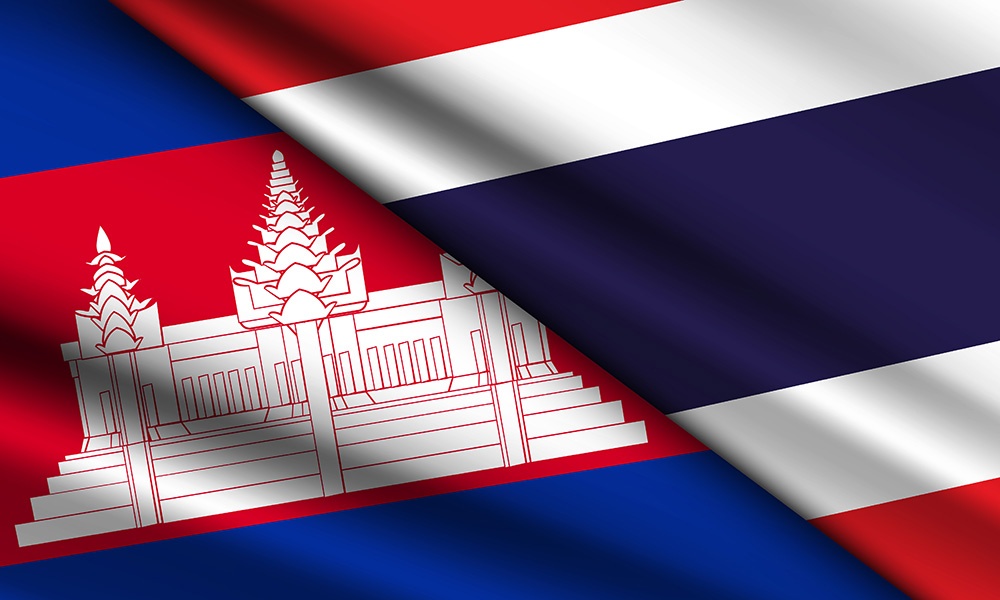
Hello, my name is Wyatt Kinney and I’m the Everbridge Global Insights team’s regional analyst for Asia Pacific. Today I’ll be providing a brief update on renewed military tensions along the Thailand and Cambodian border and what this escalation means for organizations operating in the region.
[00:21.3]
On December 8th Thailand carried out airstrikes against Cambodian military positions near the contested areas of Pre Vaheer and Tamu. And Tom, Thai authorities say the strikes were a defensive response after Cambodia deployed long range rocket systems close enough to threaten Thailand civilian areas.
[00:39.5]
Cambodia reports at least four civilian deaths, additional injuries and damage to infrastructure in the area that was impacted. Both governments initiated evacuations along the border following the strikes. This marks the most serious escalation between the two countries south since mid-2025.
[00:57.0]
Why does this matter? These strikes are part of a broader pattern of instability throughout 2025, including exchanges of fire between the two sides earlier this year in May, civilian confrontations in September along the border which included protests and a landmine blast in November that disrupted the Kuala Lumpur Peace Accord which was a US and Malaysia facilitated framework designed to help Thailand and Cambodia manage border incidents, coordinate troop movements, support joint de mining within the area.
[01:27.3]
The implementation of this peace report has been uneven as we’ve seen further escalations since it’s been implemented. At the same time the communication channels meant to prevent escalation are underdeveloped or inconsistent. Without reliable joint investigation or de escalation tactics, even routine troop movements from either side can be seen as hostile actions.
[01:51.3]
So the core of what drives the tension between the two countries, the International Court of Justice in 1962 ruled that the pre of a year of temple belongs to Cambodia. But the ruling did not clarify the surrounding territory, leaving the border ambiguous and highly dispute prone.
[02:10.8]
Domestic politics play a role as well. Thai security institutions emphasize rapid decisive responses. Cambodia faces a strong sovereignty expectation from communities living near the contested area. External actors also shape the tension.
[02:27.7]
The US and Malaysia continue to support the Kuala Lumpur process in the peace accord. Cambodia’s close relationship with China adds additional geopolitical weight to its own decision making when these disputes occur. So impacts on business operations.
[02:45.2]
For companies operating in northeastern Thailand or northwestern Cambodia, this escalation affects logistics, workforce mobility, regulatory processes and project timelines. Cross border checkpoints already seeing slower processing and heightened inspections.
[03:02.0]
Manufacturing zones reliant on cross border flows including textiles, footwear, electrical components, automotive components. It’s possible they’ll see production delays and the need for higher inventory buffers, Cambodian nationals working in Thailand may face tighter document checks, leading to temporary workforce gaps.
[03:22.1]
Infrastructure and development projects near the border, especially those requiring surveys or demining, may experience pauses or restricted access. Even administrative processes such as Cambodia’s recent e visa changes are adding uncertainty to the digital and regulatory workflows.
[03:40.5]
So, an outlook for this situation in the next 48 to 72 hours. Continued tension along the border, no doubt. Hopefully no indication of intentional escalation. But like we talked about before, you know, even a simple troop movement could spark something. The lack of joint monitoring keeps misinterpretation risks elevated.
[04:00.8]
Certainly, over the next two to six weeks, fragile standoff is most the most likely scenario. Even with occasional incidents, uneven diplomatic engagement, organizations should anticipate recurring operational variability, over the next six to 12 months going into 2026, the core issues are going to remain, which includes an unclear border, leftover mines, and weak coordination between the two governments.
[04:32.4]
Unlikely, to be resolved, be resolved quickly. Because of that, even without a full scale conflict, the border is expected to remain unstable from time to time or sporadically throughout the next year. So what should organizations do now?
[04:47.5]
Companies should ensure their business continuity plans allow rapid adjustments to routing, staffing, and facility access. Alternate transport corridors either through Laos, Vietnam, or other maritime routes may be needed if tensions increase. Non essential travel near affected districts should be limited.
[05:05.3]
Essential personnel should receive vetted route guidance and reliable communication tools. And finally, communication with staff, partners, and investors should remain factual and neutral, Given the sensitivity of the territorial issues. Thank you so much.
[05:20.6]
We’ll continue to monitor the situation closely. Have a great rest of your day.