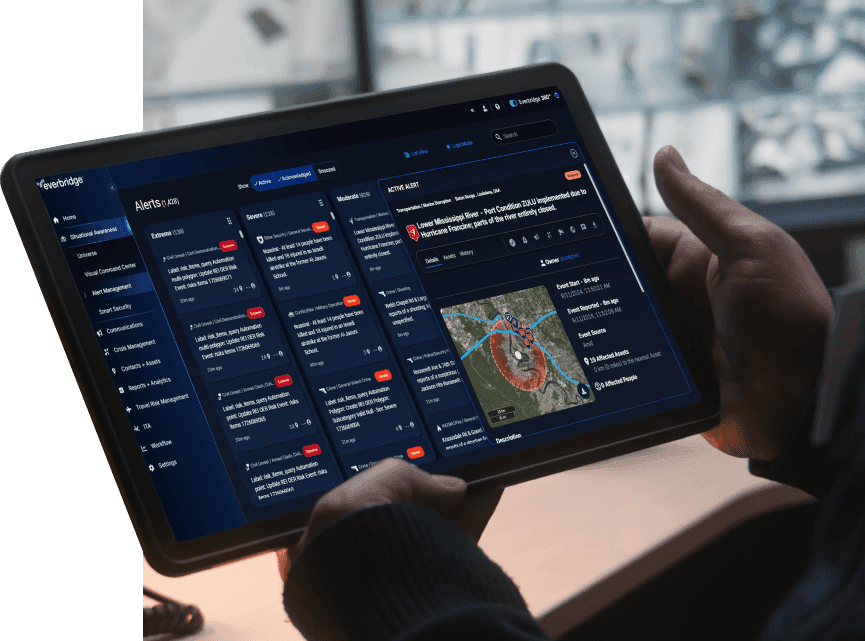

Enterprise resilience is becoming the expected standard for preparedness. Organizations must be able to respond to critical events, maintain essential operations, recover with confidence, and show evidence that their resilience programs work.
Enterprises should prepare for resilience standards that move beyond traditional business continuity plans. Regulators, boards, customers, and investors increasingly expect measurable operational resilience, documented accountability, dependency mapping, defined impact tolerances, scenario testing, third-party risk oversight, and coordinated cyber and physical response capabilities.
What enterprises should prepare for now
The clearest regulatory trend is the shift from planning to proof. Enterprises are expected to demonstrate that they understand their important services, know what could disrupt them, and can remain within acceptable levels of disruption during severe but plausible events.
Key resilience expectations include:
- Service mapping: Identify critical services, internal dependencies, technology, data, people, facilities, suppliers, and third parties that support operations.
- Impact tolerances: Define the maximum level of disruption the organization can accept before customer harm, financial loss, regulatory exposure, or reputational damage becomes unacceptable.
- Scenario exercises: Test severe but plausible incidents, including combined events that affect multiple teams, systems, suppliers, or locations at the same time.
- Board and executive accountability: Maintain clear governance, decision rights, reporting, and evidence that leaders understand resilience risks.
- Third-party and supply chain resilience: Assess whether vendors, partners, and service providers can support critical operations during disruption.
- Cyber and physical event coordination: Align cyber, business continuity, operational resilience, security, communications, and crisis management teams.
- Continuous improvement: Use exercises, incidents, audits, and lessons learned to improve plans, thresholds, workflows, and response capabilities.
These expectations appear in multiple regulatory and industry frameworks. Examples include the UK Financial Conduct Authority and Prudential Regulation Authority operational resilience rules, the European Union Digital Operational Resilience Act, the European Union Network and Information Security Directive, and heightened cyber incident disclosure and third-party risk expectations in several jurisdictions.
Requirements vary by industry, geography, and entity type. The practical direction is consistent: enterprises should be able to prove resilience before, during, and after disruption.
Why resilience expectations are increasing
In today’s high-risk environment, businesses must do more than respond effectively to disruptions. They must return to operations faster, protect stakeholders, and become more confident after each critical event.
Over the past decade, severe weather, geopolitical tensions, cyber threats, supply chain disruptions, and public safety risks have increased. Expectations have also increased among shareholders, boards, customers, employees, and regulators.
Definitions of resilience have evolved across government, regulatory, and industry sources. Confusion still exists about what resilience means and which interpretation applies to a specific organization.
Everbridge leaders have addressed this challenge in the webinar, Beyond BC: Achieving operational and enterprise resilience. The discussion covered the resilience continuum and a practical roadmap for reaching a higher level of preparedness.
The tiers of resilience
Organizations commonly move through several maturity levels as they strengthen preparedness. Each level adds discipline, coordination, and measurable evidence.
Risk management and business continuity
The most basic level of planning is risk management. It includes activities that help organizations prevent, anticipate, and avoid disruption.
Business continuity planning focuses on activities after a disruption begins. It includes procedures to restore normal operations and maintain business-critical functions.
Many organizations have practiced risk management for decades. Business continuity became more widespread after 9/11, and most mid-sized and large businesses now have at least a basic business continuity plan in place.
Operational resilience and regulatory expectations
Operational resilience raises the standard. It focuses on an organization’s ability to continue delivering important services through disruption, not just recover after the event.
Regulations issued by the UK Financial Conduct Authority and the Prudential Regulation Authority, effective March 31, 2022, set requirements for financial and investment firms to maintain a level of service to clients during an incident.
Although these requirements apply to specific industries in the UK, the underlying principles can help organizations in any sector or country. Three practices are especially important:
- Service mapping: Identify how an event in one area of the organization can affect another. Mapping dependencies helps organizations identify risks that could escalate, set thresholds, and spot gaps.
- Impact tolerances: Define the level of disruption the organization is willing to accept before action is required. Impact tolerances can use metrics such as transaction volumes, staff absences, customer wait times, reputational damage, or financial loss.
- Scenario exercises: Test whether the organization can continue to operate within its impact tolerances. Scenarios should be severe but plausible, including multiple smaller events occurring at the same time.
Enterprise resilience and organizational resilience
Enterprise resilience is the highest level of preparedness described in this article. It is also closely aligned with organizational resilience, which describes an enterprise-wide ability to anticipate, respond, recover, adapt, and improve.
Although enterprise resilience has not been defined in the same way across all regulations, it is commonly used to refer to an organization’s ability to:
- Plan, prepare, and understand risks and critical functions.
- Anticipate disruptions and potential downstream impacts.
- Respond in a coordinated, organized, and controlled manner.
- Recover, adapt, and evolve to manage future challenges more effectively.
Enterprise resilience spans all domains, including cyber and physical risks, across all geographies that support the organization. It also brings multiple disciplines together into a coordinated program.
Core disciplines include:
- Governance
- Business continuity
- Operational resilience
- Risk management
- Supply chain resilience
- Infrastructure resilience
- Training and awareness
The resilience hierarchy
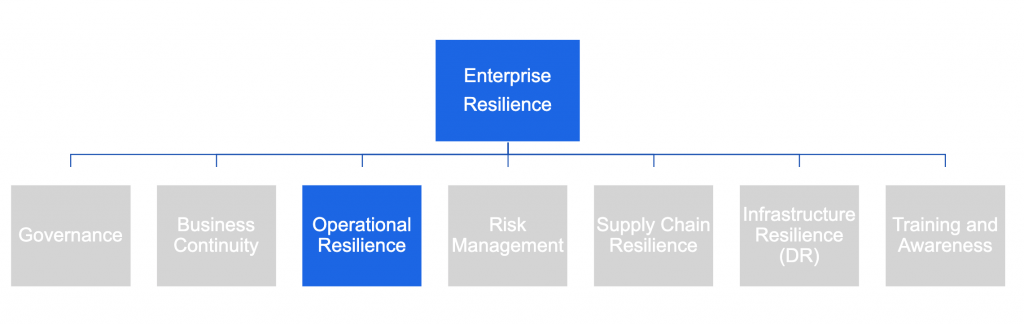
The following hierarchy shows how resilience capabilities build over time. Each level strengthens the organization’s ability to prepare, respond, recover, and improve.
Risk management helps reduce the likelihood and potential effect of disruption. Business continuity helps restore operations when disruption occurs.
Operational resilience adds the ability to continue delivering important services within defined tolerances. Enterprise resilience connects these capabilities across the organization so leaders can manage critical events with greater speed, clarity, and coordination.
How Everbridge supports the Best in Resilience journey
Resilience programs need accurate information, coordinated workflows, and fast communication. Everbridge helps organizations bring these capabilities together across teams, locations, systems, and stakeholders.
Everbridge 360 provides a unified experience for managing critical events across the enterprise. The High Velocity Critical Event Management platform, Powered by Purpose-built AI, helps organizations identify risks, assess potential impacts, automate response actions, and communicate with the right people at the right time.
The Best in Resilience journey helps organizations evaluate maturity and identify practical next steps. This approach supports continuous improvement across preparedness, response, recovery, and adaptation.
Enterprise resilience capabilities often include:
- Real-time risk intelligence to understand emerging threats.
- Automated workflows to reduce manual coordination during critical events.
- Targeted communications to reach employees, responders, leaders, customers, and partners.
- Common operating visibility to support faster decisions.
- Post-incident review data to strengthen future plans and exercises.
- Scalable processes that support multiple locations, functions, and business units.
Industry and use-case considerations
Resilience expectations vary by industry, but the operating principles are converging. Enterprises should prepare for requirements that connect governance, technology, people, suppliers, and communications.
Financial services organizations face some of the most explicit operational resilience expectations. They must identify important business services, map dependencies, define impact tolerances, and test their ability to remain within those tolerances.
Healthcare, energy, transportation, manufacturing, retail, and public sector organizations face different regulatory drivers. However, they still need to protect critical operations, manage workforce safety, support continuity, and communicate during critical events.
Global enterprises also need a consistent approach across jurisdictions. A unified resilience model helps local teams meet regional obligations while supporting enterprise-wide visibility and control.
The future of enterprise resilience
UK operational resilience regulations defined a clear, multistep process for organizations to plan, prepare, and test their resilience programs. This standard is higher than many businesses have historically followed, and it provides a useful roadmap beyond the UK financial sector.
Operational resilience is one component of enterprise resilience. The broader enterprise approach connects risk management, business continuity, operational resilience, crisis management, cyber resilience, physical security, supply chain resilience, and infrastructure resilience.
As virtual and physical threats continue to increase, boards of directors, investors, employees, customers, and regulators will likely expect more mature resilience capabilities. Organizations that prepare now can move from reactive response to proactive, measurable, and coordinated resilience.
To learn more, watch the webinar replay, Beyond BC: Achieving operational and enterprise resilience.
Need a comprehensive approach to enterprise resilience?
Everbridge helps organizations strengthen resilience with real-time risk intelligence, coordinated critical event response, and scalable communications. You can assess your current maturity, identify gaps, and build a clearer path to resilience.
Frequently asked questions
Enterprises should prepare for standards that require measurable operational resilience. Common expectations include service mapping, impact tolerances, scenario testing, third-party dependency oversight, executive accountability, cyber resilience, and documented continuous improvement.
The most relevant expectations include the UK FCA and PRA operational resilience rules, the European Union Digital Operational Resilience Act, the European Union Network and Information Security Directive, and evolving cyber incident disclosure and third-party risk requirements. Applicability depends on the organization’s industry, geography, and regulatory profile.
Business continuity focuses on restoring operations after disruption. Operational resilience focuses on continuing to deliver important services through disruption within defined impact tolerances.
An impact tolerance is the maximum level of disruption an organization is willing to accept before the effect becomes unacceptable. It can include measures such as time, transaction volume, customer harm, financial loss, service delay, staff availability, or reputational damage.
Yes. Although the UK rules apply to specific regulated firms, the underlying practices are broadly useful. Service mapping, impact tolerances, and severe but plausible scenario testing can strengthen resilience programs in many sectors and regions.
An enterprise can start by identifying its most important services, mapping dependencies, defining tolerances, testing realistic scenarios, and improving governance. A maturity assessment can help prioritize gaps and build a practical roadmap.