
Selecting a business continuity planning platform is no longer just a software decision. It is a strategic resilience decision.
Organizations are facing more operational complexity, tighter regulatory expectations, more interdependent systems, and greater pressure to recover quickly when disruption occurs. For business continuity, risk, IT disaster recovery, procurement, and executive teams, the RFP process has to do more than compare features. It needs to reveal whether a platform can help the organization understand what matters, coordinate response, prove readiness, and continuously improve.
That’s why a business continuity management RFP should focus on practical outcomes: centralized data, adaptable workflows, compliance support, dependency visibility, automation, reporting, and integration with critical event management.
Everbridge’s guide, “Top 10 questions to ask when choosing the right business continuity platform,” frames platform selection as a long-term decision that should align with an organization’s unique resilience needs, not just today’s checklist of features.
What should be included in a business continuity planning RFP?
A strong business continuity planning RFP should include questions that help you evaluate how a vendor supports the full lifecycle of continuity planning, testing, reporting, and response.
At a minimum, your RFP should assess:
- Data centralization across teams, including business continuity, disaster recovery, risk, IT, facilities, HR, and incident management
- Configurability of templates, workflows, reports, data fields, and calculations
- Regulatory compliance and audit readiness
- Pre-built resources, plan and impact assessment templates, reports, and workflows
- Dependency mapping and business impact analysis
- Reporting, dashboards, and executive visibility
- Automation for plan updates, approvals, testing, reminders, and escalations
- Integration with core data systems such as HR, Facilities, IT in addition to critical event management and real-time incident response
- Training, onboarding, implementation, support, and licensing
- Long-term scalability and vendor partnership
The goal is not to ask every possible question. The goal is to ask the questions that reveal whether the platform can mature with your organization.
Why BCP RFPs need to go beyond feature checklists
A basic feature checklist may tell you whether a vendor has plan templates, dashboards, or reporting. It will not tell you whether the platform can help your organization make better decisions during disruption, and mature your program over time.
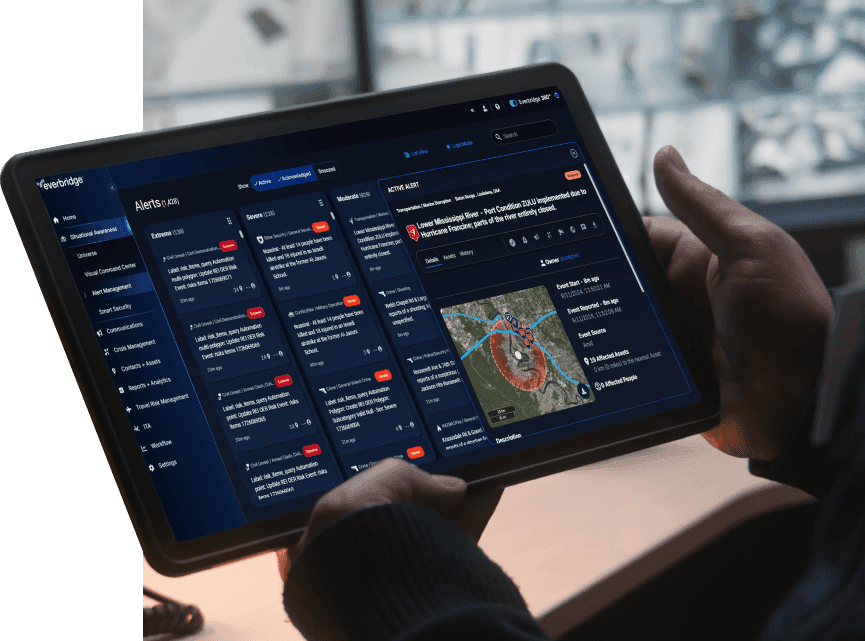
A modern business continuity platform should help teams move from static planning to operational resilience. That means it should connect planning data to real-world response. Everbridge’s BC in the Cloud and Everbridge 360 integration provides visibility to business-critical impacts instantly, informed by BIA data and asset dependencies, and enabling response teams to trigger response and recovery actions with more confidence.
The best platform is not necessarily the one with the longest feature list. It is the one that helps the organization know what is affected, understand what needs to be restored first, coordinate the right teams, identify gaps to be remediated as part of plan maintenance, and demonstrate resilience to leadership and regulators.
Download the guide: Top 10 questions to ask when choosing the right Business Continuity Platform
Choosing the right platform starts with asking the right questions. Download the guide to pressure-test vendors, align internal stakeholders, and prepare stronger RFP
Top business continuity platform RFP considerations
1. Can the platform centralize data and processes?
A business continuity platform should consolidate business continuity, disaster recovery, and risk data in one system. Centralization reduces silos, improves consistency, and gives teams a clearer view of readiness during disruption.
RFP-style questions to ask:
- Can the platform integrate with existing tools such as HR, facilities management, IT CMDB, risk management, and incident management systems?
- Does it provide standardized import templates?
- Can it segment data between business continuity and IT disaster recovery?
- Does it provide an enterprise impact view, mapping, dependencies and risks?
- Can users see upstream and downstream dependencies?
- Are dashboards available to show program health, gaps, and readiness?
2. How configurable and adaptable is the platform?
Your program will change as the organization changes. The platform should allow teams to adapt templates, workflows, calculations, reports, and data fields without requiring heavy technical support.
RFP-style questions to ask:
- Can administrators add new data tables and fields?
- Are templates, calculations, and reports modifiable?
- Can teams create new assessment templates, plan templates, and reports?
- Can templates be enhanced while retaining historical information?
- Are technical resources required to make routine configuration changes?
- Will configuration changes prevent future upgrades or enhancements?
- Do I require a developer or the vendor to apply changes to the platform?
3. Multi-channel communication
Business continuity and disaster recovery programs increasingly need to support audit readiness and regulatory evidence. Your RFP should test whether the vendor can help simplify compliance work, not add to it.
RFP-style questions to ask:
- Does the platform provide audit logging of BC and DR activities?
- Are templates and reports updated to align with regulatory requirements?
- Can workflows alert users when information needs review or updating?
- Can teams generate compliance reports for auditors and examiners?
- Does the platform support standards or requirements such as ISO 22301, FFIEC, FCA, DORA, and SOC 2 where relevant?
4. What pre-built templates and workflows are available?
Pre-built resources can accelerate deployment and improve consistency, especially for organizations moving away from spreadsheets and document-based plans.
RFP-style questions to ask:
- Are templates aligned with industry standards and best practices?
- Do templates cover business impact analysis (BIA), continuity plans, testing, risk management, and reporting?
- Can templates be configured without technical expertise?
- Can dropdowns, terminology, resource types, and workflows be modified to match internal language?
5. How does the platform handle dependencies?
Dependency mapping is one of the most important areas to test in a BCP vendor evaluation. During a disruption, teams need to understand which processes, applications, suppliers, facilities, and teams are connected.
RFP-style questions to ask:
- Can users visualize upstream and downstream dependencies?
- Can the dependency view be configured by role, function, asset, or process?
- Are orphaned records and critical dependencies easy to identify?
- Can the platform assess the impact of failures across the organization?
- Can users filter dependencies at multiple levels?
- Are dependencies considered during exercises and plan testing?
- Can the platform identify gaps in response and recovery times for applications, suppliers, or other key resources?
- Can I see the dependency map when a risk or threat is realized, to understand downstream dependencies before activating an incident?
6. What reporting is available?
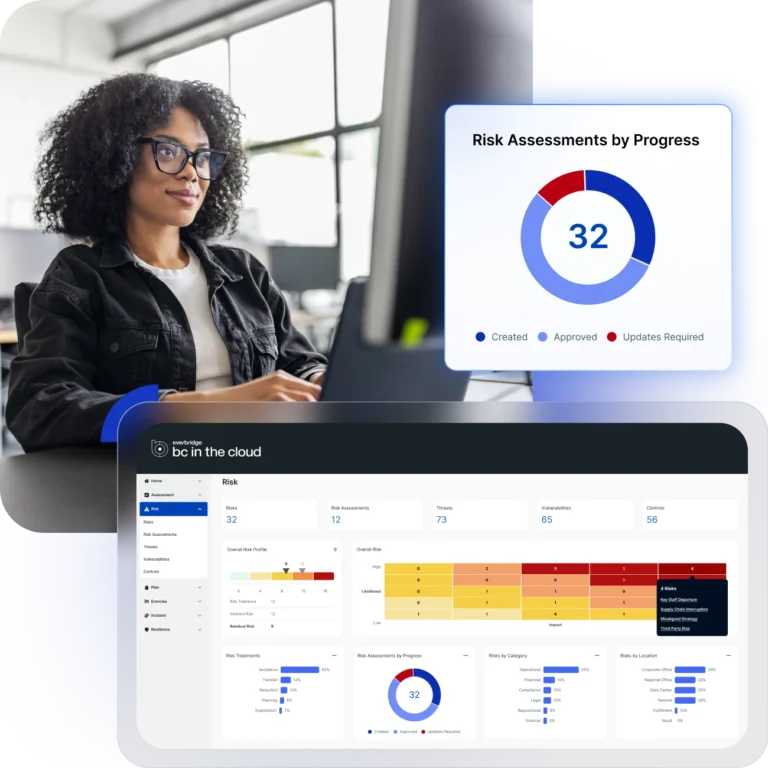
Reporting should support both operational teams and executive stakeholders. A useful platform should show plan status, readiness, gaps, testing progress, risks, and resilience metrics without excessive manual work.
RFP-style questions to ask:
- Are out-of-the-box reports available for BIA, plans, risks, and testing?
- Can users create new reports?
- Can reports be automatically sent to stakeholders?
- Are recovery time objective gaps easy to identify?
- Can reports roll up by location, business entity, executive owner, or stakeholder?
- Can non-licensed users access plan copies when needed?
7. What automation capabilities does the platform offer?
Automation reduces manual effort and makes continuity processes more consistent. It also helps enforce accountability when updates, tests, or approvals are overdue.
RFP-style questions to ask:
- Can the platform automate alerts, testing, and reporting?
- Does it include workflows for cross-departmental collaboration?
- Can workflows be modified based on organizational settings and update frequency?
- Can overdue activities be escalated to leadership?
- Can approvals, reminders, and review cycles be tracked automatically?
8. How does the platform support program visibility?
Program visibility helps leaders understand whether the organization is ready, where gaps exist, and how resilience is improving over time.
RFP-style questions to ask:
- Does the platform provide dashboards for program health and readiness?
- Can it generate reports that communicate ROI and resilience metrics?
- Can users modify reports without vendor engagement?
- Can teams track recovery progress during exercises or tests?
- Can executives see incident trends, invocation patterns, and readiness gaps?
9. What type of integration options are available for my BCP platform?
Business continuity planning incorporates information from multiple teams within an organization – from HR, Facilities, Procurement, and IT. The information collected should be consistent with your core data systems to map dependencies and understand resilience gaps within your program. Also, the BCP data becomes more valuable when it informs live response. The RFP should ask whether planning data can be used during incidents, not just stored for audit purposes.
RFP-style questions to ask:
- What data integration options are available for core data such as HR, IT Applications, etc.?
- Can I integrate and activate a notification from the BCP platform?
- Does the platform integrate planning data with critical event management?
- What BIA and plan information is available during an incident?
- Can response teams see dependencies and resources required for recovery?
- Can teams activate plan response strategies, and track recovery tasks?
- Can the platform help show which services to restore and in what order?
- Can executive teams understand why incidents were invoked and identify trends over time?
10. What training, support, and implementation resources are available?
Even a strong platform can fail if implementation, onboarding, support, and licensing are unclear. Your RFP should test whether the vendor can support long-term success.
RFP-style questions to ask:
- What onboarding and training options are included?
- Is ongoing support included or paid separately?
- Is third-party support required for configuration or program changes?
- Are self-service training resources available?
- What is the pricing model for the BCP platform?
- Do test participants, approvers, or infrequent users require licenses?
- How long does a typical implementation take?
- What does the vendor’s customer success model look like after go-live?
How mature is your business continuity program?
Use this simple maturity model to understand where your program is today and what to prioritize in your business continuity platform RFP.
| Maturity level | Program state | What it usually looks like | What to prioritize in a RFP |
|---|---|---|---|
| Level 1 — Reactive | Continuity activities are manual, siloed, or event-driven | Plans may live in documents or spreadsheets; updates are inconsistent; dependencies are hard to see | Centralized plan management, standardized templates, basic reporting, easier data imports |
| Level 2 — Coordinated | Core teams use defined processes, but visibility is limited | BC, DR, risk, facilities, and IT teams may coordinate, but data often remains fragmented | Workflow automation, role-based dashboards, integration with HR, IT, facilities, and incident management systems; audit trails |
| Level 3 — Orchestrated | Plans, dependencies, exercises, and reporting are connected | Teams can map dependencies, identify gaps, and report readiness across functions | Dependency visualization, automated testing workflows, executive reporting, compliance reporting, plan activation |
| Level 4 — Dynamically adaptive | Continuity intelligence supports real-time response and continuous improvement | BIA data, recovery priorities, risk intelligence, and incident response are connected | Integration with critical event management, real-time impact intelligence, automated response tasks, continuous improvement analytics |
What should a business continuity vendor scorecard measure?
A business continuity vendor scorecard should compare vendors against the outcomes that matter most to your organization. Rather than scoring every feature equally, group criteria into categories and weight them based on risk, regulatory exposure, operational complexity, and maturity.
Useful scorecard categories include:
- Centralized data and process management
- Configurability and adaptability
- Compliance and audit readiness
- Templates and implementation accelerators
- Dependency mapping and impact analysis
- Reporting and executive visibility
- Automation and workflow management
- Core system integration including critical event management integration
- Training, support, and implementation
- Scalability and vendor partnership
For example, a highly regulated financial services organization may weight compliance reporting, audit trails, and dependency mapping more heavily. A global enterprise with complex operations may prioritize integrations, real-time visibility, workflow automation, and incident response alignment.
How do you evaluate a business continuity platform?
The best evaluation process combines stakeholder alignment, RFP discipline, and practical validation.
Start by identifying the teams that need to use or rely on the platform, including business continuity, IT disaster recovery, risk, compliance, facilities, procurement, crisis management, and executive leadership. Then define the outcomes the platform must support.
During vendor demonstrations, ask vendors to show how the platform would handle realistic scenarios, such as:
- Updating a business impact analysis
- Mapping dependencies for a critical business service
- Identifying RTO gaps
- Preparing audit evidence
- Launching a plan review workflow
- Reporting program readiness to executives
- Activating response tasks during an incident
This shifts the evaluation from “Does the platform have this feature?” to “Can the platform support the way our organization needs to operate?”
FAQs
A business continuity management RFP should include questions about data centralization, configurability, compliance, templates, dependency mapping, reporting, automation, integrations, training, support, implementation, and scalability. It should also ask how planning data can be used during real incidents. Identify the teams in scope, types of data you would like to collect now and, in the future, (BCP, DRP, ERP, CMP, etc).
Evaluate a business continuity platform by testing whether it improves planning, visibility, response, compliance, and continuous improvement. Ask vendors to demonstrate real workflows, not just describe features.
Ask how the platform centralizes BC, DR, and risk data; how it maps dependencies; how it supports compliance; how configurable it is; what reports and dashboards are available; what automation it provides; and whether it integrates with core systems including critical event management.
A vendor scorecard should measure the capabilities that matter most to resilience outcomes: centralized data, automation, dependency mapping, reporting, compliance, integrations, support, usability, scalability, and long-term vendor fit.
Dependency mapping helps organizations understand how processes, applications, suppliers, facilities, and teams are connected. This is essential for identifying single points of failure, prioritizing recovery, and making better decisions during disruption.
Business continuity planning supports incident response when BIA data, recovery priorities, dependencies, response strategies, and plan tasks are available to response teams during an active event. This helps move plans from static documentation to operational execution.

Download the guide: Top 10 Questions to Ask When Choosing the Right Business Continuity Platform
Choosing the right platform starts with asking the right questions. Download the guide to pressure-test vendors, align internal stakeholders, and prepare stronger RFP conversations.