Coordinating crisis response across multiple sites requires both structure and agility. When incidents unfold simultaneously in different geographies, organizations must ensure that every location acts quickly, under a unified strategy, and with clear lines of authority. Effective coordination depends on transparent governance, cross-location synchronization, and technology that centralizes awareness and accelerates action. This guide explores how organizations can align leaders, systems, and data across their networks—so decisions remain consistent, resources are effectively deployed, and stakeholders stay informed, no matter where disruption strikes.
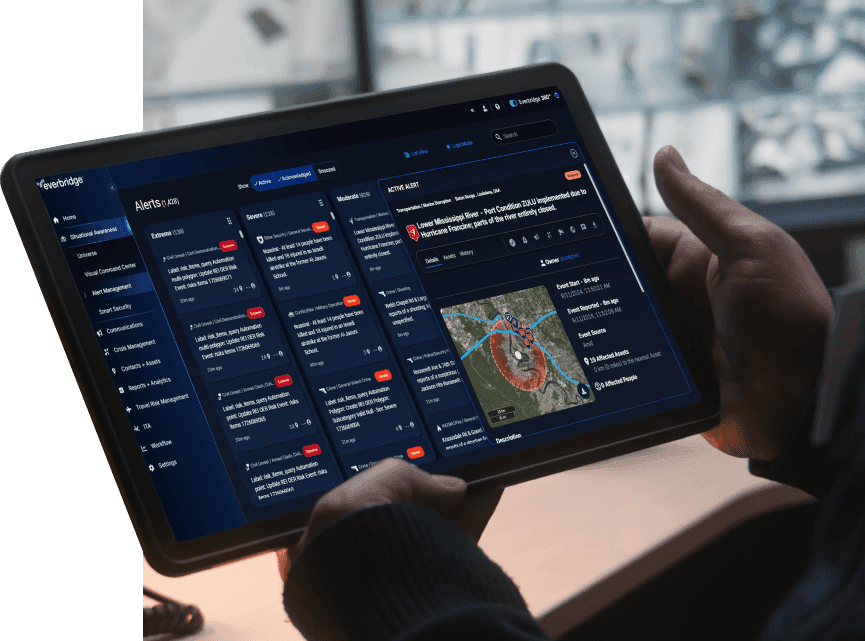
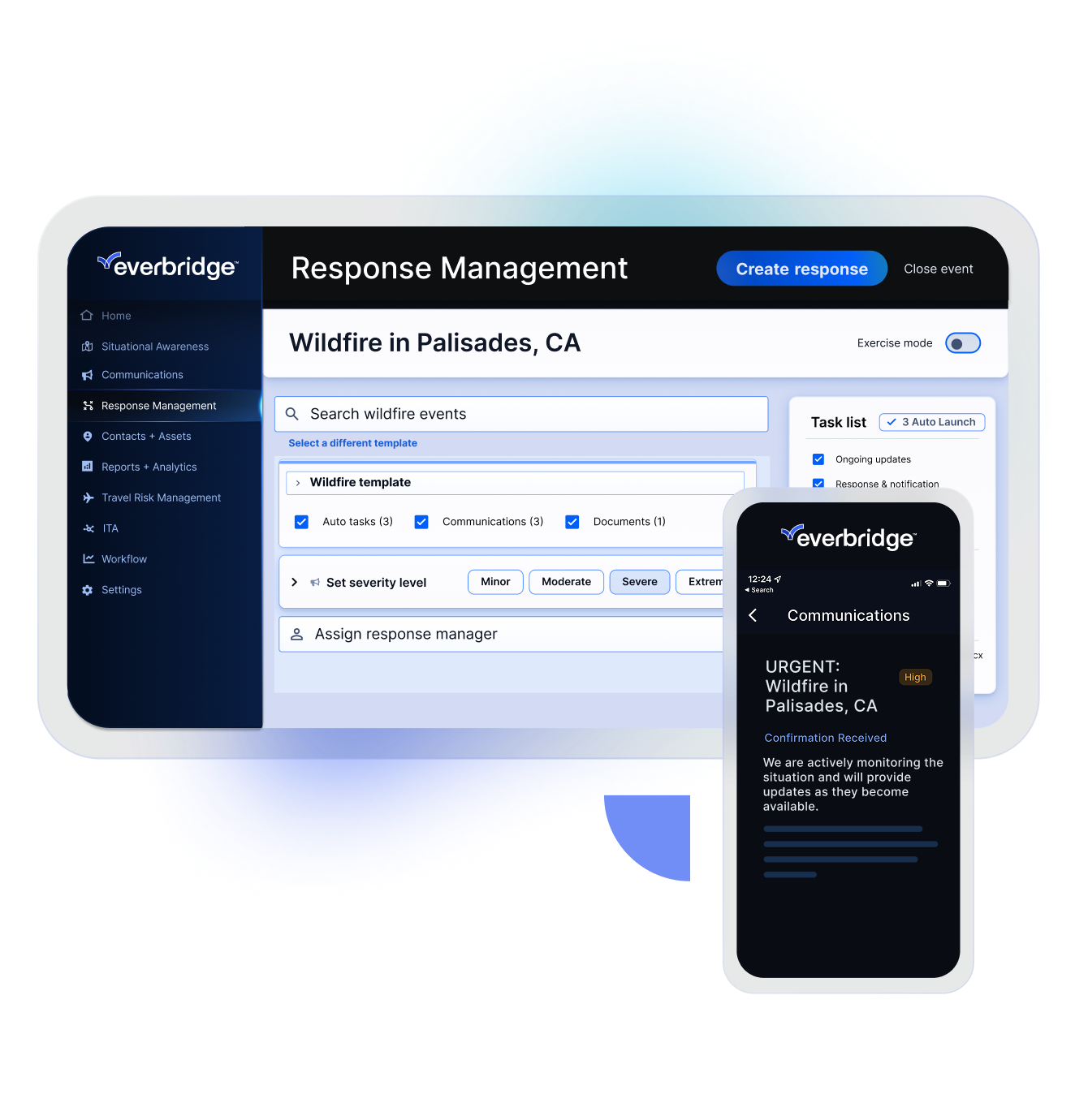
Organizations that manage incidents across multiple locations often rely on a centralized response platform to maintain visibility, coordinate actions, and ensure consistent decision-making. Everbridge Response Management helps crisis teams orchestrate response activities, automate workflows, and maintain real-time situational awareness across every affected site from a single operating environment.
Establish a scalable governance model for multi-location response
A scalable governance model is the backbone of any multi-location crisis response. It defines who has authority, how decisions flow, and how consistency is maintained as an organization grows. Without it, even well-trained teams can hesitate or act at cross purposes.
Start by appointing an incident commander to lead the overall response, supported by designated points of contact for each location. Each role should map to local jurisdictional requirements and escalation thresholds, ensuring no authority gaps exist.
A simple framework can help clarify governance models:
| Model type | Key characteristics | When to use |
|---|---|---|
| Centralized | Decisions made by a corporate command center; consistent messaging and coordination | Ideal for high-regulation, brand-sensitive operations |
| Distributed | Local sites lead initial response under unified guidelines | Best for large, geographically varied enterprises |
Regardless of structure, success hinges on documented protocols that define roles, escalation triggers, and information flow—allowing immediate, confident action when events escalate. Everbridge often supports these governance structures by providing unified visibility and command capabilities across all locations.
Define clear roles, responsibilities, and incident command structure
An incident command structure provides the hierarchy and accountability required during crisis response. Technology can play a critical role in reinforcing incident command structures. With Everbridge Response Management, organizations can assign responsibilities, track actions in real time, and provide leadership with a shared operational view—helping ensure that every location follows the same response framework while maintaining local execution flexibility. It establishes clear functions across operations, logistics, communications, and legal, preventing confusion that can delay lifesaving actions.
Assign leadership for each key function and build redundancy into critical roles. Every team member should understand their scope, backfill options, and the channels for communicating updates. Past crises have shown that unclear authority and inconsistent information can magnify damage; a tested command framework eliminates these risks.
Cross-functional representation from HR, operations, communications, and legal ensures that decisions consider both immediate safety and broader business obligations.
Map assets, risks, and legal jurisdictions for each location
Coordinated crisis management starts with full awareness of what’s at risk. Asset mapping involves cataloging all facilities, critical systems, and dependencies—from supply chain nodes to digital infrastructure.
Each location should be profiled by its risk type and relevant regulatory environment:
| Location | Key risks | Jurisdiction / authority |
|---|---|---|
| Headquarters | Cyber intrusion, reputational damage | Federal |
| Manufacturing plant | Fire, equipment failure | State/local |
| Data center | Power outage, flooding | Cross-regional utility regulations |
Mapping this data clarifies who leads local response and how public health or safety orders intersect with corporate procedures. Organizations that invest in pre-event asset and jurisdiction mapping respond faster and with fewer compliance missteps.
Implement an integrated Critical Event Management platform
An integrated Critical Event Management (CEM) platform connects all sites within a unified operational view. By detecting threats, automating alerts, and tracking tasks in real time, Everbridge 360™ and similar systems turn fragmented information into coordinated action.
Modern CEM systems combine:
- Multi-channel communication (SMS, email, voice, app)
- Automated escalation workflows
- Visual dashboards for tracking status and resources
- Offline fallback for sites without connectivity
This “single pane of glass” approach eliminates confusion, especially when multiple locations are affected simultaneously. Powered by the High Velocity Critical Event Management™ platform, Everbridge 360’s Response Management delivers built-in automation and resilience at scale—supporting faster decisions, streamlined coordination, and measurable continuity outcomes.
Develop standardized message templates and incident response playbooks
Preparedness is strengthened through standardized templates and scenario-based playbooks. Each playbook outlines who acts, what communications go out, and in what sequence.
Example scenarios may include severe weather, IT outages, or disruptions to supply chains. Templates should define required content, contact lists, and escalation paths. When built into CEM software like Everbridge, these can be activated instantly—reducing delay, human error, and inconsistent messaging.
Timely communication is a trust multiplier. Stakeholders expect the first update within an hour of an incident, followed by transparent, frequent updates that align across all channels.
Conduct regular cross-location training and joint exercises
Training transforms plans into practiced readiness. Multi-location drills should be frequent, realistic, and inclusive, stressing systems and people alike.
Best practices include:
- Conduct both tabletop and full-scale simulations
- Rotate scenarios to expose different risks
- Include external partners such as first responders or regulators
- Conduct immediate after-action reviews
Regular cross-functional exercises build confidence and uncover weaknesses before they appear in real crises, ensuring every team—from headquarters to remote sites—can act in sync when every second counts. Everbridge supports these efforts with analytics that help capture and benchmark performance improvements over time.
Maintain continuous situational awareness and monitoring
Situational awareness means perceiving and understanding events as they unfold. Maintaining it across multiple sites requires constant input from interactive dashboards, sensor feeds, and verified information sources.
Effective monitoring combines:
- Risk intelligence dashboards mapping alerts and assets
- Real-time collaboration tools to track updates and decisions
The result is a living operational picture that supports faster, better-informed decisions, enables dynamic resource shifts, and ensures consistent communications. A CEM platform like Everbridge integrates real-time threat intelligence with communication workflows to maintain this awareness continuously.
Perform after-action reviews and continuous improvement
After every crisis or exercise, organizations should capture insights that feed a cycle of continuous improvement. An after-action review (AAR) documents what worked, what failed, and what must change to strengthen response.
A practical AAR process includes:
- Gather all data and timelines from the event.
- Conduct debrief meetings with all stakeholders.
- Identify performance gaps and root causes.
- Update playbooks and training materials accordingly.
This systematic feedback loop not only refines internal readiness but also demonstrates due diligence and accountability to regulators and leadership. Everbridge systems can automate post-event reporting, helping organizations track metrics and compliance evidence efficiently.
Measure the effectiveness of crisis response efforts
Measurement turns crisis management into a measurable discipline. Core metrics reveal whether responses were timely, coordinated, and effective across all sites—fueling data-driven improvement and demonstrating ROI.
Track response time and operational efficiency metrics
Response time—the interval between detection and response initiation—is a foundational KPI. Monitor how quickly alerts are issued, tasks are assigned, and resources deployed. Comparative dashboards can highlight bottlenecks or regional discrepancies, guiding targeted training or process fixes.
Evaluate stakeholder communication effectiveness
Communication metrics verify reach and impact. Track message delivery and acknowledgment rates, and engagement. Evaluate how soon crisis communications were issued and how consistently updates were delivered.
Assess training completion and preparedness levels
Preparedness is quantifiable. Track participation rates across scheduled drills, skill assessments, and certifications. Analyzing variance between planned and actual exercises ensures equity of readiness across all sites and functions.
Analyze post-crisis recovery and lessons learned
Recovery metrics—such as time to restore critical operations—illustrate resilience ROI. Combine quantitative data (downtime duration) with qualitative feedback (employee or stakeholder confidence) to build a holistic picture of organizational recovery.
FAQs
Assemble a cross-functional team with leaders from operations, HR, IT, legal, and communications. Use a CEM platform like Everbridge 360 to maintain clear coordination and decision flow across all sites.
Standardize communication protocols and automate updates within a centralized platform. Everbridge helps ensure time zone differences never delay situational awareness or operational alignment.
Leverage real-time threat intelligence and automated workflows to maintain continuity and prioritize recovery of critical functions. Everbridge supports redundancy and remote coordination to keep people safe and operations running.
Combine tabletop simulations with full-scale drills and include external stakeholders for realistic coordination. Everbridge analytics make it easier to capture insights and improve with every exercise.
Use integrated situational data to prioritize based on life safety and operational stability. A CEM platform like Everbridge 360 provides unified intelligence to direct resources where the need is greatest.
By establishing a consistent governance framework, leveraging integrated technology, and measuring outcomes across every site, organizations can turn multi-location crisis response into a coordinated, data-driven capability. The result is faster recovery, stronger compliance, and enduring stakeholder trust—hallmarks of operational maturity and excellence in resilience.