
The best hurricane preparedness practices for businesses and employees include: understanding local storm surge, flood, and wind risks; creating evacuation and shelter-in-place plans; maintaining emergency supplies; protecting facilities and critical records; keeping employee contact information current; using emergency notification systems; and planning for post-storm recovery before severe weather arrives.
For organizations, hurricane readiness should be a coordinated business continuity effort. A documented plan, clear roles, real-time communication, and proactive employee safety actions help businesses safeguard employees and assets, minimize disruptions, and navigate critical events confidently.
Why hurricane preparedness matters for businesses and employees
Hurricanes are powerful natural disasters that can affect coastal and inland communities. While many people first think of wind, water hazards are historically the deadliest hurricane threat.
The three major hurricane hazards are:
- Storm surge: Water pushed onshore by storm winds, causing an unusual and rapid rise in water level.
- Heavy rainfall: Rainfall that can be measured in feet during severe storms and can cause dangerous inland flooding.
- Intense winds: Winds that can damage buildings, move vehicles, and turn unsecured objects into hazards.
According to guidance from the National Oceanic and Atmospheric Administration (NOAA), larger and stronger storms typically produce the greatest storm surge flooding. Storm surge during high tide can cause the worst damage, forcing up to 20 feet of water onshore during the height of a storm.
Heavy rainfall creates another major risk. The weather service and emergency management experts remind individuals to avoid floodwaters and compromised bridges. The guidance is simple: “Turn Around Don’t Drown.” Flooding downstream can cause fatalities after a hurricane has moved through an area.
Fierce winds also contribute to hurricane hazards. Hurricane categories are based solely on wind speed. A Category 5 storm has winds exceeding 157 miles per hour. Hurricane Andrew, which struck Miami in 1992, had a recorded wind gust of 164 miles per hour.
Core hurricane preparedness best practices
Businesses and employees should prepare before hurricane season and revisit plans when a storm is forecast. The goal is to know earlier, respond faster, and improve continuously.
Assess hurricane risk
Every preparedness plan should begin with risk analysis. Organizations and employees need to understand the hazards that apply to their locations.
Key actions include:
- Identify whether homes, offices, warehouses, or worksites are in an evacuation zone.
- Determine whether storm surge is a risk.
- Evaluate inland flooding exposure.
- Review wind exposure for buildings, equipment, and outdoor assets.
- Identify employees who may need additional support before, during, or after the storm.
For businesses, risk analysis should include facilities, employees, supply chains, technology systems, transportation routes, and customer commitments.
Create an evacuation plan
Organizations and employees should understand evacuation routes before severe weather is forecast. A strong evacuation plan includes multiple routes, safe destinations, and clear triggers for action.
Best practices include:
- Know primary and alternate evacuation routes.
- Follow official evacuation orders when issued.
- Avoid waiting until routes are congested or conditions worsen.
- Choose destinations that provide protection from storm surge, flooding, and wind.
- Communicate expectations clearly to employees, contractors, and essential personnel.
Many people evacuated New Orleans during Hurricane Katrina by driving west on Interstate 10. However, evacuation does not always require traveling hundreds of miles. The priority is reaching a location that is safe from hurricane hazards.
Build emergency supply kits
Employees and business locations should have at least three days of supplies available. Emergency responders and municipalities may be focused on restoration and recovery operations, so individuals and organizations should be prepared to be self-sufficient for a period of time.
Recommended supplies include:
- Fresh water.
- Non-perishable food.
- Seven days of medication.
- Pet supplies.
- Flashlights and batteries.
- First aid supplies.
- Cash, since point-of-sale devices may be without power.
- Solar-powered or backup USB chargers.
- Printed contact lists and essential documents.
If sheltering in place, individuals can fill a bathtub with water before the storm so that water is available for flushing toilets if service is interrupted.
Review insurance and flood coverage
Organizations and employees should review insurance coverage before hurricane season. Many policies have waiting periods before coverage takes effect.
Recommended actions include:
- Confirm property coverage limits.
- Review business interruption coverage.
- Document assets with photos or video.
- Understand deductibles and exclusions.
- Review flood insurance needs through the National Flood Insurance Program when applicable.
Businesses operating near the coast or in flood-prone areas should confirm coverage early, not when a storm is already approaching.
Protect facilities, equipment, and records
Physical preparation can reduce damage and support faster recovery. Organizations should secure buildings, protect records, and prepare critical equipment before severe weather arrives.
Practical steps include:
- Purchase plywood or aluminum panels to board windows and doors.
- Secure loose outdoor items and furniture.
- Move files from bottom drawers in flood-prone areas.
- Keep tarps available to cover important equipment and supplies.
- Protect backup power, fuel, and communications equipment.
- Move vehicles and mobile assets away from flood-prone areas when possible.
Facilities teams should document shutdown procedures for utilities, machinery, and other operational systems.
Support employees, neighbors, and pets
Hurricane preparedness should account for personal safety and practical needs. Employees are more likely to respond effectively when they know their families, pets, and essential needs are considered.
Important steps include:
- Encourage employees to prepare household plans.
- Check on neighbors, especially older adults and those who may need assistance.
- Include pets in evacuation and sheltering plans.
- Identify pet-friendly destinations before a storm.
- Share trusted local emergency resources with employees.
One lesson from Hurricane Katrina was the need for better pet planning. Many pets were left on their own because emergency plans did not adequately account for them.
Emergency notification systems for hurricane preparedness
During a hurricane, communication can determine how quickly people take the right action. Businesses should use emergency notification systems to send clear, timely messages across multiple channels.
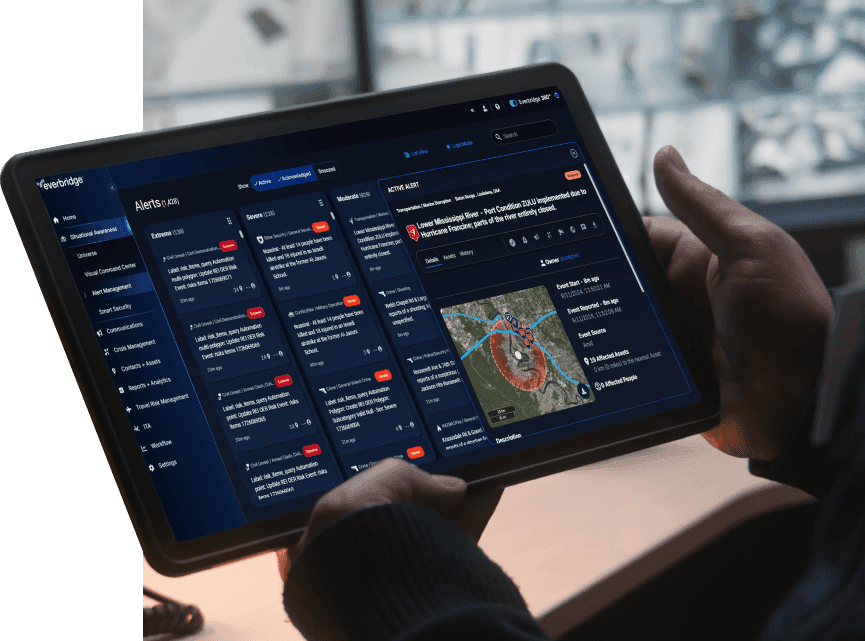
Everbridge 360 empowers organizations to manage critical events with real-time threat intelligence, automated communications, and coordinated response workflows. Everbridge 360 helps teams know earlier, respond faster, and improve continuously when severe weather threatens employees, facilities, and operations.
What business hurricane communications should include
A strong hurricane communication plan should include:
- Current employee contact information.
- Multiple communication channels, such as text, email, voice, and mobile app alerts.
- Pre-approved message templates for evacuation, shelter-in-place, closures, and reopening.
- Escalation paths for leaders, safety teams, and facility managers.
- Two-way messaging to confirm employee safety.
- Location-based alerts for affected employees and worksites.
Emergency communication should be proactive, concise, and actionable. Employees need to know what is happening, what they should do, where to get updates, and when the next message will arrive.
Disaster recovery solutions and business continuity planning
A hurricane preparedness plan should be formal, documented, and easy to activate. A homeowner can write a simple plan on paper or in a digital document. A business should maintain a formal hurricane preparedness plan within business continuity management software.
A complete business plan should address:
- Personnel roles and responsibilities.
- Critical tasks before, during, and after the storm.
- Required resources and vendors.
- Facility shutdown and reopening procedures.
- Technology recovery requirements.
- Recovery time objectives.
- Employee safety and accountability.
- Stakeholder communication.
Everbridge supports organizational resilience by helping businesses coordinate people, processes, assets, and communications in one scalable approach. With Purpose-built AI and real-time data, organizations can reduce manual effort, prioritize action, and manage large-scale events with greater confidence.
What to do when a hurricane is approaching
Businesses and employees typically have a three-to-five-day window once a hurricane threat is recognized. During that time, teams should monitor the storm track and projections from trusted experts.
The cone of uncertainty estimates the storm center’s possible track. The storm can follow any route within that cone, and hazards can extend well beyond the center line.
Before conditions deteriorate
When a storm is forecast, organizations should:
- Activate the hurricane preparedness plan.
- Monitor NOAA, the National Hurricane Center, and local emergency management updates.
- Confirm employee contact information.
- Send preparedness reminders to employees.
- Close or secure facilities when needed.
- Move essential equipment and records out of flood-prone areas.
- Confirm backup power and communications readiness.
- Follow evacuation orders when issued.
Employees should be ready to leave if their area has not yet been ordered to evacuate but conditions may change.
During the hurricane
During the storm, personal safety is the priority. Employees should follow official guidance and avoid unnecessary travel.
Recommended actions include:
- Shelter in an interior portion of the building.
- Stay as far away as possible from windows and doors.
- Remember that winds can exceed 100 miles per hour.
- Do not go outside during the eye of the storm.
- Stay out of flooded areas.
- Avoid walking or driving through floodwaters.
The eye of the storm may bring a brief quiet period, but dangerous conditions can return suddenly.
Floodwater is also a significant hazard. Six inches of moving water can knock an adult off their feet, and floodwaters can contain contaminants and carry disease.
Post-hurricane recovery steps
A hurricane passing does not mean the critical event is over. Recovery requires caution, coordination, and clear communication.
Prioritize employee safety
After the storm, organizations should account for employees before restarting operations. Two-way communication can help confirm who is safe, who needs help, and which locations remain affected.
Recovery communications should address:
- Employee safety checks.
- Facility status.
- Road closures and travel restrictions.
- Return-to-work timing.
- Remote work expectations.
- Available employee support resources.
Use generators safely
Generators can support recovery, but they must be used correctly. Safety procedures should be shared before and after the storm.
Generator safety practices include:
- Never run a generator inside a house or enclosed space.
- Avoid carbon monoxide exposure.
- Use a transfer switch that separates generator power from the main panel.
- Do not energize power lines connected to the building.
- Protect utility line workers by following electrical safety requirements.
Reduce cleanup injuries
Cleanup can create additional risks after a hurricane. Overexertion, power tools, and unstable conditions can cause injuries.
Recommended precautions include:
- Hydrate frequently.
- Take breaks.
- Know personal limits.
- Seek assistance when unfamiliar with power tools.
- Use chainsaws and cleanup tools only with proper training.
- Avoid driving across flooded roads.
Road flooding can continue after the storm. Employees and response teams should avoid flooded routes until officials confirm they are safe.
Hurricane preparedness checklist for businesses
Use this checklist to strengthen hurricane readiness across people, facilities, and operations:
- Assess risk: Identify evacuation zones, flood exposure, wind exposure, and critical facility vulnerabilities.
- Document the plan: Create a formal hurricane preparedness plan with roles, resources, tasks, and recovery times.
- Prepare employees: Share evacuation guidance, household preparedness tips, and trusted emergency resources.
- Maintain supplies: Keep water, food, medicine, cash, chargers, first aid supplies, and essential documents available.
- Protect facilities: Board windows, secure outdoor assets, move records, and protect critical equipment.
- Review insurance: Confirm property, flood, and business interruption coverage before hurricane season.
- Set communications: Use emergency notification systems with multi-channel alerts and two-way check-ins.
- Monitor threats: Follow NOAA, the National Hurricane Center, and local emergency management guidance.
- Respond early: Follow evacuation orders, close facilities when needed, and communicate decisions clearly.
- Recover carefully: Confirm employee safety, inspect facilities, avoid flooded roads, and reopen in phases.
How Everbridge helps organizations prepare for hurricanes
Everbridge helps organizations safeguard employees and assets before, during, and after hurricanes and other critical events. The platform supports proactive planning, real-time awareness, automated communications, and coordinated response.
Key capabilities include:
- Real-time threat intelligence for severe weather monitoring.
- Automated emergency notifications across multiple channels.
- Location-based alerts for affected employees and facilities.
- Two-way messaging to confirm employee safety.
- Business continuity workflows for response and recovery.
- Scalable coordination for large-scale events and distributed teams.
With Everbridge, organizations can minimize disruptions and strengthen organizational resilience through a measurable, repeatable approach to hurricane preparedness.
Take time now to be prepared and know your risk
Hurricanes can disrupt businesses, employees, families, and communities. A clear plan, reliable communication, and a coordinated recovery process help organizations strengthen resilience before severe weather arrives.
Frequently asked questions
A business hurricane preparedness plan should include risk analysis, evacuation procedures, shelter-in-place guidance, employee communications, facility protection steps, critical task assignments, vendor contacts, insurance information, and recovery timelines.
Employers can help by sharing official guidance, confirming contact information, encouraging household emergency kits, providing evacuation and closure updates, supporting remote work when possible, and using two-way communication to confirm employee safety.
A business should activate its hurricane plan when a credible storm threat is identified, often three to five days before potential impact. Leaders should monitor official forecasts, communicate early, and be ready to adjust operations as conditions change.
The most important best practice is to send timely, clear, and actionable messages through multiple channels. Employees should know what is happening, what action to take, where to get updates, and how to confirm their safety.
An emergency notification system helps organizations send alerts, reach employees through multiple channels, target messages by location, and collect safety confirmations. This improves situational awareness and supports faster, more coordinated response.