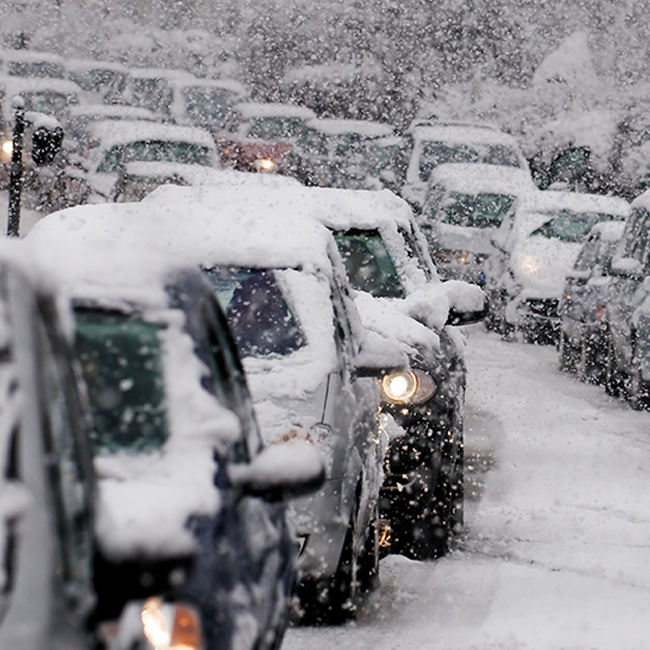
Across the United States this week, a historic winter storm has laid bare the real and growing vulnerabilities in how power systems and communities cope with extreme weather. This historic winter storm has cloaked much of the United States, impacting hundreds of millions of people across dozens of states in heavy snow, ice, and bone-chilling cold, resulting in widespread power outages, travel chaos, and loss of life.
In Tennessee alone, utilities reported hundreds of thousands of customers without power, and across multiple states, outages have at times exceeded a million customers at the storm’s peak.
The human toll is equally sobering: multiple fatalities have been linked to the storm’s direct and indirect effects, from hypothermia and traffic incidents to exposure during outages and hazardous conditions.
This is not an isolated event. It is emblematic of a changing climate reality, one where weather disruptions are larger, longer, and more complex than many traditional emergency and grid systems were designed to handle.
The growing gap between risk and readiness
Power companies have made substantial investments in resilience: advanced grid equipment, predictive weather intelligence, outage management systems, and customer notification platforms. Yet this week made one thing clear: the challenge is no longer the absence of data or tools, but the difficulty of coordinating them across the full emergency lifecycle.
During a multi-day, multi-state event, utilities must simultaneously manage:
- Rapidly evolving weather conditions, including snow, ice, and sustained sub-freezing temperatures
- Outage response and restoration across multiple service territories
- Communications with customers, regulators, first responders, and community partners
- Field crew safety, staging, and resource prioritization under hazardous conditions
These pressures don’t expose a lack of effort or expertise. They expose a structural gap: the absence of an integrated operating framework that turns intelligence into coordinated action in real time.
Extreme weather demands a new operational model
Large-scale weather events rarely follow a clean arc. They unfold in phases: preparation, impact, escalation, restoration, and recovery, often overlapping and evolving over days. Each phase introduces decisions that matter deeply in the moment:
- Which circuits should be prioritized first: critical care facilities or dense residential areas?
- When do worsening conditions warrant a crew safety stand-down versus continued restoration?
- How frequently should regulators and government partners be briefed during prolonged outages?
What’s required isn’t just better forecasting or another dashboard. It’s shared situational awareness that aligns data, decisions, and execution across the enterprise- and with external stakeholders – so those decisions can be made quickly, consistently, and confidently.
That level of coordination requires more than disconnected tools. It requires an integrated operating layer for emergency response.
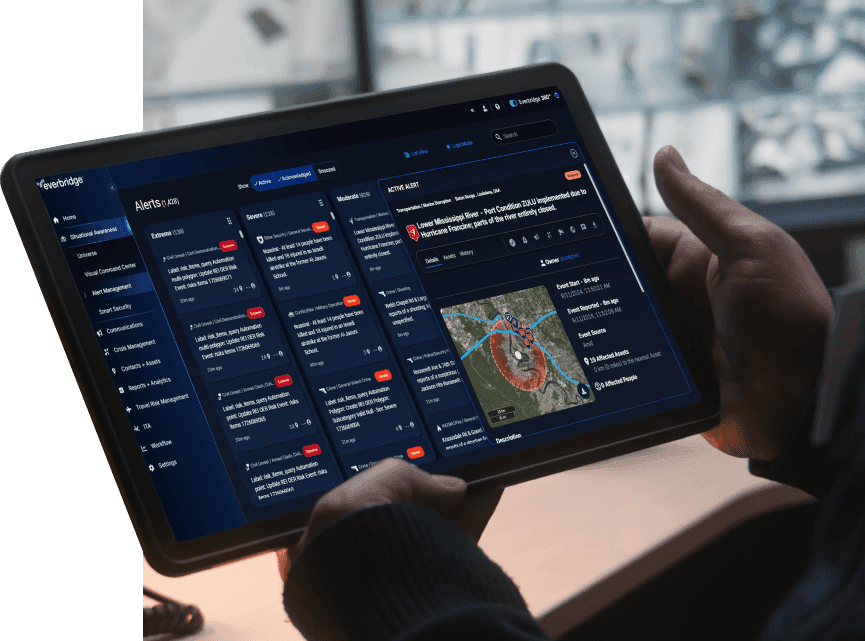
That’s the thinking behind the new Emergency Event Management (EEM) solution from Everbridge, Ekatra, and ServiceNow.
From fragmentation to unified emergency response
The EEM solution unifies three critical emergency response dimensions:
- Real-time situational intelligence and mass communications (Everbridge)
- Regulated, role-based emergency playbooks that embed best practices and compliance (Ekatra)
- Orchestrated workflow automation and execution tracking (ServiceNow)
When these capabilities work together, organizations gain one shared operating picture and a single, coordinated emergency response engine, critical when every minute has operational and human impact.
What changes when it matters most
In a storm that stretches from Texas to Maine:
- A unified operational command means leaders are working from the same real-time view of weather, outages, and restoration progress.
- Automated workflow orchestration reduces the burden of manual coordination. Crews are dispatched more quickly, status updates propagate faster, and critical escalations occur without delay.
- Coordinated public communications ensure customers and community partners receive consistent, trustworthy information, reducing confusion and anxiety during outages and recovery.
- Standardized emergency playbooks guide actions across teams and geographies, ensuring measured and compliant responses even as conditions shift.
This combination turns a fragmented reaction into an orchestrated response.
Serving communities when they need it most
Utility emergency response isn’t just about restoring, it’s about protecting lives and livelihoods.
- Restoring power quickly and safely prevents cascading impacts on hospitals, water systems, schools, and vulnerable populations.
- Clear, coordinated communication builds trust and reduces secondary crises, such as carbon monoxide exposure from unsafe heating attempts.
- A shared response framework strengthens partnerships between utilities, government emergency managers, and first responders.
The Everbridge + Ekatra + ServiceNow EEM solution doesn’t eliminate the weather. But it changes how organizations perform under pressure from reactive islands of data into unified, confident action.
In an era where extreme weather is increasingly the norm, resilience is no longer an aspirational goal but a strategic imperative. With connected emergency operations, utility leaders can not only weather the storm but also show their communities they are prepared for whatever comes next.
See unified emergency response in action at DTECH
As utilities across the country respond to extreme weather events like this week’s winter storm, the need for connected, real-time emergency operations has never been clearer.
If you’ll be at DTECH in San Diego next week, we invite you to stop by the ServiceNow booth UL347 to learn more about how the Everbridge + Ekatra + ServiceNow Emergency Event Management (EEM) solution is helping utilities prepare for, respond to, and recover from major events with greater speed, coordination, and confidence.
See firsthand how unified situational awareness, guided playbooks, and automated workflows can transform emergency response when it matters most and how your organization can be better prepared for whatever comes next.