
Most organizations have become remarkably good at responding to critical events. They’ve invested in technology, built response plans, trained crisis teams, and established clear processes. When severe circumstances arise, they know how to mobilize people, protect operations, and keep the business moving. Yet one critical gap remains. The response may begin within minutes, but the funding needed to enact that response is often unbudgeted or arrives weeks to months after cost was incurred. This uncertainty can delay response as budgets are scoured for useable balances and expenses go through approval processes not designed to move at speed. There may be insurance recovery coming, but during the emergency it’s not clear how much or when that funding may arrive. This is the resilience gap clearly seen on many balance sheets and in chaotic email threads. Organizations are prepared to respond, but funding for that response is unclear. As climate-related disruptions become more frequent and more costly, a solid resilience strategy should extend beyond responding well and ensure the capital to effect that response is available when it’s needed, not after the crisis has passed.
It’s a structural problem
In a post-covid world, resilience teams and plans have been battle tested. Emergency Operations Centers stand up quickly. Employees are notified. Vendors are engaged. Alternate sites are activated. Leaders make decisions with speed and confidence. Timing the financial component to response remains a problem. When it’s unclear how well funded and how quickly funded the response will be, the operation team moves with friction. Trying to balance their duty of care to their workforce and making sure the finances exist to carry out their work without creating cascading budgeting issues for their finance team. Operational teams are measured on the response. Finance is measured on recovery. Those two timelines rarely align. By the time finance begins evaluating losses, operations have already committed significant resources to protecting people and maintaining business continuity. That disconnect creates a financial blind spot. Organizations spend immediately because they have no choice. fall outside the bounds of typical coverage. The result is a growing category of response costs that accumulate across every major event.
Traditional insurance still plays an important role
Commercial insurance remains essential, but it was designed primarily to restore damaged assets, not to finance operational response. When a major weather event occurs, organizations incur costs long before property damage is fully understood. Overtime cost, emergency staffing, relocation, transportation, communications, continuity planning, and supplier coordination all begin immediately. Traditional claims processes weren’t designed to fund those activities in real time. Parametric insurance approaches the problem differently. Instead of paying after documented losses are assessed, coverage is triggered when a predefined event that will result in physical or financial loss occurs. Once the trigger is met, payment is released without the traditional adjustment process. In other words, coverage is triggered by the event, not the claims process.
Financing resilience
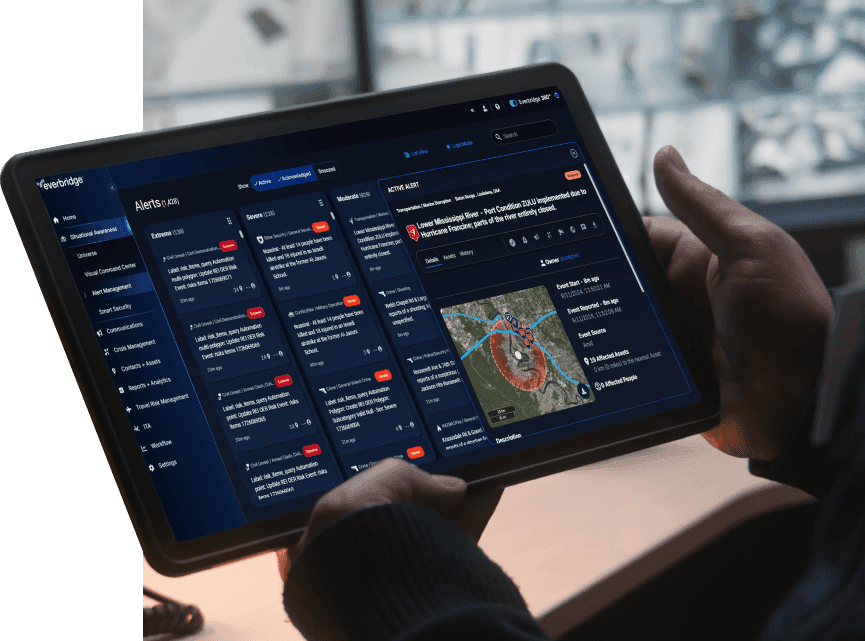
This is where Everbridge Insurance Services (EIS) changes the conversation. Rather than viewing insurance as something that happens after a crisis, EIS helps organizations who clearly understand the cost associated with recovery, purchase an insurance policy that is tailor-made for that expected loss. Fast access to capital means emergency teams can make decisions based on what’s needed, not on which budget can absorb the immediate expense. Organizations can focus on activating vendors, mobilizing staff, protecting operations, and maintaining continuity without waking up the finance team and getting expense approvals from the C-suite. Financial resilience becomes part of operational resilience. What makes this approach unique is that Everbridge doesn’t stop at the insurance policy. Parametric insurance workflows are embedded within the Everbridge Critical Event Management platform, connecting real-time risk intelligence, coordinated response, and financial protection into a single resilience strategy. The same event that activates emergency response can also initiate the financial protection needed to support it. Instead of treating operational response and financial recovery as separate disciplines, Everbridge helps bring them together.
The next evolution of resilience
For years, Everbridge resilience programs have focused on helping organizations know earlier, respond faster, and improve continuously. The next step of evolution is to ensure the response is fully financed. As the Risk Zone continues to expand, organizations need more than visibility into emerging threats. They need confidence that when critical events occur, the financial resources required to respond will be available immediately, not after the event has already reshaped the business. The question for leadership moves beyond whether your organization has drafted a comprehensive suite of response plans to answer the question of whether the necessary funding to enact those plans will be available when it’s needed. Organizations that treat financial resilience as critical enabler of operational resilience will recover faster, make better decisions under pressure, and emerge on solid footing from every critical event. Because resilience is about having the resources to act when every minute matters.
Ready to close the financial resilience gap?
Every organization’s risk profile is different. That’s why Everbridge Insurance Services works with you to evaluate your operational exposures, identify where traditional insurance leaves financial gaps, and design a parametric insurance solution tailored to your business. Whether you’re looking to complement your existing insurance program or explore new ways to finance response and recovery, our specialists can help you understand where parametric insurance can deliver the greatest value. Schedule a consultation with an Everbridge Insurance Services expert to discuss your organization’s resilience strategy and discover how you can proactively finance the cost of response before the next critical event occurs.
Schedule a consultation with an Everbridge Insurance Services expert to discuss your organization’s resilience strategy and discover how you can proactively finance the cost of response before the next critical event occurs.