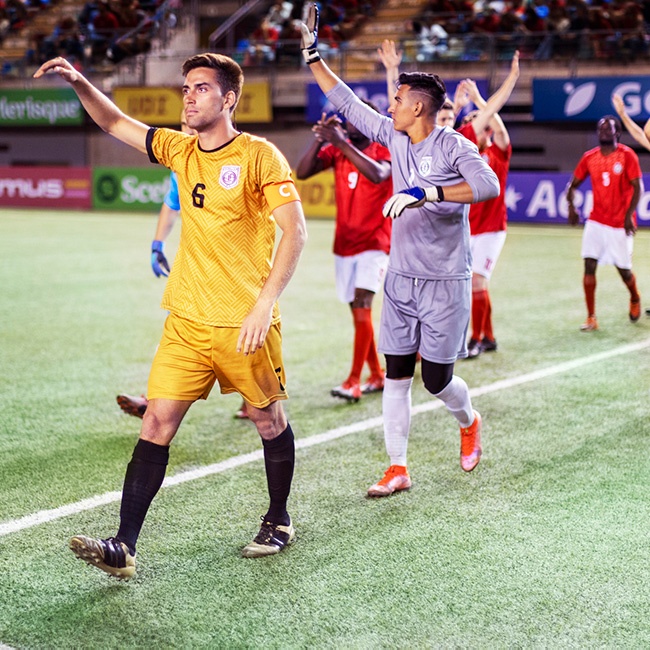
As anticipation builds for the 2026 FIFA World Cup across the United States, Mexico, and Canada, a growing concern is taking center stage alongside the action on the pitch: extreme heat and its cascading impact on safety and operations.
Heat is no longer a background risk; it is a primary operational challenge. Elevated temperatures, especially when combined with high humidity, can significantly increase “feels-like” conditions and create dangerous environments for players, staff, and spectators alike.
Seasonal signals reinforce this concern throughout North America, with above-normal temperatures forecast during the tournament window. This increases the likelihood of longer-duration and more widespread heat events.
Recent external coverage has also highlighted the growing concern that World Cup matches could be played in extremely hot conditions, reinforcing that this is not just a meteorological signal, but a widely recognized operational risk.
Why extreme heat is a primary operational risk for World Cup 2026
Extreme heat is not just a weather condition. It is a direct driver of operational disruption.
Elevated temperatures increase the risk of heat-related illness, strain medical services, complicate crowd management, and disrupt event operations. In major metropolitan areas such as New York/New Jersey, Dallas, Mexico City, Toronto, and Los Angeles, these risks are amplified by urban heat island effects, increased energy demand, and pressure on critical infrastructure.
For large-scale events like the World Cup, the combination of high temperatures, dense crowds, and prolonged outdoor exposure creates conditions where small disruptions can escalate quickly.
Where heat risk is expected to be most pronounced
The strongest heat signals are concentrated across the western and central United States, where persistent dryness is likely to intensify both the duration and severity of heat events.
In southern-tier cities such as Atlanta, Dallas, Houston, and Miami, typical June and July high temperatures already range from the middle 80s to upper 90s °F (30 to 35°C). When combined with Gulf moisture, heat index values can frequently exceed 105 to 110 °F (40 to 43°C), creating dangerous conditions during peak afternoon match windows.
Across southern Canada, including major population centers like Toronto, average summer highs in the 70s to 80s °F (21 to 30°C) can trend warmer through July. While less persistent than in the southern United States, these episodic heat events can still pose meaningful risks, particularly for large outdoor crowds that may be less acclimatized.
In Mexico, the most intense and consistent heat risk is focused across northern and central regions, including Monterrey and Mexico City. Monterrey frequently experiences daytime highs approaching 100°F (38°C), with higher apparent temperatures under humid conditions. Mexico City, despite its elevation, can see temperatures rise into the mid to upper 70s °F (22 to 27°C), where strong solar radiation and thinner air can accelerate heat stress.
The operational challenge is not just peak temperature. It is the combination of intensity, duration, and prolonged exposure across large populations.
Heat rarely occurs in isolation
These atmospheric conditions are unlikely to occur in isolation. Seasonal trends point toward compound risk scenarios, where multiple hazards unfold in close succession or at the same time.
While much of the focus is on extreme heat, broader June and July climate patterns suggest additional challenges that will need to be managed in parallel.
An increase in thunderstorm activity across eastern and southern North America may bring lightning, heavy rainfall, and localized disruption. In western regions, wildfire risk and associated smoke may degrade air quality and visibility. The early months of the Atlantic and eastern Pacific hurricane seasons also coincide with the tournament.
These overlapping hazards can amplify one another. Heat combined with poor air quality, or storms disrupting already strained transport systems, can quickly increase operational complexity.
A distributed event with localized risk profiles
Unlike a single-site event, the World Cup is a distributed, multi-city operation spanning 16 host locations across three countries, each with distinct climate profiles and seasonal risk factors.
The structure of the tournament amplifies this complexity. Matches are often scheduled during peak afternoon and early evening heat. Large crowds remain exposed to outdoor conditions for extended periods. Operations depend heavily on transportation networks, energy systems, and public safety infrastructure.
In this environment, weather becomes more than a planning consideration. It becomes a driver of real-time operational decision making.
What organizations need to prepare for now
Preparing for World Cup conditions requires a shift from general awareness to operational readiness.
Plan for heat as a primary risk
- Model worst-case heat scenarios, not averages
- Align staffing, medical coverage, and scheduling with peak heat periods
Prepare for overlapping hazards
- Build response plans that account for concurrent risks such as heat, storms, and air quality issues
- Stress test coordination across teams and agencies
Protect staff and attendees
- Implement clear heat safety protocols for workers and volunteers
- Expand access to hydration, shaded areas, and cooling zones
- Design crowd flow to reduce congestion and exposure
Strengthen infrastructure resilience
- Coordinate with utilities around peak energy demand
- Assess backup power and redundancy for critical systems
- Monitor transport systems for heat-related strain
Enhance situational awareness
- Integrate weather intelligence into operational decision-making
- Establish clear thresholds for action and escalation
Communicate clearly and consistently
- Provide timely, location-specific updates
- Focus on actionable guidance
- Align messaging across agencies and partners
Supporting coordinated response at scale
Managing an event of this scale requires more than forecasting. It requires the ability to translate evolving conditions into coordinated action.
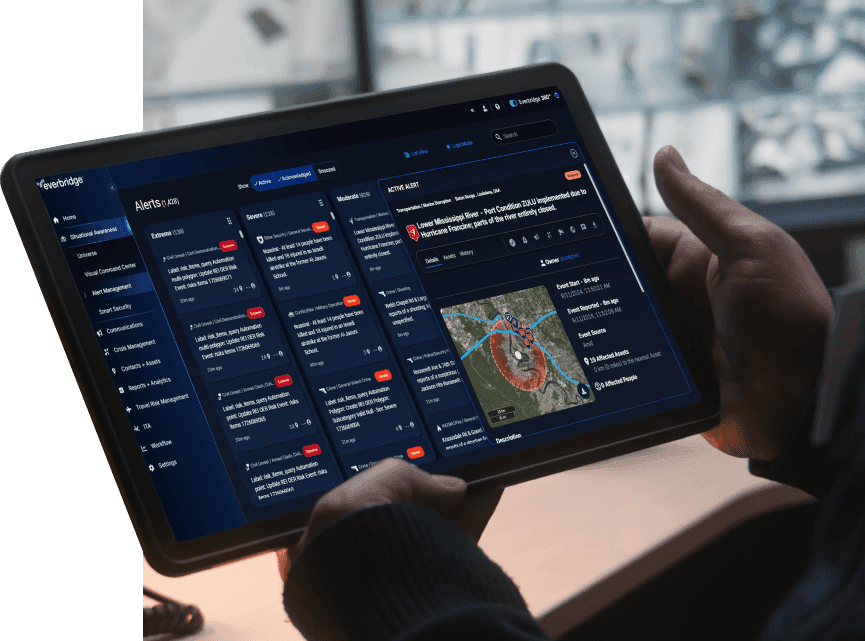
Everbridge supports organizations by helping them operationalize risk intelligence, maintain shared situational awareness, and communicate effectively during rapidly changing conditions. This enables more consistent decision making when timing and clarity are critical.
Key takeaways
- Extreme heat is emerging as a primary operational risk for World Cup 2026
- The greatest challenge comes from compound risk, not isolated hazards
- Risk profiles vary significantly across host cities
- Large-scale outdoor events increase exposure and infrastructure strain
- Organizations that integrate weather into real-time operations will be better positioned to respond
FAQs: World Cup 2026 weather and heat risk
Forecast signals indicate a higher likelihood of above-normal temperatures across much of North America during June and July. In several host cities, especially in the southern United States, heat index values could exceed 105°F (40°C).
Extreme heat increases the risk of heat-related illness, strains medical and energy systems, and complicates crowd management. For large outdoor events, it becomes a significant operational challenge rather than just a weather condition.
Southern United States cities such as Dallas, Houston, Atlanta, and Miami face the highest combined heat and humidity risk. Other cities, including those in Canada and Mexico, face different but still meaningful heat exposure depending on local conditions.
Yes. Thunderstorms, wildfire smoke, and early-season tropical activity may all affect operations. These hazards may occur independently or overlap with heat, creating more complex and potentially disruptive scenarios.
Compound risk refers to multiple hazards occurring at the same time or in close succession. During the World Cup, this could mean extreme heat combined with thunderstorms or degraded air quality, amplifying overall impacts on operations and safety.
Organizations should focus on scenario-based planning, workforce protection, infrastructure resilience, real-time situational awareness, and clear communication strategies. Flexibility and rapid decision-making will be essential across all host locations.
Key mitigation measures include providing accessible hydration, shaded areas, cooling zones, and clear public safety guidance. Proactive planning in these areas can significantly reduce health risks and improve the overall spectator experience.
Weather affects scheduling, safety, staffing, transport, and communications. In a multi-city event, it requires continuous monitoring and real-time decision making.
Weather influences scheduling, safety protocols, staffing, transportation, and communications. For a multi-city event like the World Cup, it requires continuous monitoring, coordinated response planning, and real-time operational adjustments.
Everbridge helps organizations turn risk intelligence into coordinated action through real-time alerts, shared situational awareness, and effective communication during evolving events.