Perspectives from the front lines
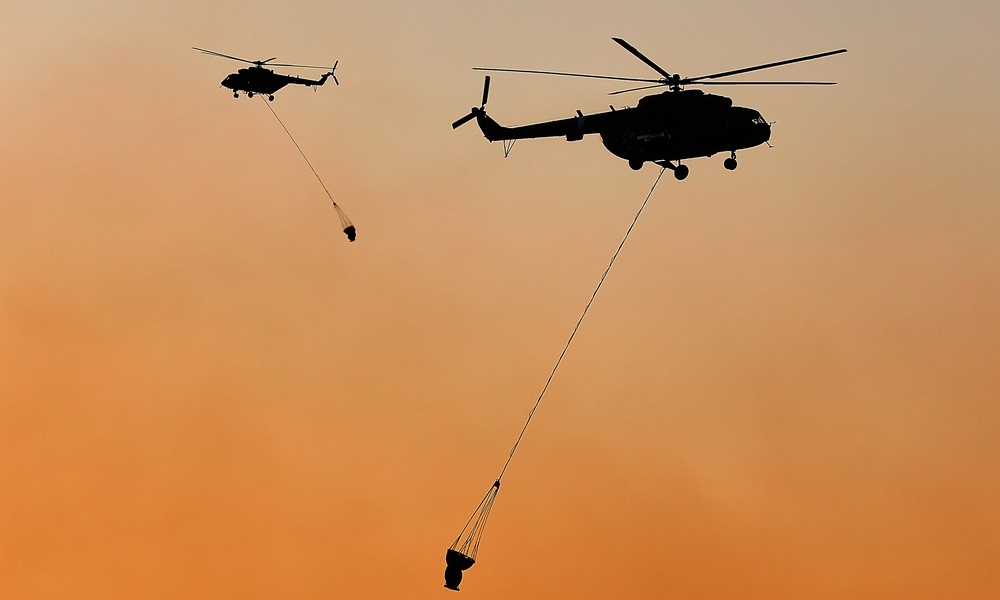
Hurricanes, floods, and heatwaves have broken records, taken lives, and displaced tens of thousands of residents. However, it is the widening scope and increased intensity of wildfires and bushfires that are on the minds of many around the globe. Consider the Western half of the United States, one of the most well-known recipients of wildfires, where tens of millions of acres have burned over the past five years, driven by prolonged drought, extreme heat, and strong wind events. In August 2023, the Maui wildfires in Hawaii became the deadliest wildfire disaster in the United States in more than a century, highlighting critical gaps in emergency alerting and public communication. Globally, wildfire risk continues to intensify. Across Europe and the Mediterranean, wildfires burned hundreds of thousands of hectares during the 2023 and 2024 fire seasons, forcing large-scale evacuations and straining emergency response systems in countries including Greece, Spain, Italy, and Portugal. As fire seasons grow longer and more severe, emergency managers warn that human activity and climate-driven conditions are creating an increasingly volatile wildfire landscape. “Unfortunately, the wildfire threat is getting more intense as human activities and natural factors create the ideal conditions for large-scale burns,” said Brett Ostler, State Fire Management Officer, Department of Natural Resources in Utah.
“Wildfire season isn’t really a season anymore,” said Ostler during a series of webinars hosted by Everbridge. “It’s more of a year-round event that everyone must remain prepared to deal with. In Utah, we train year-round to continually improve our responses and learn from every incident. We have to in order to keep up with the constant flow of events.”
As wildfires continue to threaten life and property, organizations across every sector must take a similar approach, added Chief Kim Zagaris, Wildfire Policy & Technology Advisor for the Western Fire Chiefs Association.
Organizations must develop a comprehensive and proactive response plan to protect their most important assets, including their team members, customers, and communities.
“Having a continuity plan is critical,” Zagaris stressed. “The less you are prepared, the larger the negative impact is going to be to your employees, customers, or residents and your ability to provide them with services.”
With advice from expert first responders in multiple regions, organizations can enhance their existing business continuity and disaster recovery plans to respond effectively to fast-moving risks in the event of a wildfire.
Before a wildfire strikes
The best time to start recovering from a disaster is before the event happens. An effective wildfire response plan begins with a proactive, comprehensive assessment of potential threats and the actions required to mitigate the impacts of those risks.
- Create defensible space and buffer zones with well-maintained landscaping to slow or stop the spread of fires.
- Use fire-resistant construction materials for buildings and campuses, including non-combustible fencing and decking.
- Regularly assess properties for compliance with local fire codes, and donʼt delay replacements or improvements to physical spaces.
Fires are a constant fact of life for many around the globe, but that doesn’t mean preparation isn’t necessary. “We’ve had fires for year and years, and we will continue to have fires for the foreseeable future. So the preparation for the future is always starting now,” notes Brad Richy, Director of the Idaho Office of Emergency Management, Idaho Military Division.
Address the risks in your local environment
Several government bodies provide highly detailed, up-to-date maps of fire risks to help individuals and organizations make decisions about daily activities and when to activate the initial phases of their fire preparation plans.
However, changing climates, developments in new areas, and changing patterns of human behavior are altering these fire risk profiles and bringing challenges to businesses and other organizations that may not be accustomed to monitoring these dashboards frequently.
“Even areas that are not immediately adjacent to wildlands or recreational areas run the risk of being subject to wildfires in this new environment,” said Zagaris.
“It’s not always a direct flame that will burn down the property,” he said. “Many times, it’s going to be ember intrusions from high winds, even if the main fire is relatively far away. If each homeowner or business owner takes responsibility for managing the land around their property, implementing the proper clearances, and assessing their structures for problem areas, we would be in a much better place in terms of prevention.”
“Property owners will often spend hundreds of thousands of dollars on interior remodeling, but they won’t spend the time to harden their properties against a fire that could very easily destroy those new spaces. Being aware of your local fire codes and maintaining your property according to your environment and regional risks is extremely important.”
Create and implement an effective communication plan
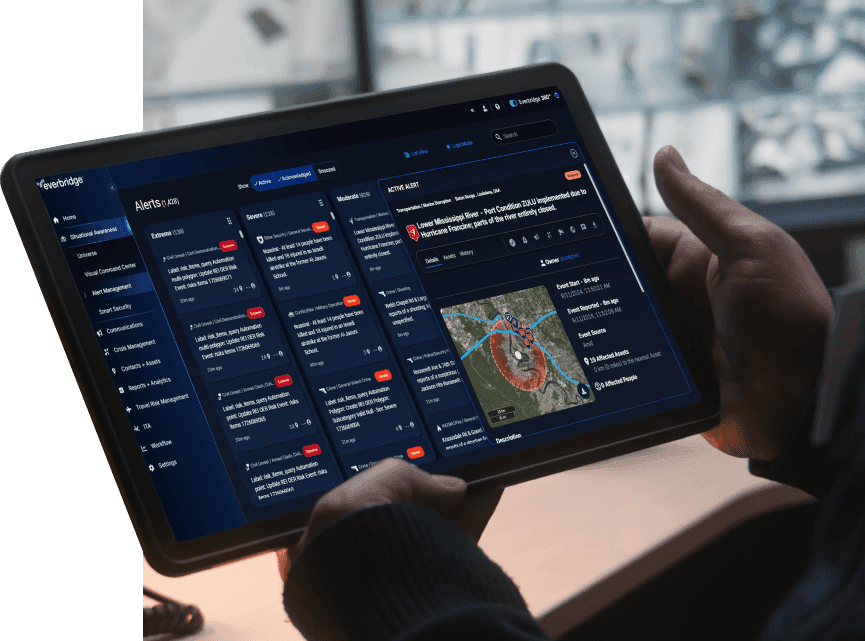
Communication can be challenging in the middle of a high-impact event. The need to react quickly in emergency conditions can easily lead to communication breakdowns. Organizations need to develop a clear, resilient strategy for sharing critical information with decision-makers, staff members, local first responders, and the broader community.
Private organizations and government agencies can build off the way emergency management departments work with the public to keep them informed, Richy explained. Social media, text message alerts, and local radio broadcasts are among the most effective tools.
“We have adapted the way we communicate with the public to keep up with emerging trends,” he said. “We use social media quite a lot to push out messaging in Idaho.”
“But just like with anything, there’s the risk of people getting a little tone-deaf when you repeat the same information over and over. You have to be creative about the way you craft those messages and reiterate how important it is to get prepared, stay prepared, and have a plan.”
Organizations and agencies should frequently remind team members or clients about fire-related policies such as having adequate personal supplies on hand, how to evacuate if necessary, when and where operations will continue, and what resources may be available for individuals who are displaced or who have lost their private homes.
Regular meetings and planning sessions are a core part of Utahʼs communication plan as well, said Ostler. Moving these events online with the help of virtual conferencing software has produced positive results for his department.
“When we hold in-person meetings, we donʼt always get the turnout we hope for,ˮ he said. “But online, we get all kinds of participation. You have to be adaptable and responsive to how people want to receive information if you are really going to get through to them.ˮ
Staying nimble and responsive during a wildfire
An approaching wildland fire can produce an incredibly stressful environment for organizational leaders and those who rely upon them. Remaining informed and ready to disseminate key information in a clear, calm, and timely fashion can make it easier for entities to respond appropriately to rapidly changing circumstances.
Reinforce trust in local fire officials if they call for action
First responders will do whatever they have to in order to save lives during an emergency, even when that means leaving valuable property behind. Individuals and organizations in high-risk areas must be ready to make similarly hard choices and trust that orders from their local fire officials are in their best interests at all times.
“I canʼt overemphasize how quickly things can change during a wildfire event,ˮ Zagaris stated. “If we say to get out, itʼs because you really need to move. We donʼt want people out of their homes if they donʼt have to be. We donʼt like evacuations. But when theyʼre necessary, theyʼre necessary immediately. That is something that is critically important to communicate.ˮ
Organizational leaders can help first responders in these difficult situations by urging team members to promptly comply with evacuation orders and reiterating the organizationʼs commitment to the safety of their staff and their families above all else.
Monitor the mental health and wellbeing of organizational members
First responders are extremely familiar with the emotional and mental toll of overwork in crisis situations. Burnout can lead to long-term consequences for individuals and families.
“Members of organizations that are not on the front lines of firefighting can also experience battles with anxiety, depression, and traumatic stress during and after a wildfire event. Every organization needs to keep an eye out for stress and fatigue,ˮ says Richy.
“You have to have an understanding of what fatigue looks like and how it can set in. Folks deal with stress differently, and emotional and mental fatigue doesnʼt look the same in everyone,ˮ he explained.
“If you are in a leadership position, you need to be serious about telling people to take time off. When there are slow days, or when someone has been working exceptionally hard for a long period of time, you need to tell them to go home, relax, recharge, and come back better than ever.ˮ
Organizations must consider downtime needs and schedule shifts accordingly when making their disaster plans, agreed Ostler.
“Last year, we had one of our fire wardens work 40 straight days without a day off,ˮ he noted.
“That shows incredible dedication, but itʼs simply not acceptable from a well-being point of view. Everyone needs to have downtime or they will get burned out.ˮ
“Thatʼs something we have made sure of this year as we allocated our resources. We made sure in our pre-season discussions to say that this will be a marathon and we need each person to make it to the end feeling strong and resilient.ˮ
Recovery and restoration after the crisis
Communities damaged by fires often travel a long, slow road to recovery. Cornerstone businesses, educational institutions, healthcare systems, and government agencies can play a guiding role in bringing people back together and picking up the pieces of interrupted lives.
In addition to providing recovery resources to local causes where possible, organizations can set an example with how they respond to the destruction of property and the displacement of team members following a wildfire, bushfire, or other critical event.
Prioritize the importance of people and their families
No organization can return to full-capacity without staff, partners, and clients who are able and ready to actively contribute again.
“Initially, the biggest thing to focus on is the survivors,ˮ said Richy. “Anybody who had to evacuate or who lost their home will need support as they try to figure out how theyʼre going to move forward.ˮ
Organizational leaders may consider working with local volunteer agencies and faith-based groups to support team members and help families find a stable footing.
“When entire communities are wiped out, this is a long-term process that requires creative thinking and sustained leadership,ˮ said Zagaris.
“If youʼre in a community that has been wiped out to a significant degree or wiped out entirely, the fire didnʼt just take homes and buildings. It also took away that communityʼs entire tax base,ˮ he said. “So the ability to recover is going to be even harder, and the community will have to rely on other sources of revenue to cover the shortfalls that will domino from that: the schools, the infrastructure, and the healthcare that will be harder to provide.
Organizations should think creatively about how they will support their teams during the transition period to prevent large numbers of employees or customers from moving away to other regions.
Consider the long-term impacts of a wildfire event
When itʼs time for organizations to turn their attention to rebuilding their businesses, they should be careful and deliberate about their decisions around physical and operational factors.
“A lot of the recovery process is dependent on the nature of the fire. If you have ground that is sterile for six inches down because of the intensity of the fire, itʼs going to be more difficult to recover the vegetation or crops in that area. Itʼs going to be more difficult to rebuild structures,ˮ Richy said. “Recovery teams will have to try to figure out how to make that happen so that the region can move forward again.ˮ
Stakeholders in charge of reconstructing properties must also be aware of how previous fires can lead to future natural disasters.
“Having no vegetation makes the area much more vulnerable to flooding and mudslides, which can be just as devastating as a fire,ˮ Richy pointed out. “Itʼs really hard to explain and predict all the damage that can occur years after a fire happens, but recovery plans need to take these long-term unknowns into account.ˮ
Zagaris suggests that organizations take the time to identify and remediate the weaknesses in design and operations that led to vulnerabilities in the first place.
“Donʼt be in such a hurry to rebuild as soon as you clear the debris from a site. If you start building something new according to the old building codes that got it burnt down, then youʼre just building tomorrowʼs problems again today,ˮ he said. “Make sure you are taking the time to harden your organization against future events.
- Work with legislators to secure backup power for cellular communications in the event of a disaster.
- Back up data into the cloud to avoid losing information written down on paper.
- Set up secure remote access capabilities or a virtual private network (VPN) so employees can continue working securely from home.
Adopt best practices to prevent future disasters
Every wildfire situation is unique, but there are also shared lessons to be learned. For Ostler in Utah, the constant cycle of fires has taught his department that the most important part of recovery is mitigation.
“Anything we can do to lessen the impact of the critical fire season before it gets bad is going to help the community recover from a fire event afterward,ˮ he stated. “You have to create strong lines of communication that are going to stay open through an event and through the recovery. And you have to be willing to learn from what happened, both good and bad.ˮ
“In addition to that, open lines of communication are absolutely essential. You have to relay information to the right people at the right time and make it clear what you are planning, how you are planning it, and what the results are afterward.ˮ
Communication should be paired with a cooperative approach to planning, sharing resources, and helping communities recover, concluded Zagaris.
“We rely on shared resources and mutual aid for much of the work we do, as do many other groups in different sectors. Being very aware of what resources are going to be available and which resources are tied up elsewhere will be very important moving forward.ˮ
“The more we can cooperate and support the folks out on the front lines through prevention, mitigation, and solid planning, the better off weʼll be during and after a fire. Thatʼs the best way for us to work together to educate the public and create resilient communities that will thrive even after a fire hits.ˮ