Full transcript
[00:04.9]
Hello everyone and thank you for joining. My name is James Burr and I’m a Senior Regional Analyst for Europe, the Caucuses and Central Asia. Today I’ll briefly cover the current risk picture surrounding the ongoing Russo Ukrainian conflict focused on Russia’s most recent large scale missile and drone attack on Kyiv.
[00:20.9]
All information in this presentation comes from publicly available reporting. The key takeaway is that these attacks are creating more than just military challenges. They continue to pose risks to personal safety, business continuity, transportation and cybersecurity. Public reporting indicates that Russia recently carried out what has been described as its largest combined missile and drone attack on Kyiv since the full scale invasion began.
[00:47.1]
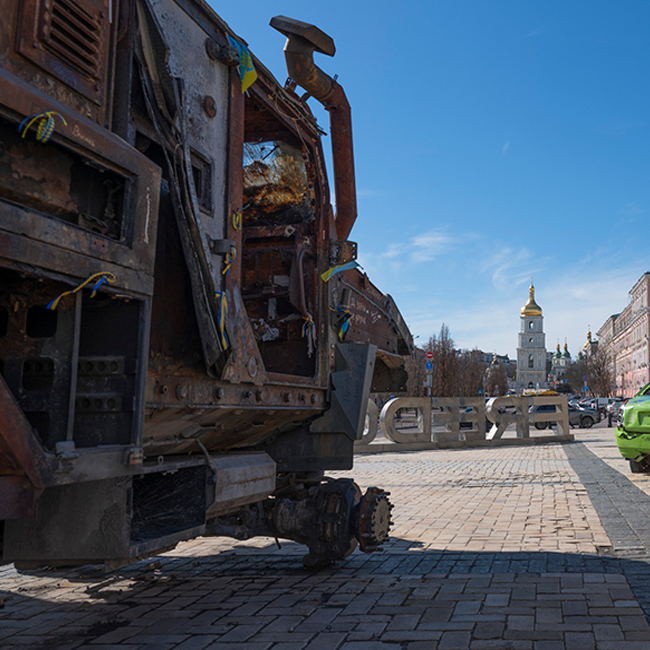
Using more than 70 missiles, nearly 500 drones, the attack struck civilian areas across the capital and at the time of recording have reportedly killed at least 20 people. It also reflects Moscow’s ongoing strategy of targeting urban areas and critical infrastructure.
[01:03.6]
Although Ukraine continues to intercept many incoming threats, shortages of air defence interceptors are reportedly placing increasing pressure on its defensive capabilities. Now, looking ahead, the main concern is that these large scale attacks from both sides could become more frequent and more disruptive.
[01:22.7]
For organizations with personnel or operations in Kyiv and across Ukraine and Russia, that could mean recurrent air alerts, temporary transport disruptions, utility outages, communications issues and interruptions to normal business activity.
[01:38.0]
But there are also wider regional considerations. Previous large attacks have prompted neighboring countries to increase air patrols and introduce temporary airspace Restrictions which can affect executive travel, logistics and cross border movement.
[01:53.5]
Across central and Eastern Europe, cybersecurity also remains an important consideration. While there is no evidence that this specific attack was accompanied by a coordinated cyber campaign, previous periods of military escalation have coincided with increased activity by Russian state linked and Pro Russian cyber actors.
[02:13.7]
Organizations and sectors such as government, defence, energy, transportation, logistics and telecommunications may face comparatively higher exposure. Now, looking ahead, Moscow is likely to continue using large missile and drone attacks to maintain pressure on Kyiv and other Ukrainian cities even if they do not significantly change the battlefield.
[02:37.6]
This suggests a sustained period of disruption rather than a short lived escalation. So for clients, the practical takeaway is to continue assessing travel to Kyiv carefully and where operations continue. Consider maintaining shelter procedures, reliable personnel accountability measures, redundant communications and contingency plans for short notice disruptions.
[03:03.9]
Organizations elsewhere in Europe may also benefit from monitoring transportation and airspace developments, reviewing sanctions exposure and regularly exercising cyber incident response plans. Overall, this remains a prolonged strategic risk environment rather than any single attack.
[03:22.0]
The greater concern is that repeated large scale strikes by Kyiv and Moscow could make disruption in major cities more routine, increase regional security measures and create wider, indirect impacts for businesses operating across Europe. Thank you for listening.