Full transcript
[00:08.4]
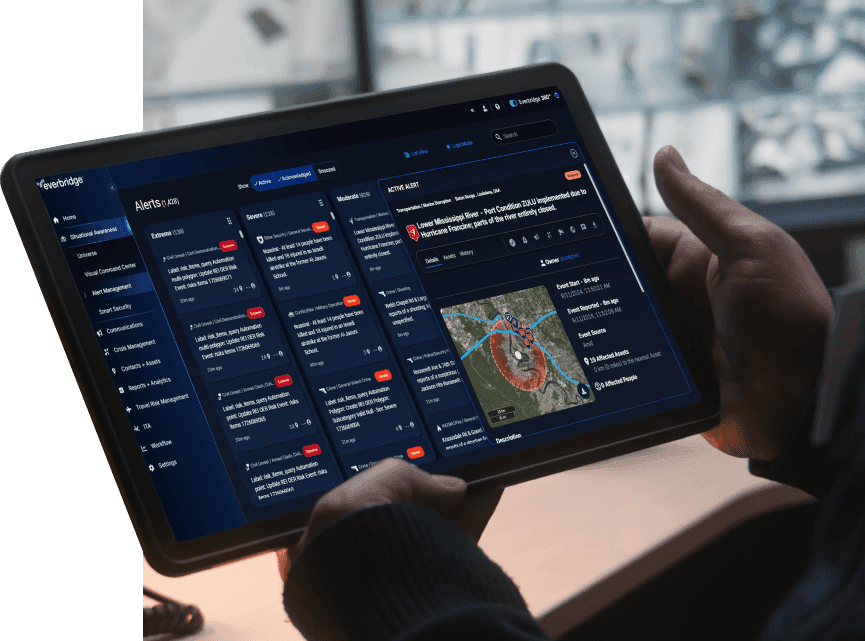
Hi, my name is Benjamin Olson with the Everbridge Global Insight team and in today's rapid Resilience briefing we're looking at the sharp escalation between Afghanistan and Pakistan over the past 24 hours. Tensions have been building since the Taliban returned to power in 2021.

[00:23.8]
Since then, Pakistan has repeatedly accused Kabul of tolerating or failing to control militant groups like Tariq e Taliban Pakistan or TTP who operate in the Afghani territory and do carry out strikes inside Pakistan over the past year that has led to repeated cycles of violence and fragile ceasefires between both countries, including one recently brokered in last October by Qatar and Turkey that has now ultimately collapsed.

[00:52.2]
Over the past several days, the situation has intensified. Beginning on February 22, Pakistan carried out airstrikes inside Afghanistan along the 2,600 kilometer Durand Line. Afghan authorities say they then retaliated on February 26 along the Pakistani border.

[01:10.3]
Pakistan now has escalated further by deploying fighter aircraft alongside artillery and ground strikes targeting military installations in Kabul, Kandahar and Pak T. Drone operations are continuing at this time between both sides hitting targets.

[01:27.9]
What makes this different than any other situation since 2021? The scope here? Pakistan appears to have now been targeting Taliban government military infrastructure, not just the alleged milita camps where the TTT operate, increasing the risks of sustained state level confrontation.

[01:46.2]
Pakistan Defense minister on social media has even described the situation as open war. The UN regional actors and other countries are calling for rapid de escalation at this time. However, however, fighting is still continuing.

[02:02.5]
Casualty figures do remain contested here as well. All we have is open sources and open sources do say 150 to 300 killed with possibly 450 wounded. But as of right now nothing is for certain just because of the volatility of the situation.

[02:19.1]
Civilian deaths are not reported in, only a few injuries. But once again we don't know. Everything is very limited. For most Western firms, direct exposure to Afghanistan is limited. The greater concern here is the spillover into Pakistan.

[02:36.2]
The Torqham border crossing, a key trade choke point between Afghanistan and Pakistan is being affected. There have been past claims of weeks and months of cargo being stuck at the border and that is likely going to happen too. Pakistan though is more integrated into the global supply chains which export textiles to North America and Europe, agricultural goods like rice and a significant share of world surgical instruments.

[03:03.4]
Escalation here also raises the duty of care concern for personnel in country. Air travel is another secondary risk. If airlines decide to reroute to avoid the area, expect longer flight times, higher cost and potential delays especially between the Europe and South Asia sectors.

[03:23.6]
Near term we are continuing to expect tit for tat strikes on both sides, possible temporary border closures and renewed mediation efforts. The key risk here is miscalculation particularly if strikes expand towards major cities or infrastructure within Pakistan.

[03:40.9]
So what should organizations be doing right now? Well there are a few things. Reassess travel and duty of care protocol for Pakistan, validate crisis communication and response plans, stress test supply chains and identify alternative sourcing where possible and review insurance and compliance screening and escalating triggers.

[04:01.7]
In short out of all of this this is the most serious Afghanistan Pakistan confrontation in years but it does remain regionally concentrated. Most western firms do not face direct exposure here though it does need to be noted that contingency planning is prudent for those with personnel or suppliers in Pakistan.

[04:22.4]
Everbridge and the Global Insight team will continue to monitor and provide updates as the risk landscape evolves and changes as this event continues to proceed. Thank you so much.
Full transcript
[00:04.9]
Hello, my name is Wyatt Kinney. I'm the Asia Pacific Regional Analyst with the Everbridge Global Insights team. In this briefing, I'll provide an overview of the Bangladesh national elections coming up on February 12, 2026, with a focus on the political context and near term operational considerations.

[00:21.7]
To begin, here's a brief overview of the election. Bangladesh is scheduled to hold parliamentary elections in a national referendum on February 12, 2026. The vote will take place under the interim administration led by Chief Advisor Muhammad Yunus. The election and referendum are intended to support a return to parliamentary governance following political changes in 2024.

[00:43.2]
The pre election environment remains closely managed with elevated administrative coordination and security oversight. Turning to the political context shaping the election, the February 2026 elections are taking place under an interim administration. The current electoral fields include the Bangladesh Nationalist Party, also known as the bnp, the Jamaat e Islami Party and the National Citizen Party, also known as ncp.

[01:09.9]
Voter voters will take part in a referendum on the July Charter which outlines proposed governance reforms. International observation missions, including from the European Union are present to monitor the process. Next, I'll touch on security conditions and political activity during the election period.

[01:29.0]
Election periods in Bangladesh are typically accompanied by increased political mobilization, expanded security force deployments, tighter controls around key locations. In the current cycle, authorities are, have emphasized preventative measures, rapid response to gatherings, protection of polling related infrastructure.

[01:50.2]
Recent incidents involving political figures, have contributed to a more cautious security posture. Increased monitoring of campaign events and demonstrations. Current indicators suggest activity related risks remain localized, primarily in like urban centers.

[02:07.9]
Disruption is more likely to take the form of movement restrictions and traffic controls than sustained civil unrest. Urban centers, particularly in daca, are expected to experience the most noticeable operational constraints during the election period.

[02:25.5]
Related to this, it's also important to address protest activity and urban disruption. DACA has experienced public demonstrations and labor related actions in the period leading up to the election. In response, authorities have implemented traffic controls and restricted zones near government facilities during the election period, primarily from February 11th through the 13th.

[02:49.7]
There's a high likelihood of, you know, localized road closures, delays to public services, general movement restrictions. Briefly I'll address the terrorism and extremism risk environments. Security assessments indicate an elevated but non, a non specific risk of opportunistic activity during the election period.

[03:11.6]
There is no confirmed reporting of an imminent or coordinated extremist plot. Any potential incidents would most likely involve low complexity methods and public or symbolic locations. For most organizations, this translates to general situational awareness rather than a targeted threat exposure.

[03:32.4]
Finally, there are important economic and trade considerations to keep in mind. Bangladesh plays a central role in global textile and apparel manufacturing, including logistics. Short term disruption could affect inland transport, port operations and custom administrative processes.

[03:52.0]
These impacts are expected to be time limited and operational rather than structural. Regional and global effects would most likely involve schedule variability, not supplied loss. The outlook so looking ahead to the immediate period around the election, pre election period, during the election and post election so pre election period there's going to be an increased security presence and administrative control controls.

[04:18.7]
During the actual election period on February 12th expect temporary disruption to mobility and government services. Post election conditions will depend on administrative sequencing and political responses. To conclude the February 12, 2026 Bangladesh National Elections represents a defined operational period requiring planning and awareness.

[04:43.6]
The main considerations relate to mobility, scheduling and administrative pace. Conditions are best characterized as managed and time bound rather than actual unrest.
Providing the right kind of care when it matters the most
Challenges
A US employee of a global brand traveling on business in Shanghai suffered a potentially life threating sub-arachnoid haemorrhage and was rushed into hospital. Everbridge Assist was subsequently contacted by the patient’s colleague requesting assistance.
Solutions
As the initial communication regarding the patient’s condition was unclear, we immediately appointed a local in-country agent to provide direct contact with the hospital, gain accurate medical information and translations to facilitate progress of the case.
This also enabled us to provide an immediate guarantee of payment to ensure no delays in treatment were incurred. We quickly established lines of communication with all the relevant parties, including the treating doctors, the client and the patient’s family.
We fully appreciate that effective communication is key, not only to ensure we’re fully aware of any changes to the patient’s condition at the earliest opportunity, but to also facilitate any additional support required as soon as possible.
Everbridge Assist uses a well-established network of healthcare facilities globally. In this case, as the patient had already been admitted to a hospital, and as part of our due diligence process, we were able to assess the healthcare facilities to determine whether they were suitable to meet the patient’s treatment needs. Our team had already made provisional plans in advance for ongoing care, including a potential transfer to an alternative facility and provision for medical repatriation, if required.
Following our assessment, the medical facility was deemed capable of providing the necessary surgical expertise and care required for the patient’s condition. Additional nursing care and equipment were provided to ensure his day-to-day care needs were being met.
Further, we organized additional neurosurgical expertise to review the patient and confirm the diagnosis and treatment pathway. Through our regular communication with the treating medical team and family, our clinical team were also able to support the patient in ensuring appropriate management of pain relief to ensure his comfort.
We fully understand the enormous stress endured by the family when their loved one is taken ill overseas. Our service encompasses care of the family, including in this case, daily communication to keep them informed of their loved one’s condition and treatment, particularly important with any language barriers, and of any logistical aspects of our assistance. Importantly, it also enables us to understand their concerns and needs. As a result, a fundamental part of our assistance for the family was to organize their visas, flights to and accommodation in Shanghai, as well as their transportation to and from the hospital.
The patient and family often worry about the practical and financial implications of being unwell overseas. As part of our assistance, we facilitated the completion of insurance claim forms and absence of leave forms for the family and the patient’s employers, in order to provide the necessary supportive information. This ensured they would continue to be paid during their leave of absence.
The Outcome
Following an extended stay in hospital and a subsequent convalescence period in Shanghai, the patient recovered sufficiently for him to be able to safely return to the US.
In this case, although a medical repatriation was no longer required, we provided a door-to-door service for him and his family, ensuring they all arrived home safely.
The patient and family were provided a number of repatriation options and were able to discuss these with our clinical team to determine the most suitable option.
As part of our wraparound service, we made the essential medical referral with our relevant counterparts in the US, to enable an effective medical handover and to provide continuity of care.
Therefore, on his return to the US, we remained in contact with the patient to confirm that the necessary local medical appointments had been made and attended and that an appropriate follow-up medical plan was in place. This medical handover concluded our service and no further assistance was required.
About Everbridge Assist
To operate effectively, every business needs to focus on being more adaptable, more flexible, more resilient. It’s not enough to look at any single aspect in isolation. You need to consider how every part of the organization can perform no matter what.
This may mean ensuring your international travellers and expats can work safely and effectively wherever they are in the world. It may involve making sure your facilities are adequately protected against environmental and man-made risks. Or it could mean focusing on increasing the robustness of your entire end-to-end supply chain.
Five real-world cases where receiving the right care at the right time made all the difference
When crises strike, a swift and expert response can make all the difference. From medical evacuations to security extractions, these Everbridge Assist cases highlight the value of having a dedicated team of security, medical, and logistics professionals ready to act, ensuring your people receive the care and protection they need when it matters most.
1. Life-saving evacuation for a critical medical emergency
When a corporate traveler was hospitalized in Belém, Brazil with thrombosis, she was given a 50 percent chance of survival and just 24 hours to receive specialist treatment before her critical organs would fail.
The hospital lacked the necessary equipment and specialists, so Everbridge Assist stepped in. Everbridge quickly assembled a team of security, medical, and operational personnel. A bilingual security professional was deployed locally to assist with translation, provide support, and coordinate movements on the ground.
This enabled an emergency medical air evacuation. Within 12 hours, the patient arrived 3,000 km away in São Paulo, where she was successfully treated by a specialist capable of performing the complex surgery.
2. The right care for a life-threatening medical emergency
When a US employee of a global brand suffered a life threatening subarachnoid hemorrhage while on business in Shanghai, our assistance team was contacted by their colleague.
We immediately deployed a local agent to liaise with the hospital, obtain accurate medical updates, and provide translations to ensure smooth case management.
After confirming the hospital’s facilities were suitable, we arranged for the patient’s family to fly to Shanghai and stay nearby. We also assisted with completing insurance claims and work absence forms to ensure the employee’s salary continued without interruption.
Following recovery and convalescence in Shanghai, Everbridge provided door-todoor assistance for the whole family to return to the US, putting in place a medical handover to provide continuity of care.
3. Safeguarding personnel with a high-risk security extraction
When personnel found themselves at the center of a terror attack in Stockholm, Sweden, they placed an emergency call to their Global Security Operations Center, who immediately contacted Everbridge Assist.
A lone perpetrator in a van hit bystanders before crashing into the wall of our client’s office. With gunfire being heard and the security situation fluid, our team liaised with the employees directly, coaching them on how to shelter-in-place and barricade the doors until support personnel could reach them.
To ensure the safe extraction of the employees, our team arranged a car, driver and close protection officer. The employees were provided with the name, telephone number and photograph of the key close protection officer deployed, as well as a password that the individual would use as an additional identifier on arrival.
All the affected personnel were safely extracted from their office and escorted to safety.
4. Ongoing treatment and support for complex mental health case
A US student, undertaking her PhD in the UK, was struggling with underlying mental health issues and contacted our assistance team for help. During the initial assessment, our clinician flagged the case as high priority and arranged immediate counseling, face-to-face psychiatric appointments, and additional support. The case was complex, requiring the coordination of 5 separate health professionals, all arranged via our assistance team. To ensure that the patient had the medications she needed, we also collected and delivered her prescriptions directly to her.
Following treatment, the patient’s mental health condition stabilized sufficiently for her to be able to remain in the UK and continue her studies. We continued to support the student during her stay, monitoring her progress and providing additional care and treatment as and when her condition fluctuated.
As part of our service, we also offered professional trauma counseling and therapy support to the individuals concerned.
5. Coordinating multifaceted support for an expat dependent
The daughter of a British expat working in China was suffering with symptoms local doctors had attributed to recurrent kidney infections. When symptoms worsened the family contacted Everbridge Assist for assistance. Having reviewed the case and liaised with local doctors, our clinicians determined a more serious condition, organizing an MRI scan which revealed a potential tumor.
The patient had been treated at several hospitals with incompatible technology, making it impossible to share medical files. Our team collated and encrypted the data, transferring it to the most suitable medical facility, reviewing the history, and ordering further tests.
Due to the complexity of the case, it was agreed that the patient would be flown back to the UK for treatment, which we arranged. We then transferred her to the NHS for long-term care.
Highlights
Over 77,000 rescue calls in one year
Up to 400 rescue requests per day during spring and summer months
Automated communications significantly reduce response times
When you find a sick, injured, or orphaned native animal anywhere in New South Wales, Australia, you call WIRES. The largest wildlife rescue service in the country, WIRES (Wildlife Information Rescue and Education Service) celebrated 35 years of animal rescue in 2020. WIRES receives around 170,000 calls annually and provides rescue advice and assistance for over 100,000 animals per year.
To help as many animals as possible WIRES uses a network of volunteer rescuers and caregivers. In fact, WIRES has around 2,500 volunteers involved in the rescue, rehabilitation and release of animals across NSW. WIRES has developed a comprehensive animal database that records information on types of animals, injuries, fates, and locations for rescue and release.
Animal rescue, rehabilitation, and release are more than just a public service for the people at WIRES. It is truly a job born of passion. WIRES’ mission is to actively rehabilitate and preserve Australian wildlife and inspire others to do the same. “We are deeply committed to improving outcomes for native animals. To be able to rescue more animals faster is one of many ways that we do this and our team all put their heart and soul into the work. It is truly a labor of love,” says Leanne Taylor, CEO of WIRES.

“Literally the first couple of rescues we sent out using the new system were solved in minutes.”
-Kyla Shelley, COO, WIRES
Challenges
Each time WIRES received a rescue call, a team member had to find an available volunteer based on the location, the animal, and the type of injury or situation. Depending on those and other variables, the rescuer might need specific training or experience. For virtually its entire existence, WIRES had to match the rescue to the volunteer manually, entering the rescue details into the system and then using a spreadsheet to contact appropriate volunteers, calling them one by one until they found a rescuer.
Response times used to vary considerably due to the volume of rescue calls, the location and the availability of volunteers. During the peak spring and summer seasons, WIRES receives up to 400 rescue calls a day and some calls can take hours to resolve. The number of rescue calls has risen sharply recently because of increased urbanization, sprawl, and a reduction in natural habitat— all of which have increased human-animal interaction.
“We are deeply committed to improving outcomes for native animals. To be able to rescue more animals faster is one of many ways that we do this and our team all put their heart and soul into the work. It is truly a labor of love.”
Leanne Taylor, CEO, WIRES
Solution
To rescue animals faster by reducing the amount of manual work needed, WIRES implemented xMatters. With volunteers in the xMatters system, the rescue team can now contact available, qualified, local volunteers in an instant. All rescues escalate automatically if not solved in set timeframes and there is no doubt that more rescues are being solved faster now than before. “Literally the first couple of rescues we sent out using the new system were solved in minutes,” Shelley says.
Benefits
While response times used to vary by time of year and rescue specifics, WIRES now achieves more consistent response times. Since volunteers in the field use the xMatters app, text, and email, they can receive alerts and respond from anywhere. Rescue team members can also include custom messages so volunteers understand the specifics of each rescue situation before accepting.
The situation may require someone who is trained to handle venomous snakes or someone trained and vaccinated to handle flying-foxes. With the set-up of the new system WIRES can contact the right volunteers for all rescues across each species, including reptiles, raptors, macropods, wombats, birds and possums.
Animal rescue is an ongoing priority for WIRES, as is the long-term protection and preservation of native Australian animals. As they gain more passionate volunteers, provide more wildlife training for wildlife rescuers and carers, provide more community wildlife education and improve their systems, WIRES can and will help more animals than ever before. For more information about WIRES visit them at https://www.wires.org.au/.
Highlights
Drop-down lists and spell check have greatly improved the accuracy and quality of information captured from callers.
Pre-formatted, contextualized electronic forms with relevant prompts and fields empowers teams to gather information efficiently.
Two months to fully adopt xMatters, a month shy of the assumed timeline.
Wesfarmers Chemicals, Energy & Fertilisers (WesCEF) operates chemical, energy, and fertilizer businesses that service a range of sectors in both domestic and international markets. Headquartered in Western Australia, WesCEF employs people in a wide range of disciplines, professions and industries.
“xMatters allows us to ensure we provide the right information to the right people at the right time to enact a timely response to emergency situations.”
– Jon Knox, Quality Superintendent at WesCEF
Challenges
Prior to xMatters, WesCEF relied on a manual, hand written form for gathering information from persons phoning to report an incident. The information captured would then be condensed and sent out via text message to initiate a response, with the hard copy form provided to responders upon arrival. The information received by the responding incident team did not provide enough detail and thereby increasing the time to achieve resolution.
Solutions
WesCEF initially sought xMatters to replace their SMS-based incident notification process. A simple implementation was completed to meet their immediate MVP for replacing their former tool. This was not only a success, as thorough training and support ensured xMatters was customized to their needs, but during the process, more benefits were quickly realized and implemented immediately.
The biggest concern throughout the implementation process was adoption; how quickly would WesCEF’s Incident Management Team (IMT) members be fully trained on the solution and use it in their day-to-day? Overall it took about two months to be fully set up on the platform, a month less than their assumed adoption timeline on day one of the process.
Benefits
WesCEF has been using xMatters to support their emergency management and business continuity strategies, specifically in Emergency Response and Incident Management Team mobilization and communication. Since implementation, WesCEF has been able to develop pre-formatted, contextualized electronic forms, complete with relevant prompts and fields to empower their teams to gather information efficiently. Once completed, these details are immediately relayed to response teams ensuring that all parties have the right information and can mobilize in a timely manner.
Some of the key benefits WesCEF has realized by using xMatters include:
- Increased accuracy – Incorporating elements such as drop-down lists and native spell check has greatly improved the accuracy and quality of the upfront information captured.
- Increased flexibility – xMatters enables WesCEF to optimize forms and workflows on the fly, allowing for fast, efficient incorporation of lessons learned and continuous improvement ideas that can be instantly deployed. Under the previous paper-based approach, that process could take days or weeks to complete.
- Increased confidence – xMatters enables efficient, two-way communication when responding to an incident and gives WesCEF’s incident controllers real-time information.
During the implementation of xMatters, WesCEF realized some immediate benefits including centralized message tracking and configurable response sets; Additional functionality and use cases were also explored and implemented to better support response processes. One example of this was WesCEF’s creation of a simple workflow to notify standby IMT members when the nominated Incident Controller had assumed responsibility for an event. A small change, but very meaningful when a call is received and members can be confident that the right person received the call. In all instances, WesCEF’s improvements were able to be implemented in-house utilizing the user-friendly support documentation and product experts available at xMatters.
Like most businesses, COVID-19 challenged WesCEF to adjust and rapidly adapt the way they worked. One such challenge was how to continue to effectively manage emergency incidents at a time where most team members were working from home.
Once again, utilizing the intuitive workflow configuration, WesCEF was able to integrate xMatters notifications with Microsoft Teams. Teams was a platform the business was becoming increasingly familiar with during COVID lockdowns, and being able to integrate information directly from xMatters allowed the team to easily collaborate, share information, and access crucial documentation enabling a streamlined, distributed incident response process. This capability is continuing to be used post lockdown restrictions, allowing for integrated in-person/remote incident response coordination.
At WesCEF, safety is at the heart of all they do. Having effective systems and processes in place to respond to unwanted events is key to ensuring businesses can continue to operate safely. With xMatters, WesCEF is able to access the right information and ensure it is provided to the right people at the right time for a quick and efficient issue resolution.
Full transcript
[00:04.9]
Hello, my name is Wyatt Kinney and I’m the Everbridge Global Insights team’s regional analyst for Asia Pacific. Today I’ll be providing a brief update on renewed military tensions along the Thailand and Cambodian border and what this escalation means for organizations operating in the region.
[00:21.3]
On December 8th Thailand carried out airstrikes against Cambodian military positions near the contested areas of Pre Vaheer and Tamu. And Tom, Thai authorities say the strikes were a defensive response after Cambodia deployed long range rocket systems close enough to threaten Thailand civilian areas.
[00:39.5]
Cambodia reports at least four civilian deaths, additional injuries and damage to infrastructure in the area that was impacted. Both governments initiated evacuations along the border following the strikes. This marks the most serious escalation between the two countries south since mid-2025.
[00:57.0]
Why does this matter? These strikes are part of a broader pattern of instability throughout 2025, including exchanges of fire between the two sides earlier this year in May, civilian confrontations in September along the border which included protests and a landmine blast in November that disrupted the Kuala Lumpur Peace Accord which was a US and Malaysia facilitated framework designed to help Thailand and Cambodia manage border incidents, coordinate troop movements, support joint de mining within the area.
[01:27.3]
The implementation of this peace report has been uneven as we’ve seen further escalations since it’s been implemented. At the same time the communication channels meant to prevent escalation are underdeveloped or inconsistent. Without reliable joint investigation or de escalation tactics, even routine troop movements from either side can be seen as hostile actions.
[01:51.3]
So the core of what drives the tension between the two countries, the International Court of Justice in 1962 ruled that the pre of a year of temple belongs to Cambodia. But the ruling did not clarify the surrounding territory, leaving the border ambiguous and highly dispute prone.
[02:10.8]
Domestic politics play a role as well. Thai security institutions emphasize rapid decisive responses. Cambodia faces a strong sovereignty expectation from communities living near the contested area. External actors also shape the tension.
[02:27.7]
The US and Malaysia continue to support the Kuala Lumpur process in the peace accord. Cambodia’s close relationship with China adds additional geopolitical weight to its own decision making when these disputes occur. So impacts on business operations.
[02:45.2]
For companies operating in northeastern Thailand or northwestern Cambodia, this escalation affects logistics, workforce mobility, regulatory processes and project timelines. Cross border checkpoints already seeing slower processing and heightened inspections.
[03:02.0]
Manufacturing zones reliant on cross border flows including textiles, footwear, electrical components, automotive components. It’s possible they’ll see production delays and the need for higher inventory buffers, Cambodian nationals working in Thailand may face tighter document checks, leading to temporary workforce gaps.
[03:22.1]
Infrastructure and development projects near the border, especially those requiring surveys or demining, may experience pauses or restricted access. Even administrative processes such as Cambodia’s recent e visa changes are adding uncertainty to the digital and regulatory workflows.
[03:40.5]
So, an outlook for this situation in the next 48 to 72 hours. Continued tension along the border, no doubt. Hopefully no indication of intentional escalation. But like we talked about before, you know, even a simple troop movement could spark something. The lack of joint monitoring keeps misinterpretation risks elevated.
[04:00.8]
Certainly, over the next two to six weeks, fragile standoff is most the most likely scenario. Even with occasional incidents, uneven diplomatic engagement, organizations should anticipate recurring operational variability, over the next six to 12 months going into 2026, the core issues are going to remain, which includes an unclear border, leftover mines, and weak coordination between the two governments.
[04:32.4]
Unlikely, to be resolved, be resolved quickly. Because of that, even without a full scale conflict, the border is expected to remain unstable from time to time or sporadically throughout the next year. So what should organizations do now?
[04:47.5]
Companies should ensure their business continuity plans allow rapid adjustments to routing, staffing, and facility access. Alternate transport corridors either through Laos, Vietnam, or other maritime routes may be needed if tensions increase. Non essential travel near affected districts should be limited.
[05:05.3]
Essential personnel should receive vetted route guidance and reliable communication tools. And finally, communication with staff, partners, and investors should remain factual and neutral, Given the sensitivity of the territorial issues. Thank you so much.
[05:20.6]
We’ll continue to monitor the situation closely. Have a great rest of your day.
In our latest Rapid Resilience Briefing, we analyze the new phase-one Gaza ceasefire, a fragile starting point but not a complete peace plan.
Full transcript
[[00:05.0]
Hello, my name is Zsolt Csepregi. I’m the regional, analyst for the Middle east and North Africa at Eberbridge’s Global Insights Team. Today I will outline the ceasefire deal between Israel and Hamas and highlight the associated security and business risks. The newly announced Gaza ceasefire, which was brokered by the United States, Egypt, Turkey and Qatar, is a phase one agreement which is designed to secure the release of Israeli hostages in exchange for Palestinian prisoners, assured limited withdrawal of Israeli forces from Gaza and expanded humanitarian aid access.
[00:39.4]
It’s an important step, but it’s not a solution. Mediators themselves call it a starting point. A narrow humanitarian and political transaction, but not a complete peace plan. The goal right now is simple, to stop the immediate fighting and get the Israeli hostages home.
[00:55.9]
Everything beyond that, from Hamas disarmament to the future of Gaza’s governance, remains deeply contested. The second phase, meant to turn this truce into a sustainable political settlement, will be much harder. Israel insists that Hamas must be disarmed and excluded from the governance of Gaza.
[01:14.9]
While Hamas for its part, refuses to surrender control or its legitimacy. These positions are fundamentally incompatible once the immediate pressure eases. So the Israeli hostages are home and Israeli troops pull back, both sides will have far less incentive to compromise.
[01:34.7]
External actors are also shaping this trajectory. Palestinian Islamic Jihad has cautiously accepted the deal, but there is still a risk that more militant elements within Hamas or BIG could splinter towards Islamic State aligned, groups that outrightly reject any form of political compromise with Israel.
[01:55.6]
The Houthis in Yemen continue to reject the ceasefire outright, keeping Red Sea maritime risks elevated, while Hezbollah remains deliberately ambiguous along the northern border of Israel. For businesses and international operators, this environment represents de escalation without guaranteeing a resolution.
[02:15.4]
It’s a reduction in immediate violence, but not in underlying instability. So logistics and air travel are likely to remain volatile with potential disruptions from renewed rocket fire, drone attacks or political protests.
[02:30.5]
And beyond the region, pro Palestinian and pro Israeli demonstrations will continue across major global cities, carrying reputational and operational risk for multinational firms. Global companies should therefore remain vigilant and adaptable as this first phase of the ceasefire unfold and negotiations on the second phase start.
[02:51.0]
Even if progress continues, instability will persist across the Middle East. Organizations should diversify logistic routes, review travel and security protocols and maintain flexible staffing and crisis communication plans. Monitoring both of regional developments as well as protest movements globally will be key in protecting personnel and operations.
[03:12.8]
The coming months will demand strategic patience coupled with operational flexibility as the ceasefire talks may reduce violence temporarily but are far from assuring a lasting stability.