
The World Economic Forum’s Global Risks Report 2026 points to a more volatile and interconnected risk landscape. Geoeconomic confrontation, interstate conflict, extreme weather, societal polarization, and misinformation rank among the top near-term threats.
This risk environment is already visible in 2026. Climate-related disruption continues, geopolitical competition is reshaping operating conditions, and slower growth with renewed inflationary pressure is challenging global markets.
Organizations need effective risk mitigation controls that protect people, assets, operations, and infrastructure before disruption escalates. The most effective controls combine clear governance, real-time threat intelligence, cybersecurity safeguards, operational continuity plans, emergency communications, supplier resilience, compliance monitoring, and continuous testing.
Risk mitigation is essential for modern business resilience. When organizations close the gap between exposure and preparedness, they reduce financial losses, regulatory penalties, operational disruption, and reputational damage.
For organizations in regulated industries such as finance, healthcare, and manufacturing, effective risk mitigation strategies are not optional. They support operational resilience, stakeholder trust, and long-term stability.
This guide explains what risk mitigation is, which controls organizations should have in place, and how leaders can create a practical strategy to anticipate, mitigate, respond, recover, and adapt.
What risk mitigation controls should organizations have in place
Effective risk mitigation controls reduce the likelihood or impact of critical events. They also help organizations make faster, more coordinated decisions when conditions change.
Organizations should prioritize these risk mitigation controls:
- Risk governance and ownership: Define risk owners, escalation paths, decision rights, and reporting responsibilities.
- Enterprise risk assessment: Identify risks across operations, finance, cybersecurity, compliance, workforce safety, supply chains, and physical locations.
- Real-time threat intelligence: Monitor emerging threats that could affect people, assets, operations, and infrastructure.
- Cybersecurity controls: Use access controls, data backups, incident response plans, endpoint protection, and employee training.
- Business continuity plans: Maintain documented recovery procedures, alternate workflows, and continuity plans for essential functions.
- Emergency and mass notification: Communicate quickly with employees, contractors, customers, and stakeholders during critical events.
- Supplier and third-party risk controls: Diversify vendors, review contractual obligations, and monitor supplier exposure.
- Insurance and contractual risk transfer: Use insurance policies and liability provisions to reduce financial exposure.
- Compliance monitoring: Track regulatory obligations, audit readiness, policy adherence, and reporting deadlines.
- Training, testing, and exercises: Validate plans through drills, tabletop exercises, after-action reviews, and continuous improvement.
These controls work best as an integrated system. A single control may reduce exposure, but coordinated controls improve readiness, response, recovery, and organizational resilience.
What is risk mitigation
Risk mitigation is the process of identifying potential threats to an organization and implementing strategic measures to eliminate them or reduce their impact. Unlike reactive crisis management, risk mitigation focuses on prevention and preparation.
Risk mitigation creates stronger defenses before threats disrupt operations. It helps organizations protect business continuity, preserve stakeholder trust, maintain regulatory compliance, and safeguard financial stability.
Risk mitigation operates within a broader risk management framework. That framework includes risk identification, assessment, treatment, monitoring, and continuous improvement.
Risk management provides strategic oversight. Risk mitigation delivers the practical controls that turn vulnerability into resilience.
Types of risks organizations face
Organizations face multiple types of risk. Each category requires tailored controls, clear accountability, and the right level of monitoring.
Compliance risks
Compliance risk emerges when organizations fail to adhere to legal, regulatory, or industry standards. A missed compliance deadline can cost finance firms millions in fines, while healthcare organizations may face patient safety violations with financial and legal consequences.
Effective compliance controls include policy management, regulatory monitoring, audit trails, training, and documented escalation procedures.
Operational risks
Operational risk results from inadequate or failed internal processes, systems, or human factors. Manufacturing facilities may face equipment failures, supply chain disruptions, and quality control issues that halt production and damage customer relationships.
Effective operational controls include preventive maintenance, redundant systems, documented procedures, employee training, and business continuity planning.
Reputational risks
Reputational risk threatens the trust and confidence that stakeholders place in an organization. A single data breach or product recall can erode years of brand building, especially in sectors where public trust is critical.
Effective reputational controls include stakeholder communications plans, media monitoring, incident response protocols, and coordinated executive communications.
Cybersecurity risks
Cybersecurity risk remains one of the most pressing concerns for organizations. Data breaches, ransomware attacks, and system infiltrations can compromise sensitive information, disrupt operations, and create significant financial and legal exposure.
Effective cybersecurity controls include access management, employee awareness training, network monitoring, data backups, incident response plans, and cybersecurity insurance.
Financial risks
Financial risk includes market volatility, credit defaults, liquidity constraints, and currency fluctuations. These risks can affect stability, investment planning, and growth.
Effective financial controls include scenario planning, liquidity management, credit reviews, insurance coverage, and regular financial risk assessments.
What is a risk mitigation strategy
A risk mitigation strategy is a plan that defines how an organization will reduce exposure to identified risks. It outlines the actions, controls, owners, and procedures needed to protect operations and maintain continuity.
Effective risk mitigation strategies focus on three core objectives:
- Identify and assess potential threats.
- Prioritize risks by likelihood and potential impact.
- Implement targeted controls for each risk category.
This systematic approach helps organizations allocate resources effectively. It also supports organizational resilience by aligning preparedness, response, and recovery across teams.
The most effective strategies reflect an organization’s operating environment, industry requirements, and risk tolerance.
Five effective risk mitigation strategies
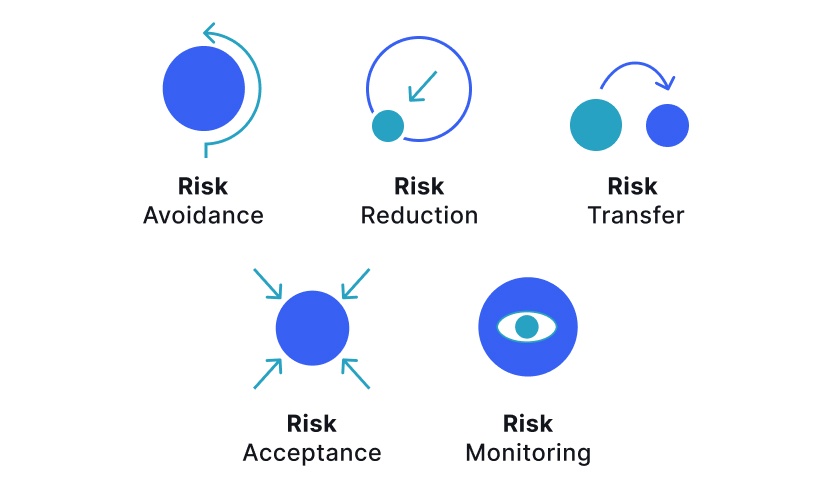
Organizations use several risk mitigation strategies depending on the severity, likelihood, and business value of each risk. The following approaches are the most common.
1. Risk avoidance
Risk avoidance eliminates activities or processes that create significant threats to organizational objectives. This strategy works well when the potential impact outweighs the possible benefit.
Examples include:
- Financial institutions may relocate operations from politically unstable regions to protect assets and personnel.
- Technology companies may avoid entering markets with restrictive data privacy laws to reduce regulatory risk.
Risk avoidance is most effective when an activity is optional, the exposure is high, and the organization has a viable alternative.
2. Risk reduction through preventive controls
Risk reduction uses controls that lower the likelihood of a risk or reduce its potential impact. This approach helps organizations continue beneficial activities while limiting exposure.
Examples include:
- Manufacturing plants use fire suppression systems, workplace safety talks, employee training, and emergency shutdown protocols to prevent workplace accidents.
- Healthcare organizations implement redundant data backups and strict access controls to mitigate cybersecurity risks.
Common risk reduction controls include training, automation, access restrictions, monitoring, maintenance, and documented response procedures.
3. Risk transfer with insurance and contracts
Risk transfer shifts part of the financial burden of potential losses to a third party. Organizations often use insurance policies, contractual agreements, liability clauses, and vendor requirements.
Examples include:
- Businesses purchase cybersecurity insurance to cover legal fees, notification costs, and penalties from data breaches.
- Construction companies transfer risk to contractors through liability coverage requirements in their agreements.
Risk transfer does not eliminate operational exposure. It helps reduce financial impact when a covered event occurs.
4. Risk acceptance with monitoring
Risk acceptance recognizes that some threats are inherent to operations. Organizations may accept a risk when mitigation costs exceed the potential impact.
Examples include:
- Startups often accept market risks tied to new product launches as part of innovation.
- Established companies may tolerate minor operational risks with limited business impact.
Accepted risks still require oversight. Organizations should monitor these risks and revisit decisions when conditions, regulations, or business priorities change.
5. Risk monitoring with real-time threat intelligence
Risk monitoring provides continuous visibility into the threat landscape. It helps organizations detect emerging risks and adapt mitigation strategies as conditions change.
Examples include:
- Financial institutions use AI tools to detect fraudulent activity quickly.
- Supply chain managers use predictive analytics to anticipate and reduce disruption.
Real-time threat intelligence helps organizations move from reactive response to proactive risk mitigation.
Six steps to create a successful risk mitigation strategy
A risk mitigation strategy should be practical, repeatable, and measurable. These six steps help organizations create a strategy that supports operational resilience.
1. Identify risks
Begin by identifying risks that could affect the organization. Review operations, financial practices, cybersecurity, workforce safety, compliance obligations, facilities, and supply chains.
Use tools such as SWOT analysis, risk assessments, incident histories, audit findings, and stakeholder interviews. A broad view helps leaders identify risks before they become critical events.
2. Assess risk impact and likelihood
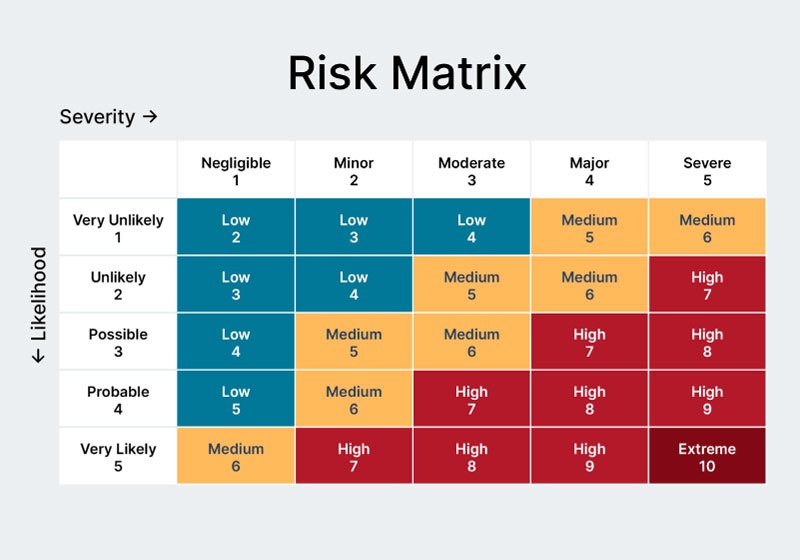
After identifying risks, evaluate their potential impact and likelihood. This assessment helps leaders prioritize the risks that pose the greatest threat to operational continuity and strategic objectives.
A risk matrix can help teams compare risk levels consistently. It also supports more transparent decision-making across departments.
3. Develop mitigation plans
Develop actionable plans for high-priority risks. These plans may include preventive controls, backup systems, emergency procedures, communication workflows, or response protocols.
Engage stakeholders across departments. Risk mitigation is more effective when security, operations, compliance, technology, human resources, communications, and executive teams align on roles and actions.
4. Implement risk controls
Deploy the controls defined in the mitigation plan. Integrate them into daily operations so teams can act consistently during normal conditions and critical events.
Examples include:
- Training employees on risk management procedures.
- Strengthening cybersecurity defenses.
- Using risk intelligence tools.
- Diversifying suppliers to reduce dependency.
- Documenting escalation procedures.
- Automating emergency communications.
Implementation turns strategy into operational readiness.
5. Monitor and review
Continuous monitoring keeps the risk mitigation strategy current. Establish performance indicators that measure whether controls are working as intended.
Review the strategy regularly. Update plans when new risks emerge, business conditions change, or after-action reviews identify improvement opportunities.
6. Foster a risk-aware culture
A risk-aware culture encourages employees to identify, report, and respond to potential risks. It also helps teams act with confidence when critical events occur.
Leaders should encourage open communication, clear accountability, and ongoing training. Resilience improves when risk awareness becomes part of daily decision-making.
Risk mitigation controls by business function
Risk mitigation works best when controls map to the functions they protect. This structure helps organizations assign ownership and measure control effectiveness.
People and workforce safety
Organizations need controls that help protect employees, contractors, visitors, and lone workers. These controls support faster communication and more coordinated response during critical events.
Common controls include:
- Emergency and mass notification.
- Safety check-ins and wellness checks.
- Location-aware alerting.
- Evacuation and shelter-in-place procedures.
- Employee training and drills.
Operations and facilities
Operational controls help reduce downtime and maintain essential functions. They are especially important for manufacturing, transportation, energy, healthcare, and other time-sensitive environments.
Common controls include:
- Preventive maintenance.
- Redundant systems.
- Emergency shutdown procedures.
- Facility access controls.
- Incident response workflows.
- Business continuity plans.
Cybersecurity and data protection
Cybersecurity controls reduce the likelihood and impact of digital threats. They also help organizations respond faster when incidents affect systems or sensitive information.
Common controls include:
- Multi-factor authentication.
- Role-based access controls.
- Data backups.
- Endpoint protection.
- Security monitoring.
- Incident response playbooks.
- Employee awareness training.
Supply chain and third-party risk
Supply chain controls help organizations reduce dependency on a single vendor, region, or transportation route. They also help leaders identify supplier exposure before disruption spreads.
Common controls include:
- Supplier diversification.
- Contractual risk transfer.
- Vendor risk assessments.
- Inventory planning.
- Alternate logistics options.
- Real-time threat monitoring.
Compliance and governance
Governance controls help organizations align risk decisions with legal, regulatory, and business requirements. They also make it easier to demonstrate accountability.
Common controls include:
- Risk ownership.
- Policy management.
- Audit readiness.
- Compliance calendars.
- Board reporting.
- Documented escalation paths.
Using Everbridge risk intelligence and CEM to strengthen controls
The expanding risk zone represents a new reality for organizations worldwide. The rising frequency and intensity of critical events, including natural disasters, cyberattacks, geopolitical conflicts, and public health events, are reshaping executive and board priorities.
These challenges place pressure on operational continuity and organizational resilience. Seamless operations now depend on the ability to anticipate, mitigate, respond, recover, and adapt across an increasingly complex risk landscape.
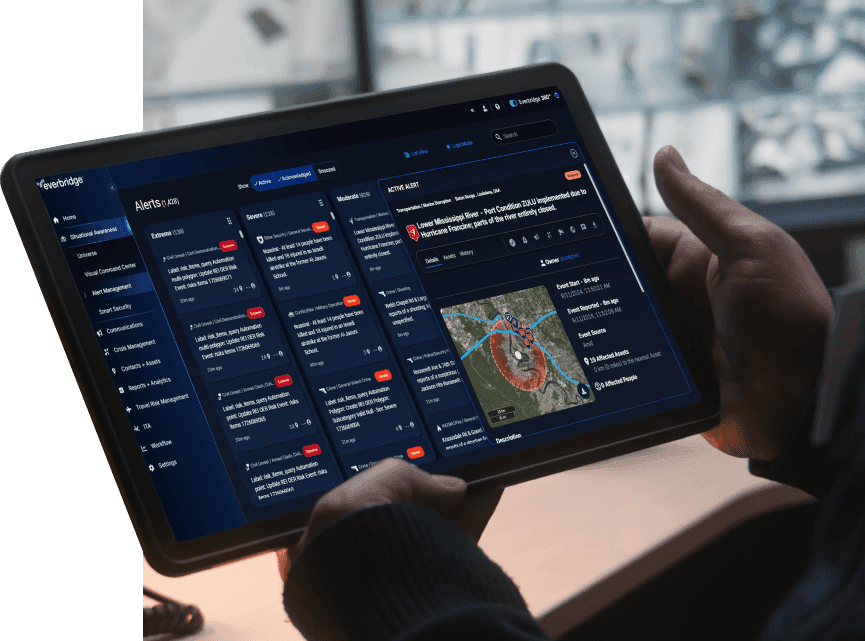
The Everbridge High Velocity Critical Event ManagementTM platform supports organizations as they address this expanding risk zone. Powered by Purpose-built AI, the platform helps leaders understand risks earlier and respond faster.
By integrating advanced analytics, real-time monitoring, and automated workflows, Everbridge helps organizations assess threats, minimize downtime, and maintain operational efficiency.
Real-time threat intelligence for earlier awareness
Risk intelligence monitoring uses advanced technology, machine learning, and a broad network of vetted data sources. It provides real-time, hyper-local insights into potential threats.
Platforms such as the Everbridge Risk Intelligence Monitoring Center help organizations receive targeted alerts. These alerts support faster, more informed decisions that protect people, assets, operations, and supply chains.
Automated workflows for coordinated response
Risk controls are most effective when teams can act quickly and consistently. Automated workflows help organizations reduce manual coordination and keep response actions aligned.
Everbridge supports coordinated communication, escalation, and operational workflows during critical events. This helps organizations reduce confusion, accelerate response, and support recovery.
Emergency communication for operational continuity
Emergency and mass notification capabilities help organizations reach the right people at the right time. Fast, targeted communication supports safety, continuity, and stakeholder confidence.
Everbridge helps organizations communicate across channels during critical events. This strengthens risk mitigation controls by connecting threat detection with action.
Building resilience with strategic risk management
The modern business environment requires proactive risk management. Organizations that invest in comprehensive risk mitigation strategies and technologies can reduce disruption and support sustainable growth.
Success requires commitment from all organizational levels. It also requires practical controls, clear ownership, continuous monitoring, and regular improvement.
Organizations that embrace this approach create resilience beyond threat protection. They strengthen readiness, stability, and continuity across people, assets, operations, and infrastructure.
Download the 2026 Global risk and resilience outlook
Frequently asked questions
The most effective risk mitigation controls include risk governance, enterprise risk assessments, real-time threat intelligence, cybersecurity safeguards, business continuity plans, emergency communications, supplier risk controls, insurance, compliance monitoring, and regular testing.
A risk mitigation strategy is the overall plan for reducing exposure to risk. A risk control is a specific action, process, technology, or policy that reduces the likelihood or impact of a risk.
Organizations should review risk mitigation controls regularly and after any significant business change, critical event, audit finding, or after-action review. Continuous monitoring helps keep controls aligned with the current risk environment.
Real-time threat intelligence helps organizations identify emerging threats earlier. Earlier awareness gives teams more time to communicate, activate response plans, protect people and assets, and maintain operational continuity.
Organizations can measure control effectiveness through key risk indicators, incident response times, audit results, exercise outcomes, compliance performance, downtime reduction, and after-action findings.
Everbridge supports risk mitigation with real-time threat intelligence, critical event management, automated workflows, and emergency communications. These capabilities help organizations anticipate, mitigate, respond, recover, and adapt during critical events.