Leaders need seven core skills to effectively manage and respond to critical events: situational awareness, improvisation, creativity and adaptability, decisiveness, action, communication, and reevaluation.
These skills help leaders make timely decisions when information is incomplete, plans need to change, and people, assets, operations, and infrastructure may be at risk. They also help organizations move from planning to coordinated response and recovery, strengthening organizational resilience before, during, and after disruption.
The top crisis management skills for critical event response are:
- Situational awareness
- Improvisation
- Creativity and adaptability
- Decisiveness
- Action
- Communication
- Reevaluation
Context and problem framing: Why leadership skills matter
Some critical events are familiar to organizations. They may happen repeatedly, follow seasonal patterns, or align with known risks such as natural disasters or severe weather.
Other critical events present new challenges that responders have not seen or experienced before. In a more complex scenario, multiple critical events may happen at the same time, forcing leaders to split attention while anticipating the combined effects.
Every critical event requires steadfast leadership to help minimize impact on people and operations. Even the strongest emergency response plan can fall short if the leadership team is not prepared to manage a coordinated response.
Much of the discussion about readiness focuses on enterprise planning, technology, and response capabilities. Those capabilities matter, but leaders must also be able to assess conditions, make decisions, communicate clearly, and adapt as the event changes.
Common challenges: The three types of critical events
Organizations typically face three categories of critical events. Each category requires a different balance of planning, judgment, and adaptability:
- Routine emergencies: Familiar events, such as natural disasters, that organizations can plan for based on past experience.
- Crisis emergencies: Novel events, such as terrorist attacks, that are difficult to anticipate and rarely have detailed plans in place.
- Emergent crises: Events that initially appear routine, creating a false sense of familiarity, but develop into something new or more complex, such as the recent global pandemic.
The scope, severity, and novelty of a critical event influence how useful an emergency response plan will be. Planning remains essential, but no plan can account for every possible situation.
Organizational preparedness depends on two connected capabilities:
- Maintaining a constant state of readiness
- Building a wide range of contingency plans
Organizations do not prepare for every worst-case scenario in detail. Many scenarios are too broad, too severe, or too unpredictable to make that practical or cost-effective.
Instead, emergency response plans typically address routine emergencies that are reasonably predictable and well understood. When a critical event moves beyond the plan, leadership skills become the bridge between preparedness and effective response.
Everbridge solution overview: Supporting critical event management
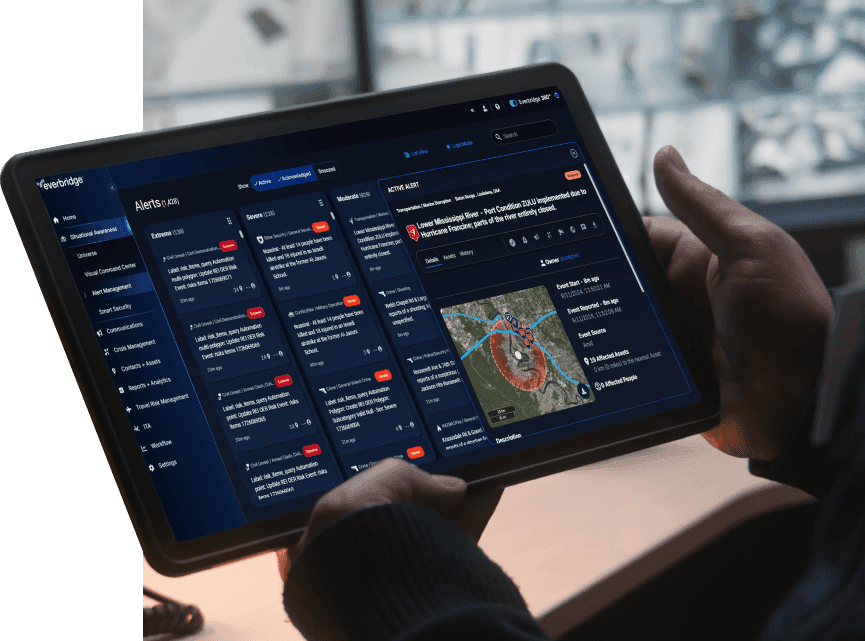
A strong leadership team needs timely information, coordinated communications, and a clear way to activate response plans. Everbridge 360 helps organizations support critical event management (CEM) by connecting risk intelligence, communications, and response capabilities across the enterprise.
The High Velocity Critical Event Management platform helps organizations anticipate, mitigate, respond, recover, and adapt when critical events affect people, assets, operations, or infrastructure. Powered by Purpose-built AI, Everbridge supports faster awareness and more coordinated action when leaders need to make decisions under pressure.
This approach helps organizations advance their Best in Resilience journey by improving readiness, operational continuity, and business continuity. The goal is not only to respond to disruption, but to build measurable resilience before disruption occurs.
How it works: The seven skills leaders must master
According to Regina Phelps, noted expert in emergency management and continuity planning, leaders need seven essential skills to navigate critical events effectively, protect their people, and maintain business continuity.
In an Everbridge webinar, Phelps highlighted how these skills work together during critical event response. The following sections summarize the main points and explain how leaders can apply each skill.
Watch the Everbridge webinar on critical event leadership
Situational awareness
Situational awareness is the leadership team’s ability to understand the broader context of a critical event while it is unfolding. Leaders must assess available information, determine what is relevant, identify gaps, anticipate likely consequences, and make appropriate decisions.
Without situational awareness, leaders may struggle to separate crucial information from irrelevant data. They may also miss the implications of response measures that affect people, assets, operations, or infrastructure.
Effective situational awareness requires leaders to gather information from multiple sources and continuously update their understanding. Real-time threat intelligence and clear internal reporting help leaders make better decisions as conditions change.
Improvisation
Improvisation is the ability to change plans quickly based on new information. In a true critical event, the tested plan may not be enough.
Leaders may need to move from the original plan to an alternate approach. In highly novel situations, that alternate plan may not exist yet.
Improvisation allows leaders to synthesize a new plan while maintaining focus on safety, continuity, and recovery. It turns readiness into practical action when the situation no longer matches the scenario the organization expected.
Creativity and adaptability
Improvisation works closely with creativity and adaptability. If improvisation helps leaders create a new course of action, creativity and adaptability help them carry it out as conditions continue to evolve.
Critical event response is never static. Leaders cannot stay attached to one strategy when new information shows that conditions have changed.
They need to keep listening, consult with frontline responders, and understand what is happening in real time. As conditions warrant, leaders must be willing and able to pivot.
Decisiveness
Decisiveness is the ability to move the organization forward despite confusing, conflicting, or incomplete information. Leaders must choose a course of action quickly enough to protect people and maintain operational continuity.
Decisiveness does not mean rigidity. It means leaders can act while continuing to improve situational awareness.
If later information shows that a decision needs to change, leaders should reevaluate and adjust. The ability to decide, learn, and adapt is central to effective critical event management.
Action
Leaders cannot control the critical event, but they can control the response. That requires action.
Action is the ability to carry out response plans, assign responsibilities, and help others follow a clear direction. It is especially important when uncertainty creates hesitation across the organization.
A leader who takes appropriate action helps convert strategy into coordinated response. That movement gives teams the confidence and structure needed to protect people and sustain operations.
Communication
Effective communication is essential to leadership during critical events. Leaders must deliver clear, concise, and timely messages that help people understand the situation and know what to do next.
Every organization should have a critical event and emergency communications platform that helps the emergency response team:
- Understand where personnel are in relation to the critical event
- Send automated, contextualized messages to personnel, including those in harm’s way
- Receive responses from personnel to assess impact and confirm safety
- Use multiple communication channels, including social media when appropriate
The platform is the vehicle for sending and receiving messages. Leaders still need to shape those messages carefully.
Communications should be clear, crisp, concise, and timely. They should avoid unnecessary alarm while still reflecting the seriousness of the situation.
Reevaluation
Reevaluation is the discipline of repeatedly assessing the response and identifying what may be missing. It helps leaders determine whether current actions are reducing impact or creating new challenges.
Without reevaluation, the other six skills can weaken over time. Leaders may continue down a path that no longer fits the situation.
Strong leaders repeatedly assess progress, identify gaps, and adjust the response. This skill supports recovery, continuity, and long-term organizational resilience.
Benefits and features: What effective leadership enables
When leaders develop these seven skills, organizations are better positioned to respond to critical events with clarity and coordination.
Effective leadership supports:
- Faster understanding of changing conditions
- More coordinated response across teams and locations
- Clearer communication with employees and stakeholders
- Better protection for people, assets, operations, and infrastructure
- Stronger business continuity and operational continuity
- More effective recovery after disruption
- Continuous improvement in preparedness and resilience
Technology strengthens these leadership skills when it helps teams see risk, reach people, and coordinate response. Everbridge critical event management capabilities help organizations turn readiness into action when time matters.
Explore the Everbridge critical event management platform
Industry and use-case variants: Applying the skills across critical events
The seven leadership skills apply across a wide range of industries and use cases. The specific event may change, but the leadership requirements remain consistent.
Organizations can apply these skills to:
- Natural disasters and severe weather
- Workplace disruptions and facility incidents
- Cyber-related operational disruptions
- Travel risk and employee safety events
- Supply chain disruptions
- Large-scale events and public safety incidents
- Business continuity and operational resilience planning
Routine emergencies rely more heavily on established plans. Novel or emergent critical events require leaders to lean more heavily on situational awareness, improvisation, adaptability, and reevaluation.
In every case, the path to resilience depends on coordinated preparedness, response, recovery, and continuous improvement.
Resources and thought leadership
Leaders can strengthen critical event response by building knowledge before disruption occurs. Everbridge resources help organizations assess readiness, understand emergency communications, and improve resilience planning.
Recommended resources include:
- Read more about crisis management
- Compare crisis emergencies and routine emergencies
- Explore business continuity solutions
- Take the Best in Resilience maturity self-assessment
- Access the Gartner Market Guide for Emergency and Mass Notification Systems
Call to action: Strengthen readiness before disruption
Critical events are unpredictable, but leadership readiness can be developed before disruption occurs. Organizations that invest in planning, communications, and critical event management capabilities are better positioned to protect people and maintain continuity.
To learn how Everbridge can support preparedness, response, recovery, and resilience, connect with an Everbridge expert.
Frequently asked questions
Leaders need situational awareness, improvisation, creativity and adaptability, decisiveness, action, communication, and reevaluation. These skills help leaders assess conditions, adjust plans, communicate clearly, and coordinate response during critical events.
Situational awareness helps leaders understand what is happening, what information matters, and what consequences may follow. It supports better decisions when conditions are changing and information is incomplete.
Communication helps leaders provide clear instructions, confirm safety, and keep people informed. A critical event and emergency communications platform can help organizations send automated messages, receive responses, and coordinate across multiple channels.
Leaders can prepare by maintaining readiness, creating contingency plans, practicing decision-making, strengthening communications, and assessing resilience gaps. They should also develop the skills needed to adapt when an event does not match the plan.
Everbridge helps organizations connect risk intelligence, communications, and response capabilities. Everbridge 360 and the High Velocity Critical Event Management platform support faster awareness, coordinated action, and stronger organizational resilience.