Community policing is a law enforcement philosophy that builds sustained partnerships between public safety agencies and the people they serve. It helps improve public safety outcomes by increasing trust, encouraging two-way information sharing, identifying local priorities earlier, and supporting proactive crime prevention.
In practice, community policing allows officers to operate consistently in the same area so they can build stronger relationships with residents, businesses, schools, and community groups. Those relationships help agencies better anticipate local risks, mitigate problems before they escalate, respond faster when critical events occur, and adapt programs based on community needs.
Context for community policing
Community policing has been used in the United States since the early 1980s. The approach shifts law enforcement from a primarily reactive model to a more proactive model focused on crime prevention, trust, readiness, and shared responsibility.
Traditional policing often emphasizes responding after a crime or critical event occurs. Community policing focuses on creating a safer social environment by engaging residents, understanding local concerns, and aligning law enforcement priorities with the people who live and work in the area.
At its simplest, community policing creates a partnership between law enforcement and residents. The more engaged public safety agencies are with the communities they serve, the more residents can help agencies protect people, property, infrastructure, and continuity.
How is community policing different from traditional policing?
| Community policing | Traditional policing |
|---|---|
| Focuses on preventing crime before it happens. | Often focuses on responding after crime occurs. |
| Builds ongoing relationships with residents and local organizations. | May rely more heavily on calls for service and patrol response. |
| Uses community input to identify local priorities. | May define priorities primarily through agency data and reported activity. |
| Encourages residents to participate in public safety. | Places more responsibility on law enforcement alone. |
| Supports two-way communication and shared awareness. | Often relies on one-way communication during critical events. |
Community policing does not replace core law enforcement responsibilities. It strengthens them by improving the flow of information, increasing preparedness, and helping agencies respond with better local context.
Common challenges in community policing
Community policing depends on consistent engagement, clear communication, and measurable follow-through. Agencies may face barriers when trust is low, communication channels are fragmented, or residents do not know how to report concerns safely.
Common challenges include:
- Limited trust between law enforcement and residents.
- Incomplete or delayed information about criminal activity.
- Difficulty reaching residents across multiple communication channels.
- Language, accessibility, or technology barriers.
- Lack of anonymous ways to share sensitive information.
- Unclear priorities between agencies and community members.
- Limited resources for sustained outreach and follow-up.
These challenges can affect preparedness, response, recovery, and long-term resilience. A coordinated engagement strategy helps agencies build trust before critical events and maintain stability when urgent communication is required.
Community policing tools and technologies
Many public safety agencies use technology to strengthen community policing initiatives. Tools such as mass notification, two-way communication, anonymous tipping, and social media integration help agencies reach residents on the platforms and devices they use most.
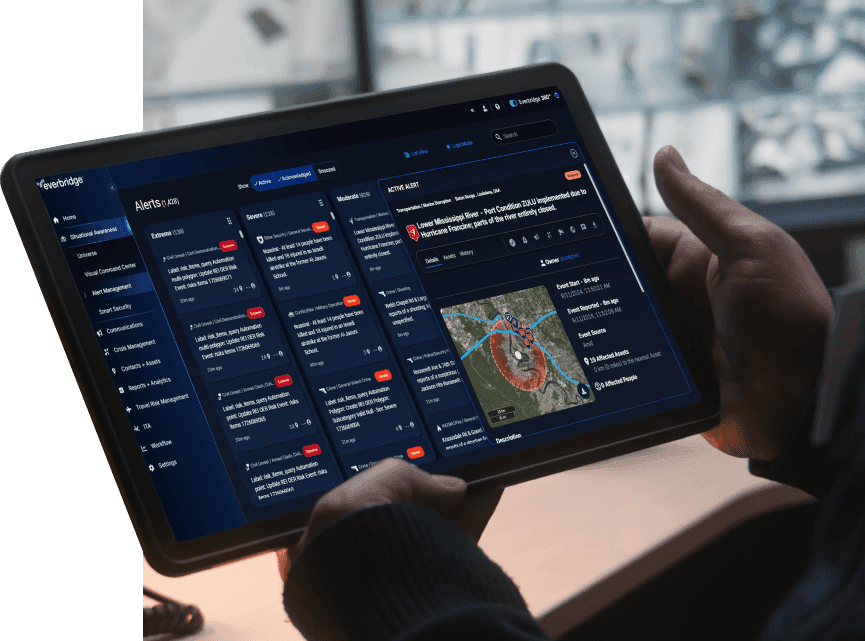
Everbridge Nixle supports community engagement by helping public safety agencies communicate with residents, collect information, and share timely updates. Everbridge 360 supports broader critical event management by helping organizations know earlier, respond faster, and improve continuously.
These capabilities empower organizations to navigate critical events confidently while supporting day-to-day community policing goals. They also help agencies safeguard people, assets, operations, and infrastructure.
How community policing works
Effective community policing combines relationship-building, local intelligence, and coordinated communication. Agencies can apply the model through a simple framework:
- Build consistent community presence in the same neighborhoods and service areas.
- Engage residents, businesses, schools, and civic groups to understand local concerns.
- Use resident input to shape an accurate public safety priority list.
- Share timely information through trusted and accessible communication channels.
- Encourage residents to report concerns, submit tips, and participate in safety efforts.
- Review outcomes and adapt programs based on changing needs.
This framework supports readiness before a critical event and coordinated response during one. It also helps agencies recover trust and improve continuously after disruptions.
Benefits of effective community policing
An effective community policing structure can improve public safety outcomes in several ways. The core benefit is stronger collaboration between residents and law enforcement.
Key benefits include:
- Residents having a more favorable view of their local police department.
- Improved trust between law enforcement and residents.
- More accurate information from residents about criminal activity in their community.
- Better understanding of citizen needs and expectations.
- Faster awareness of emerging risks and local concerns.
- More proactive crime prevention and problem-solving.
- Stronger participation in preparedness, response, and recovery efforts.
- Better continuity when public safety teams must communicate during critical events.
Community policing also helps agencies prioritize resources more effectively. When residents share accurate information earlier, agencies can address risks before they create broader disruptions.
Use cases for community policing
Community policing can support many public safety and resilience needs. The approach adapts to local conditions, population needs, and agency goals.
Common use cases include:
- Neighborhood crime prevention programs.
- Anonymous tips about suspicious activity or recurring safety concerns.
- Public updates during severe weather, road closures, evacuations, or other critical events.
- Engagement with schools, campuses, and youth programs.
- Coordination with businesses and local organizations.
- Outreach to vulnerable populations that may need accessible communication.
- Community feedback after high-impact events.
- Public education about preparedness and safety resources.
Each use case depends on trust and communication. Agencies improve outcomes when residents know how to receive alerts, ask questions, and share information safely.
Community policing examples in practice
Community policing often works best when residents see consistent engagement before a critical event occurs. The following examples show how the model can support public safety without relying only on reactive response:
- A police department assigns officers to consistent patrol areas so residents can build familiarity and trust.
- A public safety agency asks residents which criminal activities affect them most, then uses that input to refine priorities.
- A city uses two-way messaging to collect information during a localized disruption and share verified updates.
- A community safety program offers anonymous tipping so residents can report concerns without fear of exposure.
- A department uses social media integration and mass notification to reach residents across multiple channels.
These examples reflect the central purpose of community policing: law enforcement and residents work together to create safer, more resilient communities.
Strengthen community engagement
Community policing works best when agencies can reach residents quickly, receive trusted information, and coordinate response across channels. Everbridge solutions help public safety organizations minimize disruptions, safeguard communities, and improve operational resilience.
Frequently asked questions
Community policing is a law enforcement philosophy that builds ongoing partnerships between public safety agencies and residents. It focuses on trust, shared priorities, and proactive crime prevention.
Community policing improves outcomes by helping agencies receive better information earlier, understand local needs, and engage residents in prevention and preparedness. It also supports faster, more coordinated response during critical events.
Residents help identify local concerns, report suspicious activity, share feedback, and participate in safety programs. Their involvement gives public safety agencies a clearer view of community priorities.
Technology helps agencies communicate with residents through alerts, two-way messaging, anonymous tips, and social media integration. These tools improve reach, speed, and visibility during routine engagement and critical events.
Community policing emphasizes prevention, partnership, and shared problem-solving. Traditional policing often places more emphasis on responding after crimes or critical events occur.
Agencies can strengthen programs by maintaining a consistent presence, listening to residents, using accessible communication channels, and measuring progress over time. Solutions such as Everbridge Nixle help agencies support scalable two-way engagement.