Full transcript
[00:07.6]
Hello, my name is George Chepregi and I’m the Regional Analyst for Middle east and North Africa at Everbridge’s Global Insights team. Today I will outline the current state of the U.S. Iran negotiations focusing less on technical details and more on the wider regional picture and its implications for business operations in the Gulf.
[00:25.0]
As of Wednesday June 24th the U.S. Iran negotiations are active and reportedly progressing. The but they remain highly contested and fragile. The June 17th memorandum of understanding between Washington and Tehran created a 60 day window to try to turn the ceasefire and reopening of the Strait of Hormuz into a broader settlement.
[00:44.6]
Yet key terms remain disputed in public almost every day. That is why this process feels so tense. Not only because the final result remains uncertain, but because even the most basic assumptions of each side’s minimum and maximum demands are still in flux. This constant noise around the talks is not incidental.
[01:02.8]
It is a core part of these high stakes negotiations on the nuclear inspections. U.S. officials have said that Iran has agreed to full monitoring while Iran has publicly denied plans for inspections of their damaged nuclear sites which are exactly those core assets which require international oversight on warmouths.
[01:21.2]
Washington has been clear that freedom of navigation is non negotiable and that Iran cannot introduce a tall regime in the strait even as Tehran is constantly asserting that a return to pre war status quo is not acceptable. On sanctions relief and access to frozen Iranian funds.
[01:37.8]
Reporting points to a phased economic concession plan but the scope, conditions and control mechanisms remain disputed. One especially notable point is the reported proposal for a 300 billion dollars reconstruction fund for Iran just weeks after it has struck its Gulf neighbors.
[01:54.9]
Creating an alarming precedent for many regional actors. These details matter and we are watching them closely. But the main takeaway is evident even before the exact terms of a comprehensive agreement are finalized or even whether one emerges in the next 60 days. The real story is that the negotiations already reshaping regional behavior, security conditions and the operating environment for years to come.
[02:18.9]
The talks have brought Iran back into the diplomatic equation in the region of after a period of deep isolation. It’s not normalized, it’s not trusted and it’s not fully rehabilitated. But it was brought back into the diplomatic and strategic center of gravity in the Middle East.
[02:34.8]
That fact alone is forcing a profound regional adjustment. It is important to highlight that this adjustment is not happening in neat blocks of states, even if that is often the simplest way to describe it. Gulf states are trying to secure US guarantees while they are also trying to keep channels open to Tehran.
[02:53.2]
States directly affected by Iranian attacks are seeking strength in selective security coordination, while they are also acting unilaterally when they see an advantage. Israel is watching for any, arrangement that constrains its room to act, especially in Lebanon, while also managing its relationship with Washington carefully.
[03:12.4]
As the U.S. focuses on its talks with Iran, cooperation, competition and diversification strategies are all playing out at once as countries try to keep their options open and prepare for whatever regional order emerges. For businesses, that means a highly complex operating environment.
[03:30.0]
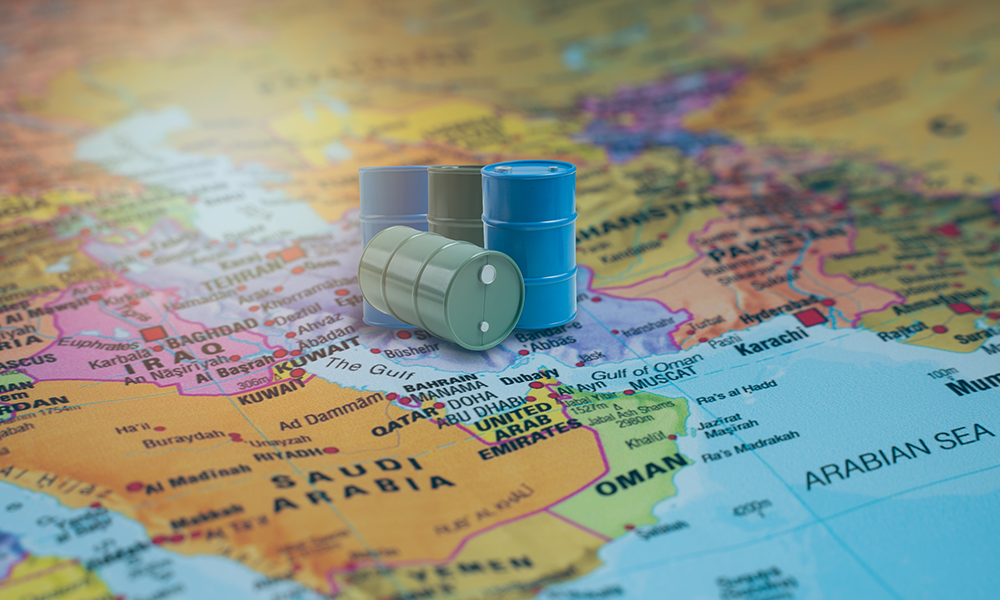
Even if de escalation broadly holds. Let’s be clear, the upside is real. There is lower immediate war risk, a large scale restoration of shipping flows in the region, and the possibility of more predictable energy exports and trade conditions.
[03:45.2]
That matters not only for operators in the Gulf, but also for global supply chains that depend on reliable maritime transit statistics, stable energy pricing and reduced insurance and freight volatility. But the downside is just as important. Repeated disruptions, sanctions, ambiguity, shipping frictions, proxy flare ups and a corrosive and even toxic information space full of contradictory claims and threats that can undermine markets and corporate decision making before facts are settled.
[04:13.3]
The most likely outcome of the U.S. Iran talks is neither a clean diplomatic breakthrough nor a total collapse. It is a state of managed volatility that could reverberate across the Middle east for years. The region is entering a period of partial de escalation, contested implementation, setbacks and constant repositioning by both regional and global actors.
[04:33.9]
Whatever the final result of the talks between Washington and Tehran, Iran is back in the regional equation and the operational environment across the Middle east will now have to adjust to that reality as, this emerging regional order continues to develop. Everbridge’s Global Insights team will keep providing in depth analysis to to help clients understand the operational risks, disruptions and strategic shifts that are ahead.