Run workplace active shooter drills with preparedness and care
Companies should run active shooter drills as part of a broader workplace safety program. An effective program starts with a written response plan, uses trauma-informed training, clearly announces every drill, tests communications and response procedures, and ends with a debrief that improves readiness.
Active shooter preparedness should help employees understand what to do without creating unnecessary fear. Organizations can strengthen safety by combining practical drills, employee education, law enforcement input, and reliable critical event communication tools.
Defining and understanding an active shooter threat
An active shooter event refers to a situation where an individual engages in violent acts, typically using firearms, with the intent to harm and kill as many people as possible. The FBI defines an active shooter as “an individual actively engaged in killing or attempting to kill people in a populated area,” and notes that “recent active shooter incidents have underscored the need for a coordinated response by law enforcement and others to save lives.”
These incidents can unfold quickly, which makes preparation, communication, and coordinated response essential. Acknowledging the possibility of an active shooter threat helps organizations anticipate, mitigate, respond, recover, and adapt.
Active shooter incidents have occurred in every US state, reinforcing the need for workplace preparedness. Organizations should approach this topic with calm, practical planning that protects people, assets, operations, and infrastructure.
To learn about the current trends in terrorism and active shooter incidents, download our whitepaper here:
Challenges organizations should plan for
The decision to conduct active shooter drills in the workplace is sensitive. Some employees may view drills as stressful, while others may feel more confident when they understand the organization’s response procedures.
Organizations should weigh these considerations carefully:
- Employee well-being. Drills can be emotionally difficult, especially if they feel too realistic or are not clearly communicated.
- Low-probability, high-impact risk. The likelihood of an incident at any single workplace may be low, but the consequences can be catastrophic.
- Workplace complexity. Large campuses, shared offices, warehouses, retail locations, remote teams, and event travel all create different risk profiles.
- Communication gaps. Employees need timely, accurate information before, during, and after a critical event.
- Coordination needs. Plans should align with security teams, facility leaders, human resources, and law enforcement where appropriate.
A trauma-informed approach helps balance readiness and employee well-being. Organizations should explain the purpose of drills, avoid unnecessary surprise, provide support resources, and create opportunities for employees to ask questions.
Using Everbridge 360 for critical event communication
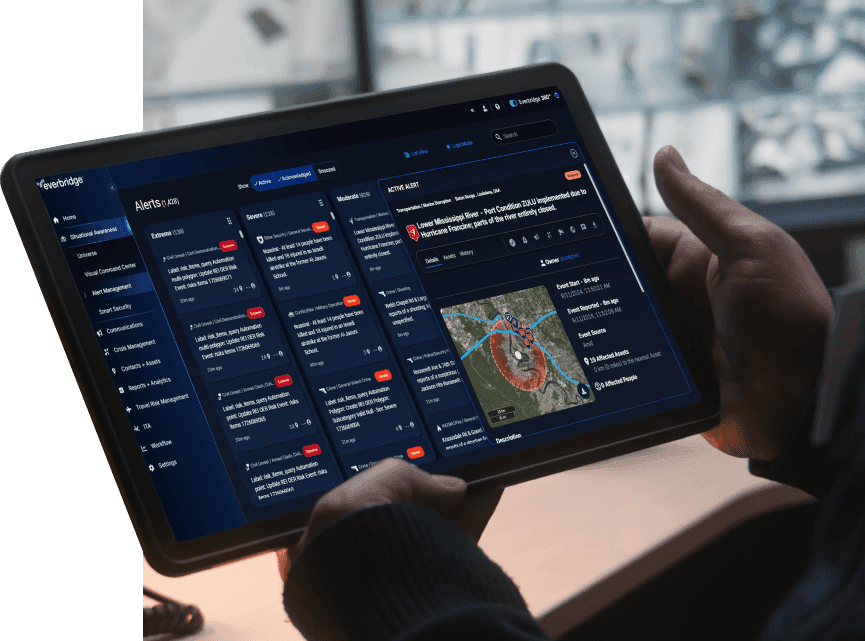
Preparedness depends on the ability to reach the right people with the right information at the right time. Everbridge 360 helps organizations communicate during critical events, including active shooter and active assailant situations, so employees can receive safety information and support when it matters most.
Everbridge 360 supports critical event management (CEM) by helping organizations know earlier, respond faster, and improve continuously. The Everbridge High Velocity Critical Event Management platform is designed to help organizations navigate critical events confidently, minimize disruptions, and safeguard employees and assets.
For remote-first and hybrid organizations, physical drills may not apply to every employee. However, employees can still face risks while traveling, attending conferences, working at customer sites, or participating in trade shows. Equipping employees with crisis communication apps and mass notification capabilities can provide a lifeline to safety information in off-site situations.
How companies should run active shooter drills in the workplace
If an organization chooses to run an active shooter drill, it should follow a clear, sequential process. The goal is to build practical readiness, not to surprise or distress employees.
1. Develop a comprehensive response plan
Start with a written response plan that reflects the organization’s facilities, workforce, operating model, and risk profile. The plan should account for lockdowns, evacuations, sheltering, communications, and post-incident recovery.
Organizations should collaborate with security professionals and law enforcement where appropriate. This helps ensure the plan reflects best practices and the unique dynamics of the workplace.
The plan should include:
- Roles and responsibilities for employees, managers, security teams, and incident leaders.
- Procedures for lockdown, evacuation, shelter-in-place, and reunification.
- Communication protocols for alerts, updates, all-clear messages, and follow-up support.
- Guidance for visitors, contractors, customers, and remote employees.
- Procedures for post-event debriefing, employee support, and plan improvement.
2. Educate employees before the drill
Employees should understand the purpose, format, and expectations before participating. Clear education reduces confusion and helps people respond more confidently.
Training can include:
- How to recognize and report concerning behavior or potential threats.
- How to follow the organization’s emergency procedures.
- How to use run, hide, fight as a mental framework.
- How emergency notifications will be delivered.
- Where to find support resources after training or drills.
The run, hide, fight concept gives employees a simple framework during an active shooter situation:
- Run: Escape the danger area if it is safe to do so.
- Hide: Find a secure hiding place, lock or block entry points, and silence devices.
- Fight: Act only as a last resort when there is no other option.
3. Run a clearly announced practice drill
Once the response plan is in place, conduct a practice drill that matches the organization’s maturity, resources, and employee needs. Drills can range from tabletop exercises for emergency preparedness to more comprehensive simulations.
Every drill should begin with a clear statement that it is a drill. This reduces confusion, supports employee well-being, and helps prevent unnecessary concern.
A practical drill should test:
- Whether employees receive alerts quickly.
- Whether communication channels remain available.
- Whether employees understand their roles and responsibilities.
- Whether evacuation routes and lockdown procedures work as intended.
- Whether leaders can coordinate decisions across teams and locations.
4. Review, debrief, and improve
After the drill, conduct a structured review. The debrief should evaluate operational performance and the emotional impact on participants.
Organizations should ask:
- Were communication channels effective.
- Were evacuation routes clearly marked and followed.
- Did employees understand their roles and responsibilities.
- Were managers prepared to provide direction.
- Did the drill reveal gaps in facilities, technology, training, or procedures.
- What support do employees need after participating.
Regular debriefs help organizations improve preparedness over time. They also reinforce a culture of operational resilience, business continuity, and continuous improvement.
Key practices that strengthen workplace safety
Active shooter preparedness works best as part of a broader risk management and workplace safety program. Organizations should combine planning, training, communication, and resilience measures.
Implement a comprehensive workplace safety program
A strong workplace safety program should include active shooter preparedness alongside other critical events, such as severe weather, cyberattacks, facility disruptions, and workplace violence. Regular reviews help keep the program aligned with current risks, facility changes, and workforce needs.
Leverage mass notification and incident communications
Emergency communication tools play a pivotal role in keeping employees informed and safe. Mass notification and incident communication platforms help organizations rapidly share critical information before, during, and after an event.
These capabilities support:
- Real-time alerts to employees and stakeholders.
- Coordinated response across teams and locations.
- Automated notifications and follow-up messages.
- Measurable delivery, response, and acknowledgment data.
- Scalable communication for single-site and multi-site organizations.
Use real-time threat intelligence
Real-time threat intelligence helps organizations anticipate risks that may affect people, operations, and infrastructure. When paired with response plans and emergency communications, risk intelligence supports proactive action and faster decision-making.
Support employees before and after drills
Employee support is essential. Organizations should provide context before training, access to resources afterward, and clear channels for feedback.
Support can include:
- Employee assistance resources.
- Manager talking points.
- Optional follow-up discussions.
- Clear escalation paths for concerns.
- Adjustments for employees who may need accommodations.
Workplace variants for remote, hybrid, and event-based teams
Not every organization should use the same type of drill. Active shooter preparedness should reflect the environment where employees work and the situations they may face.
Office and campus environments
Office and campus settings may need evacuation routes, lockdown procedures, visitor management, and floor-by-floor coordination. These locations benefit from clear signage, role-based training, and communication testing.
Manufacturing, warehouse, and operations sites
Operational environments may include large floor plans, machinery, shift workers, and limited access to mobile devices. Plans should account for audible alerts, supervisor responsibilities, safe exits, and coordination with site security.
Retail and customer-facing locations
Retail and customer-facing environments should include guidance for employees, customers, contractors, and visitors. Training should address how to move people away from danger while maintaining clear communication with incident leaders.
Remote and hybrid workplaces
Remote and hybrid employees may not participate in physical drills every year. They still need training on reporting concerns, responding during travel, and receiving critical event notifications through approved tools.
Conferences, trade shows, and business travel
Employees attending events may face risks outside company-controlled facilities. Organizations should prepare travelers with emergency contacts, communication tools, and guidance on how to respond during critical events.
Demonstrating commitment to resilience
Preparedness is not a one-time activity. It is part of an organization’s broader commitment to organizational resilience, operational continuity, and employee safety.
Everbridge offers a Best in Resilience certification program that can support an organization’s Best in Resilience journey. The program helps organizations assess and strengthen how they protect employees, assets, resources, and communities from critical events, including active shooter situations, inclement weather, cyberattacks, and more.
Becoming certified can help demonstrate a proactive commitment to resilience. It can also help employees feel more confident that their organization takes safety, preparedness, response, and recovery seriously.
Resources and thought leadership
Organizations can strengthen active shooter preparedness by combining internal planning with trusted external guidance. The following resources can help leaders continue building readiness:
Download the Everbridge whitepaper on trends in terrorism and active shooter incidents.safer work environments that protect employees and empower them to respond effectively in the face of adversity.
Learn about active shooter safety resources from the FBI active shooter safety resource center.
Explore active assailant preparedness solutions.
Review workplace safety use cases.
Strengthen emergency planning with tabletop exercise guidance.
Take immediate action with eight ways to help prevent workplace violence.
Take the next step
Active shooter preparedness requires planning, communication, empathy, and continuous improvement. Everbridge empowers organizations to navigate critical events confidently, minimize disruptions, and safeguard employees and assets.
Frequently asked questions
An active shooter drill should include a written response plan, employee education, clear drill announcements, communication testing, lockdown or evacuation procedures, role-based responsibilities, and a post-drill debrief. It should also include support resources for employees.
Yes. Organizations should clearly communicate that a drill is taking place and should begin every drill by stating that it is a drill. This helps reduce confusion and supports a trauma-informed approach.
There is no single cadence that fits every organization. Companies should set a schedule based on their risk profile, facility type, workforce needs, and guidance from safety professionals or law enforcement.
Yes. Tabletop exercises can help leaders and employees discuss response steps, identify gaps, and improve coordination without creating the stress of a full-scale simulation.
Organizations can reduce trauma by explaining the purpose of the drill, avoiding unnecessary surprise, using age- and workplace-appropriate scenarios, offering support resources, and inviting feedback after the exercise.
Yes. Remote employees may still face risks while traveling, attending events, working at customer sites, or visiting company facilities. Training and critical event communication tools can help them understand what to do.